6 Step Florist Method to Read Bouquet Color Meanings
6 Step Florist Method to Read Bouquet Color Meanings
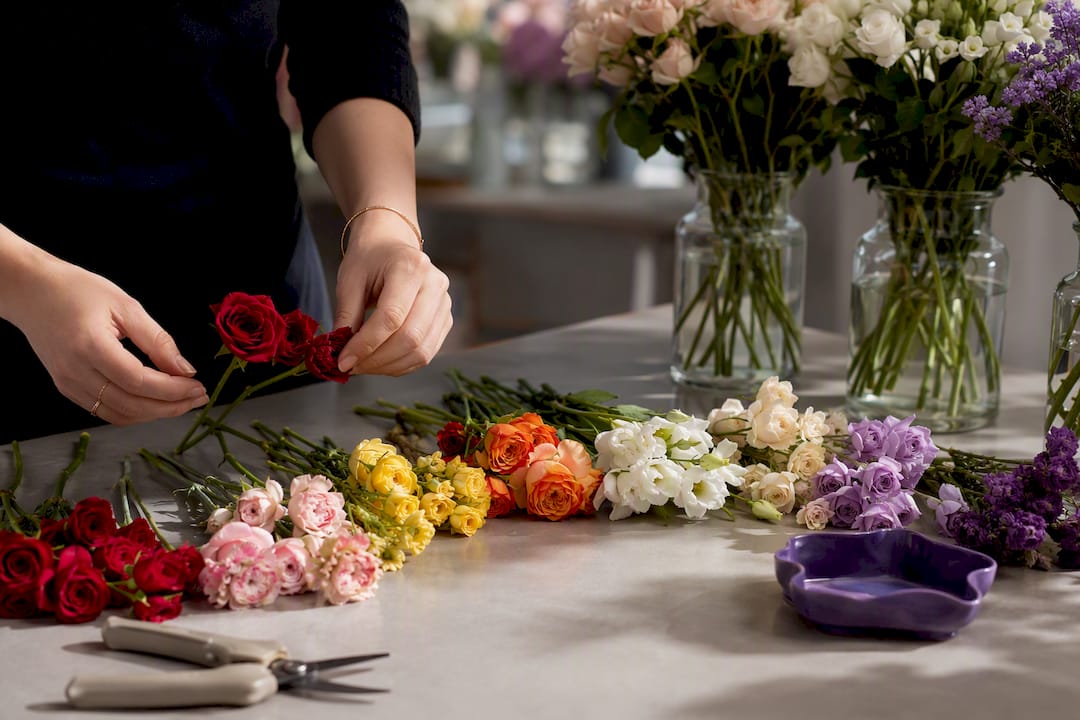
Warm colors like red, orange, and coral read as energetic and affectionate. Cool colors like blue, purple, and green read as calm, admiring, or refined. Neutrals like white and cream signal respect and quiet elegance. Shade, bloom type, and cultural background can shift any of these meanings, so when you’re not sure what message a bouquet sends, a soft palette of pink, cream, and green is the safest bet.
TL;DR:
- Red and pink bouquets primarily convey romantic passion or affection, but the exact message depends on the shade, with deep magenta feeling more passionate than blush pink.
- Yellow and orange display friendship and cheerfulness, but in some cultures, yellow may still evoke jealousy, so double-check cultural meanings before sending.
- White and cream flowers represent purity and respect, yet in East Asian cultures, they can symbolize mourning, requiring attention to cultural context.
- The number of flowers can carry meaning, with three symbolizing completeness like “I love you,” but these signals are less universal and more dependent on specific traditions.
- Florists select colors based on occasion and recipient, often balancing tone and cultural expectations, with options to confirm choices through samples or guided consultations.
Table of Contents
- What Do Bouquet Color Meanings Actually Come From?
- What Does Each Bouquet Color Mean?
- How to Choose the Right Bouquet Color for the Occasion
- Do Bouquet Numbers Carry Hidden Meanings Too?
- How a Florist Actually Chooses Colors for Real Orders
- Should Symbolism or Personal Taste Win?
- Let Malikflowers Handle the Color Decision For You
- Where These Bouquet Color Facts Come From
- Sources
- FAQ
What Do Bouquet Color Meanings Actually Come From?
Most of the color rules we still use trace back to the Victorian era, when strict social codes made it awkward to say certain things out loud. Flowers filled the gap. Floral dictionaries assigned meanings to specific blooms and shades, and floriography became a codified language that shaped how Western culture still reads a bouquet today.
Shade matters as much as hue. A pale pink rose reads as gentle admiration, while a deep magenta one leans toward gratitude bordering on passion. Bloom type shifts things too. A white violet meant innocence to Victorian gift-givers, while a purple violet meant the sender’s thoughts were “occupied with love,” according to Smithsonian Gardens’ historical notes on the language of flowers.
Culture rewrites the script entirely in some cases:
- White signals purity at a Western wedding, but it signals mourning in parts of East Asia.
- Red signals celebration and luck across much of China, not just romance.
- Yellow carried a jealousy connotation in old Victorian guides, though it now mostly reads as friendship in the West.
Pro Tip: If you’re sending flowers to someone from a culture you don’t know well, ask a florist or the recipient’s family before picking white as your default “safe” color.
What Does Each Bouquet Color Mean?
Color is the fastest emotional signal in a bouquet. Before anyone reads a card, they read the palette. Here’s what each major color group tends to say, and where it can go wrong.
Red and pink. Red says romantic passion or, in a subtler context, deep respect. Pink softens that into affection and gratitude, which is why it works for nearly any occasion. The gap between blush pink and deep magenta is bigger than it looks. Blush feels tender and understated. Deep magenta feels bold, almost as intense as red itself.
Yellow and orange. These read as friendship, cheer, and congratulations. Yellow’s history is messier than people realize. Victorian floriography linked yellow to jealousy, and that association still lingers in a handful of European countries. Send yellow to a close friend or coworker without a second thought. Send it as a romantic gesture to someone unfamiliar with your intent, and it can land oddly.
White and cream. These say purity, respect, and calm. They’re the default for weddings and sympathy arrangements in North America, and for good reason. Before sending white to someone connected to East Asian traditions, double check. It can carry mourning associations that clash badly with a celebratory occasion.
Purple and lavender. These say admiration, refinement, and a touch of distinction. Deep purple feels formal, almost regal. Pale lavender feels soft and celebratory, which makes it a favorite for graduations and thank-you bouquets.
Blue and green. These say calm, trust, and peace. Blue is genuinely rare in nature, so a blue-toned bouquet automatically feels special or unusual, almost like a deliberate design statement rather than a default choice.
Peach and neutral mixes. These say softness and sincerity without demanding much interpretation. If you don’t know the recipient’s taste, culture, or relationship status well, a peach-and-cream mix is close to a universal safe bet.
- Florist tip for red and pink: Add white or greenery to soften a heavy red bouquet without losing the message.
- Florist tip for yellow and orange: Pair with white to keep it firmly in “friendship,” not “romance.”
- Florist tip for white and cream: Add a single accent color, like blush or sage, to keep it from reading as strictly funereal.
- Florist tip for purple: Go pale lavender for celebration, deep violet for formal respect.
- Florist tip for blue and green: Use as an accent rather than the whole bouquet unless the occasion calls for something unusual.
- Florist tip for peach and neutrals: This is your go-to when you’re buying for a boss, a new acquaintance, or anyone whose taste is a mystery.
A rose color guide can help if you want to go bloom-specific rather than palette-general, since a single flower type can carry its own extra layer of meaning on top of color.
How to Choose the Right Bouquet Color for the Occasion
Picking a color doesn’t have to be guesswork. Run through this short sequence before you order.
- Define the relationship. Romantic partner, close friend, coworker, and grieving family member all call for different color intensities.
- Pick the emotional volume. Bold red and deep purple turn the message up. Blush, cream, and pale yellow turn it down.
- Consider cultural context. If the recipient’s background is unfamiliar to you, default to a neutral palette over a symbolic one.
- Choose a color temperature. Warm for celebration and affection, cool for calm and admiration, neutral for respect.
- Add a supporting tone and greenery. Practitioner florists build a palette around one focal color, one supporting tone, and greenery to balance intensity.
- Match the flowers to the card message. A tender note paired with a fire engine red bouquet can feel mismatched. Keep tone consistent.
Quick dos and don’ts:
- Do avoid all white for anniversaries or celebrations. It can read as clinical rather than warm.
- Do avoid all bold red for a new coworker or acquaintance. It can send an unintended romantic signal.
- Don’t be afraid of a brighter palette for congratulations or new-baby orders. Cheerful and bold works in those cases.
- Don’t assume greenery is filler. It’s doing real work moderating how intense a color palette feels.
Do Bouquet Numbers Carry Hidden Meanings Too?
Sometimes. A count of flowers can carry its own layer of symbolism on top of color, though it’s less universal than color meaning and varies more by culture and tradition.
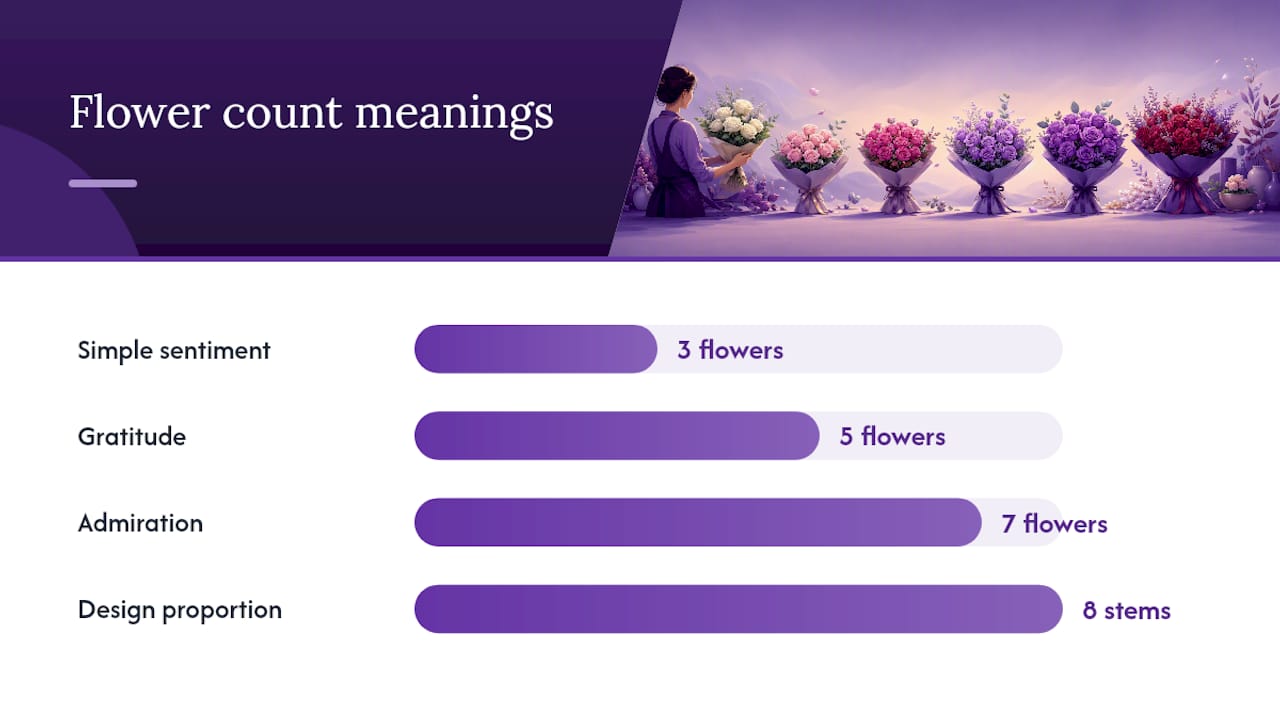
- Three flowers often symbolize a simple, complete sentiment like “I love you,” though the meaning shifts by region.
- Five flowers commonly represent gratitude or well-being in many gifting traditions.
- Seven flowers are often tied to admiration or good fortune, though this is far from a fixed rule.
The 3:5:8 rule you may have seen mentioned is not a symbolic code at all. It’s a design guideline: build a bouquet with roughly three focal blooms, five supporting blooms, and eight filler stems (or in similar proportions) to create visual balance. It’s about how the arrangement looks, not what it secretly says.
Here’s how to tell the difference between a deliberate message and a design choice: if the sender specifically requested an odd number, a particular color pairing, or a note referencing the flowers, that’s intentional symbolism. If the count simply reflects what looked balanced in the vase, that’s aesthetics, not a code to decrypt.
How a Florist Actually Chooses Colors for Real Orders
Every order starts with the occasion, not the flowers. For an anniversary, Malikflowers usually leans into deep reds or blush pinks with a soft supporting tone. For a sympathy order, the palette shifts toward whites and creams with muted greenery, calm rather than somber. For a new baby, pale yellow and peach tend to read as warm without tipping into anything gender-coded.
A bouquet’s color does more communicating than the card ever will. Getting it right for the recipient, not just the occasion, is the actual job of the arrangement.
Pro Tip: If you’re not confident about a palette, ask for a sample photo before the order ships. It’s a quick way to confirm the color reads the way you intend.
Malikflowers backs every order with a satisfaction guarantee and offers a guided florist experience for anyone who wants a second opinion before committing to a color scheme.
Should Symbolism or Personal Taste Win?
When you know the recipient’s favorite color, use it. Personal preference beats tradition every time you have that information. Lean on symbolism only when formality or cultural expectation demands it, like a funeral or a wedding tied to specific customs. Still unsure? A soft pink, cream, and green palette rarely misses. Ask a florist for a guided palette pick if you want backup.
— Reza
Let Malikflowers Handle the Color Decision For You
Some florists offer alternatives to guessing at a florist’s counter or scrolling stock photos for hours. Many arrangements are handcrafted to the occasion and the recipient, with some offering refunds if the design isn’t right.
If you want expert eyes on your color choice, a guided florist experience walks you through palette options before anything ships. For sympathy orders where getting the tone right matters most, the sympathy and funeral collection is built around respectful, calming palettes. For anniversaries and date nights, browse the love and romance collection for reds, blushes, and everything between.
Ready to stop guessing? Order flower delivery in Vancouver today, or reach out for palette advice before you buy.
Where These Bouquet Color Facts Come From
The historical grounding here comes from Cornell University Library’s exhibit on floriography and Smithsonian Gardens’ archival notes on Victorian flower meanings. Cross-cultural color differences draw on Binus International’s overview of global color symbolism. For gifting strategy beyond flowers, Font Coffee Roasters’ guide to universally appreciated gifts offers a useful parallel on pairing thoughtful presents with the right occasion.
Sources
- Written in Petals: History (Cornell University Library exhibit)
- Language of Flowers (Smithsonian Gardens historical notes)
- The meaning of colors in cultures around the world (Binus International)
- Flower Color Meanings: Build a Bouquet Palette That Matches the Mood | DigiBouquet
FAQ
What Do 7 Flowers in a Bouquet Mean?
Seven flowers are often associated with admiration or good fortune in certain gifting traditions, though this isn’t a universal rule. The number matters far less than the color and occasion behind the gift.
What Is the 3:5:8 Rule in Bouquets?
It’s a design guideline florists use for visual balance, roughly three focal blooms, five supporting blooms, and eight filler stems. It’s about composition and proportion, not a hidden symbolic message.
What Do 5 Flowers in a Bouquet Mean?
Five flowers commonly represent gratitude or well wishes in some floral traditions. As with most flower counts, the meaning shifts depending on culture and context, so it’s a nice touch rather than a fixed rule.
Can Bouquets Have Hidden Meanings?
Yes, through color, bloom type, and sometimes count, though most modern bouquets are chosen for how they look and feel rather than as a coded message. If you want your bouquet to say something specific, tell your florist the intent directly rather than relying on symbolism alone.
What Does It Cost to Get a Custom Color Palette From Malikflowers?
Pricing depends on the arrangement and occasion, and current prices are listed on the Malikflowers site. Custom designs for sympathy and tribute arrangements are available, and prices may vary; guided consultations may be available for those seeking help with color selection.