
Custom Bouquet Design: How to Order and Brief a Florist
Custom Bouquet Design: How to Order and Brief a Florist
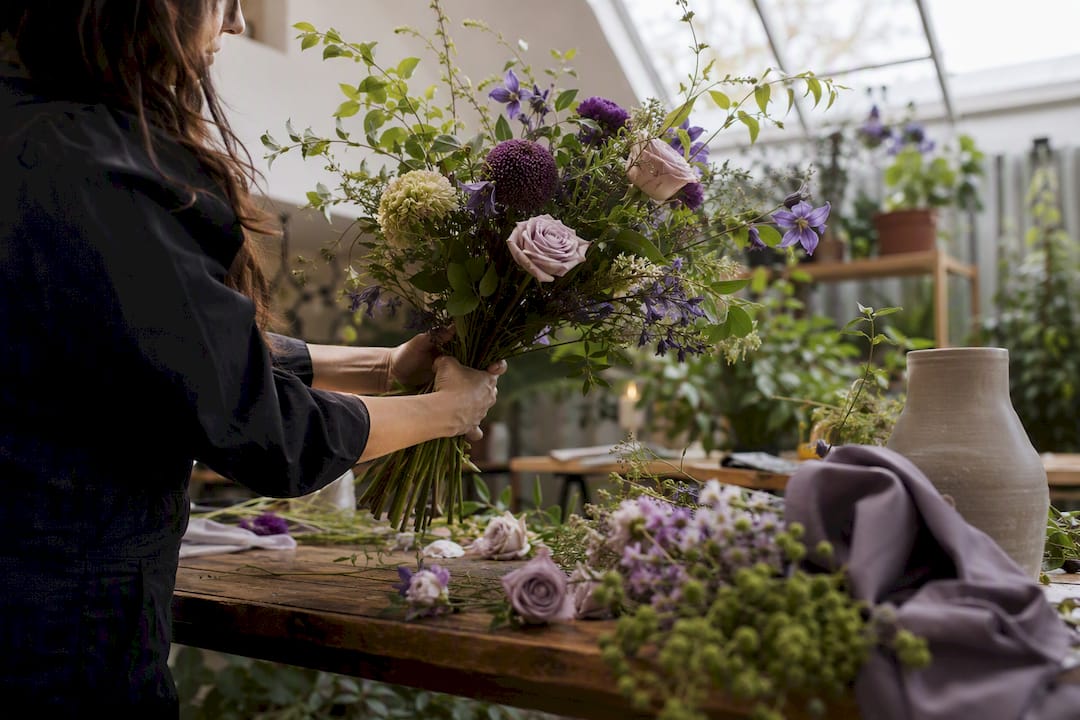
Order a bespoke bouquet from a florist who offers a designer’s choice option rather than picking a rigid catalog item. You get faster turnaround, a design shaped to your actual budget and taste, and a professional’s eye for what’s fresh that week. To get moving right now:
- Set your budget and pick a size (small, medium, or large)
- Choose a style and color palette, even loosely
- Send a short brief or contact the florist directly with your date and delivery details
That’s the whole decision. Everything below just helps you brief it well.
Key Takeaways
A well-briefed custom bouquet, built on the 3:5:8 stem structure and a clear substitution policy, consistently outperforms a generic catalog order on both fit and freshness.
| Point | Details |
|---|---|
| Use the 3:5:8 rule | Brief 3 focal, 5 textural, and 8 filler stems for a balanced 14-stem mid-size bouquet. |
| Confirm timelines early | Same-day works for simple orders; weddings and events need weeks of lead time. |
| Get quotes in writing | Ask for itemized pricing and a substitution policy before confirming payment. |
| Send photos, not paragraphs | Reference images and a palette align expectations faster than long flower lists. |
| Order through Malik Flowers | Handcrafted custom bouquets across Metro Vancouver with a satisfaction guarantee and same-day delivery option. |
Table of Contents
- How Custom Bouquet Design Orders Actually Work
- What Design Choices Should You Specify in Your Brief?
- What Determines the Price and Size of a Custom Bouquet?
- How Does Delivery and the Florist’s Choice Option Work?
- What Should You Include When You Contact a Florist?
- Order a Custom Bouquet From Malik Flowers
- Sources
- FAQ
How Custom Bouquet Design Orders Actually Work
Most florists follow the same three-step flow once you request a custom design.
- You submit a brief. Occasion, date, budget, colors, and any must-have flowers.
- The florist confirms a quote and substitution terms. This is where you learn what happens if a bloom you wanted isn’t in season.
- Production and delivery. The arrangement gets built, photographed if requested, and delivered on your window.
Timelines vary by complexity. A same-day order for a birthday or a “just because” gesture usually only needs a morning cutoff. A 24 to 48 hour window gives the designer more room to source specific stems. Weddings and large events need longer lead times, sometimes weeks, so the florist can order specialty flowers ahead of the delivery date. Ask early whether your date requires advance booking, especially around Valentine’s Day or Mother’s Day when demand spikes.
What Design Choices Should You Specify in Your Brief?
The hardest part of ordering bespoke floral design isn’t picking flowers you like. It’s translating “something pretty in pink” into instructions a florist can actually execute. This is where the 3:5:8 rule earns its reputation as the go-to shorthand in the industry: 3 focal flowers, 5 textural or greenery stems, and 8 filler or accent flowers, for a 14-stem structure that reads as full without looking overstuffed. Florists treat it as a guardrail that keeps buyers from getting lost picking stems one at a time, since it gives you an instant hierarchy: what matters most, what adds body, and what fills gaps.
Break that down into categories you can name in a brief:
- Focal flowers — roses, peonies, dahlias, or ranunculus. These carry the visual weight.
- Textural or structural stems — greenery, eucalyptus, thistle, or spray roses that add shape and depth.
- Filler flowers — baby’s breath, wax flower, or statice that soften the arrangement and fill space between focals.
You don’t need botanical Latin to write a good brief. Just say “3 focal, 5 texture, 8 filler” and describe the mood: romantic, wild-garden, modern and monochrome. Florists also recommend starting construction with 2 to 3 structure stems crossed at roughly 45 degrees, then rotating as more stems go in, so a designer who hears you reference the technique knows you understand the process.
Height matters too: a well-proportioned arrangement usually stands about 1.5 times the height of its vase, so a tall glass cylinder calls for taller stems than a low, wide bowl.
What Determines the Price and Size of a Custom Bouquet?
A handful of variables drive cost more than anything else: which flowers you request, whether they’re in season, how many stems go into the design, how labor-intensive the construction is, whether you want a wrap or a vase included, and how far the delivery has to travel. A dozen out-of-season peonies costs more than a dozen in-season carnations, and a hand-tied spiral bouquet takes longer to build than a loose gathered one.
Most florists organize custom orders into size tiers rather than pricing every stem combination separately:
- Small — a compact, single-focal design suited to desk gifts or quick gestures
- Medium — the 14-stem benchmark range, good for birthdays, anniversaries, or a thoughtful sympathy piece
- Large — statement pieces for events, milestone occasions, or when you want serious visual impact
Ask for an itemized quote before you confirm, and get the substitution policy in writing. A florist willing to put both in an email or order confirmation is one worth trusting with your money.
How Does Delivery and the Florist’s Choice Option Work?
Delivery flexibility is one of the biggest differences between ordering online and walking into a shop. Common options include:
- Same-day delivery for orders placed before a morning or early-afternoon cutoff
- Next-day delivery for more sourcing flexibility
- Scheduled delivery tied to a specific event date and time window
- In-store or curbside pickup
“Florist’s choice” or “designer’s choice” means you’re trusting the florist to substitute unavailable stems with something of equal or better quality, matched to your palette and style. This isn’t a downgrade. It’s standard practice when a specific bloom sells out or falls out of season, and it usually produces a fresher, more seasonally appropriate result than forcing a rigid list.
What Should You Include When You Contact a Florist?
A tight brief saves back-and-forth emails and gets you a better result. Cover these fields:
- Occasion and recipient name
- Delivery date and preferred time window
- Budget and size tier
- Style and color palette
- Focal flowers you love (and any you want to avoid)
- Allergies or sensitivities
- Reference photos, if you have them
- For event orders: venue contact, setup instructions, and an on-site contact person
Copy-ready example: “Medium bouquet, romantic and garden-style, blush and cream palette, peonies as focal flowers if in season, hand-tied finish, deliver Saturday between 10am and 1pm to [address], recipient’s name is Sarah.” Adjust the details and send it as-is.
A quick note on quality from our end
I’ve reviewed enough custom orders to know the brief matters more than the budget. A clear, specific brief with two reference photos consistently produces a better bouquet than a vague one with double the spend. Malik Flowers backs every custom design with a satisfaction guarantee and sources seasonal blooms carefully, so what arrives matches what you asked for, or we make it right.
Order a Custom Bouquet From Malik Flowers
Malik Flowers builds every arrangement by hand, tailored to your brief rather than pulled off a shelf. That means the same-day option actually reflects your color palette and occasion, not a generic default someone grabbed to hit a delivery window. Across Metro Vancouver, you get a designer working from your notes, a same-day delivery option when your cutoff allows it, and support for larger event orders that need setup coordination.
The trust signals are built into the process, not just marketing copy: a satisfaction guarantee with refunds if you’re not happy with the design, a gallery of past arrangements to reference in your brief, and pricing that’s clear before you commit. Browsing the spring collection or the wedding flower page gives you a sense of style and palette before you write your own brief.
Ready to move? Contact Malik Flowers directly or place your order through the products page, attach your reference photos, and specify your 3:5:8 breakdown if you have one in mind. That’s the fastest route from idea to doorstep.
Sources
- How to Arrange Flowers Like a Pro Using the 3-5-8 Rule
- The 3-5-8 rule for floral arrangements
- Make a flower bouquet step by step, from stem prep to ribbon, with easy tips for shape and vase life
FAQ
What is the 3:5:8 rule for bouquets?
It’s a stem ratio, 3 focal flowers, 5 textural or greenery stems, and 8 filler flowers, that produces a balanced 14-stem bouquet without overcrowding or looking sparse.
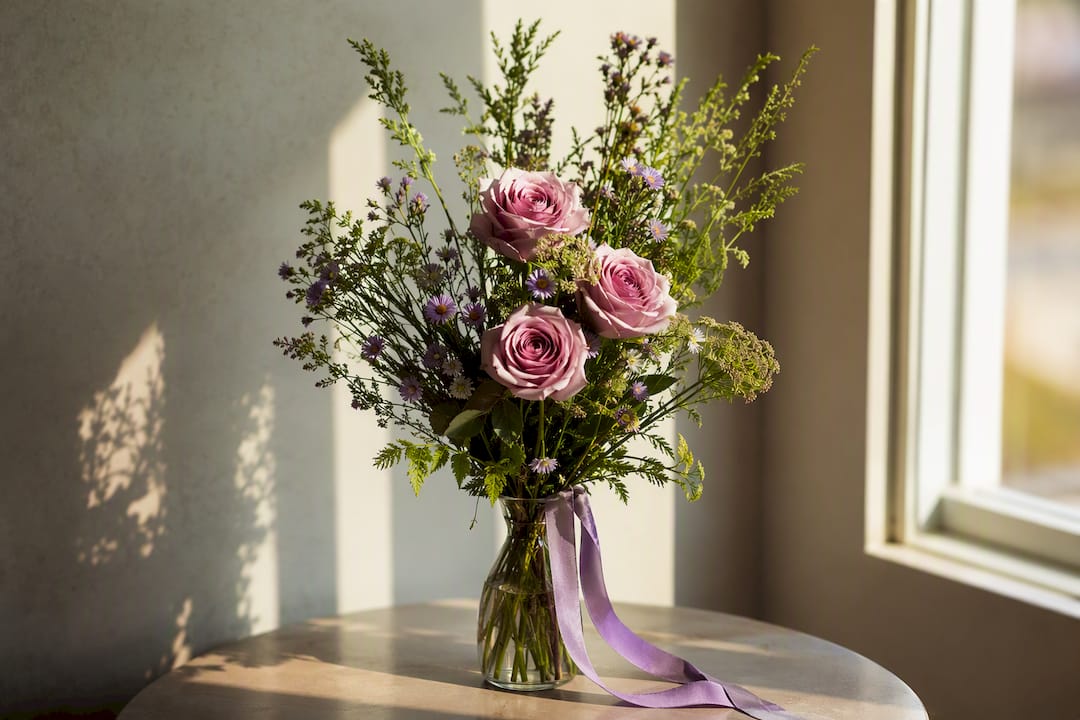
How can I create my own bouquet?
Start with structure stems crossed at about a 45-degree angle, add focal and filler flowers while rotating the bunch, and finish with a spiral hand-tied technique for even distribution and stability.
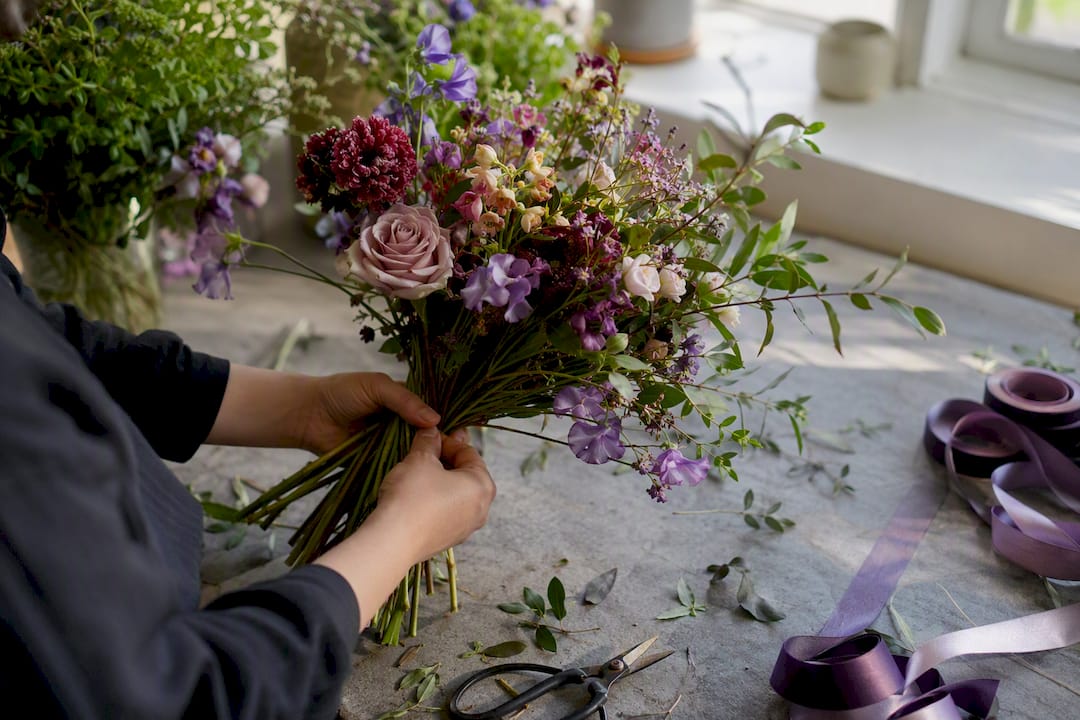
Can I design my own bouquet online for free?
You can sketch out a palette and stem breakdown yourself using guides like the 3:5:8 rule, but most florists, including Malik Flowers, let you submit a custom brief with photos and preferences at no extra design fee.
How do I make a customized bouquet?
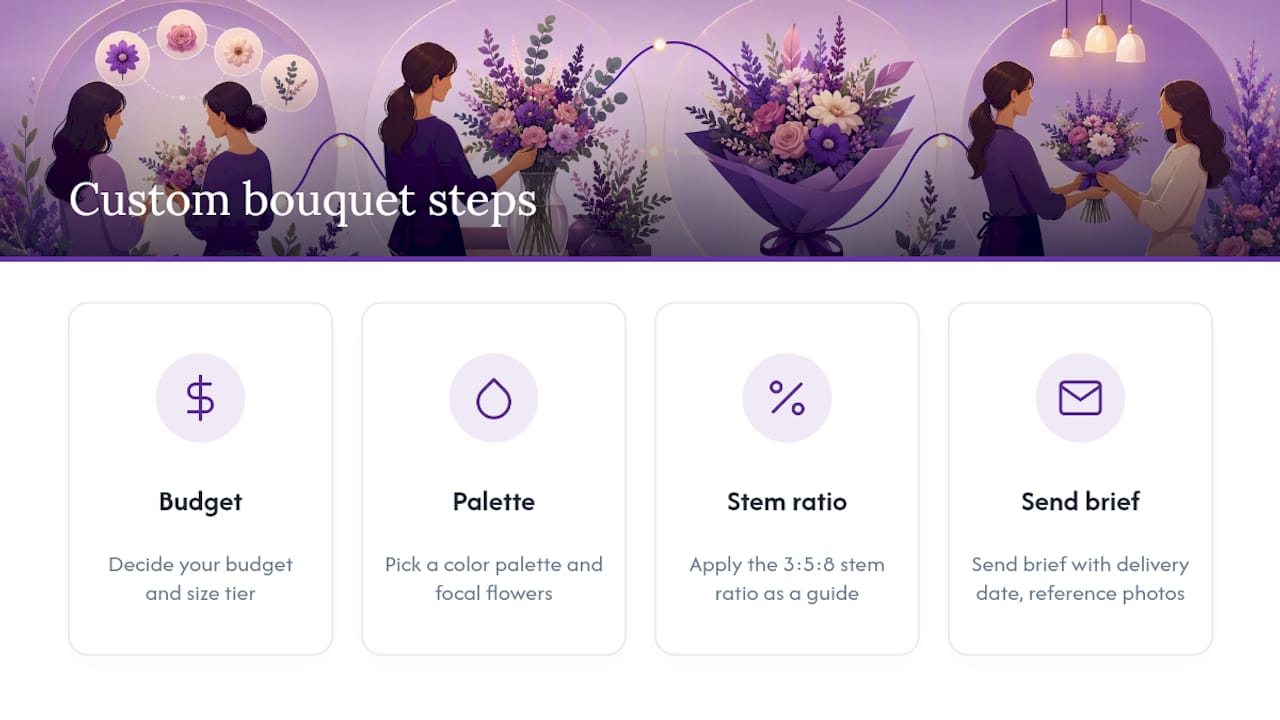
Decide your budget and size tier, pick a color palette and focal flowers, apply the 3:5:8 stem ratio as a guide, and send that brief to a florist along with your delivery date and any reference photos.
What should I do if my preferred flowers are out of season?
Ask the florist for their florist’s choice or substitution policy in advance. A good designer swaps in equal-quality seasonal blooms that match your palette rather than downgrading the design.