
2–5 Day Flower Freshness: Eco Packaging for Florists (FSC, BNQ)
2–5 Day Flower Freshness: Eco Packaging for Florists (FSC, BNQ)
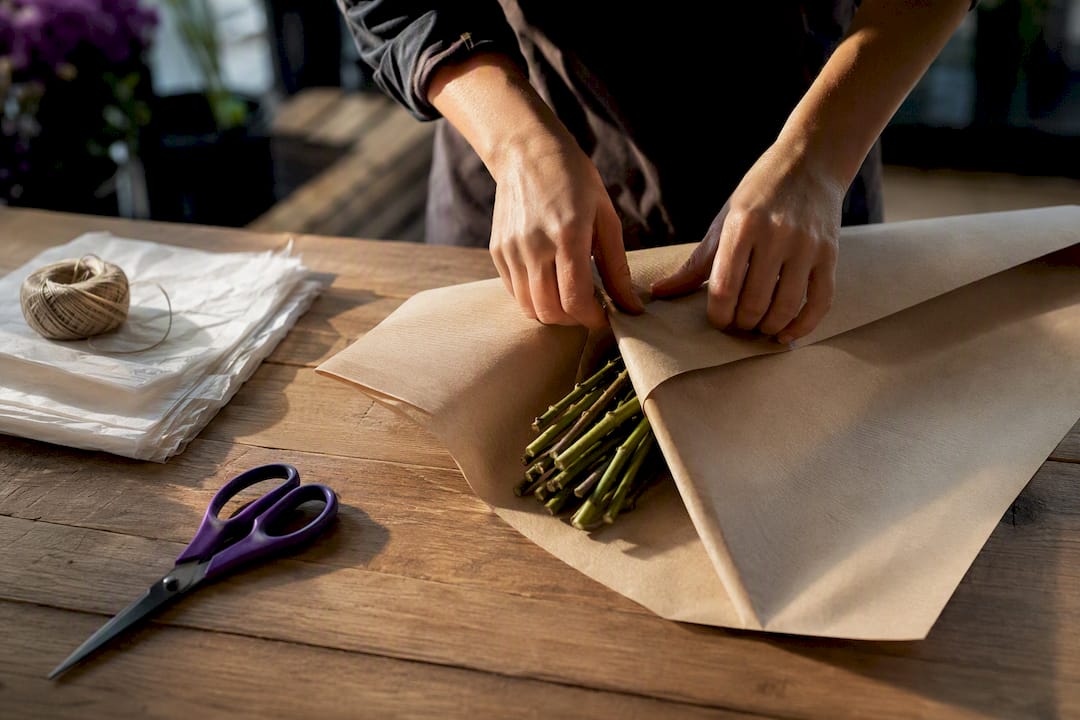
Eco-friendly flower packaging means materials that break down, recycle, or get reused instead of sitting in a landfill for centuries. The practical shortlist: compostable or recycled papers, plant-based hydration wraps for shipping, recycled cardboard boxes, and foam-free mechanics like kenzans or agrawool. Check for FSC certification on paper and BNQ, TUV, or OK compost marks on anything claiming to break down. The details below cover how to pick, use, and sell each option.
TL;DR:
- FSC certification on paper and BNQ or TUV marks on compostable materials ensure environmentally trustworthy packaging options.
- Plant-based hydration wraps provide 2 to 5 days of flower freshness during transit while reducing shipping weight and emissions.
- Foam-free mechanics like kenzans and Agrawool offer reusable, biodegradable alternatives but require proper handling and testing before use.
- Shipping formats should be matched to transit duration, with boxes and hydration wraps for longer shipping, and wraps or sleeves for local delivery.
- Reusable elements and clear disposal instructions enhance sustainability and consumer confidence, supporting waste reduction and brand reputation.
Table of Contents
- What Materials Count as Eco-Friendly Flower Packaging?
- How Do Bio-Based Hydration Wraps Keep Flowers Fresh in Transit?
- What Are the Best Alternatives to Floral Foam?
- Which Packaging Formats Work Best for Retail and Shipping?
- How Do You Choose the Right Eco-Friendly Packaging?
- How Can Sustainable Wraps Still Look Premium?
- What Business Benefits Come From Switching to Eco Packaging?
- What Happens to Eco-Friendly Packaging After Use?
- Does Eco-Friendly Packaging Affect Flower Freshness?
- What’s Next for Sustainable Flower Packaging?
- A Studio-Level View on Making the Switch Work
- Sustainable Options From Malik Flowers
- Sources
- FAQ
What Materials Count as Eco-Friendly Flower Packaging?
Paper is the workhorse of sustainable floral supplies, but not all paper carries equal weight. Kraft paper and recycled tissue handle everyday bouquets fine, and they biodegrade without complications. The credibility question is where the wood pulp came from, which is exactly what FSC certification tracks. Major Canadian retailers already require or prefer FSC-certified packaging in their supply chains, so a florist using FSC paper is matching a standard buyers already trust.
Plant-based films are trickier than they look. PLA and starch-blend wraps can mimic the clarity of plastic cellophane, but “compostable” on the label often means industrial compostable, not something that breaks down in a backyard bin. Read the fine print before promising customers it will vanish in their compost pile.
Recycled cardboard with a high post-consumer-recycled (PCR) content works well for sleeves and shipping boxes, especially with a water-based coating instead of a plastic laminate for moisture resistance. For premium presentation, natural fillers and reusable textiles (cotton twine, upcycled fabric offcuts) add texture without adding waste.
Packaging waste is a real line item in the floriculture supply chain, not a side issue. Research on plastics and packaging waste in floriculture identifies single-use plastic wrap and foam as major contributors to the industry’s footprint, which is why swapping materials at the packaging stage has an outsized effect.
Quick material comparison:
- Kraft/recycled paper: home compostable, low cost, moderate durability.
- FSC-certified printed paper: home or industrial compostable, brand credibility built in.
- PLA/starch films: often industrial compostable only, better clarity than paper.
- PCR cardboard: recyclable, strong for shipping, needs water-based coating for water resistance.
- Cotton twine/upcycled fabric: reusable, adds a premium feel, not disposable by design.
By the numbers: floriculture’s packaging and plastic use is significant enough that industry analysis treats packaging choice as one of the sector’s most actionable levers for cutting waste, alongside transport emissions.
How Do Bio-Based Hydration Wraps Keep Flowers Fresh in Transit?
Shipping fresh flowers without a bucket of water used to mean accepting some wilting risk. Bio-based hydration wraps changed that. The mechanism is simple: a fibrous wrap soaked in a nutrient solution gets sealed against the stem ends inside a compostable bag, then closed with a natural rubber band, creating a small moisture reservoir that feeds the stems in transit.
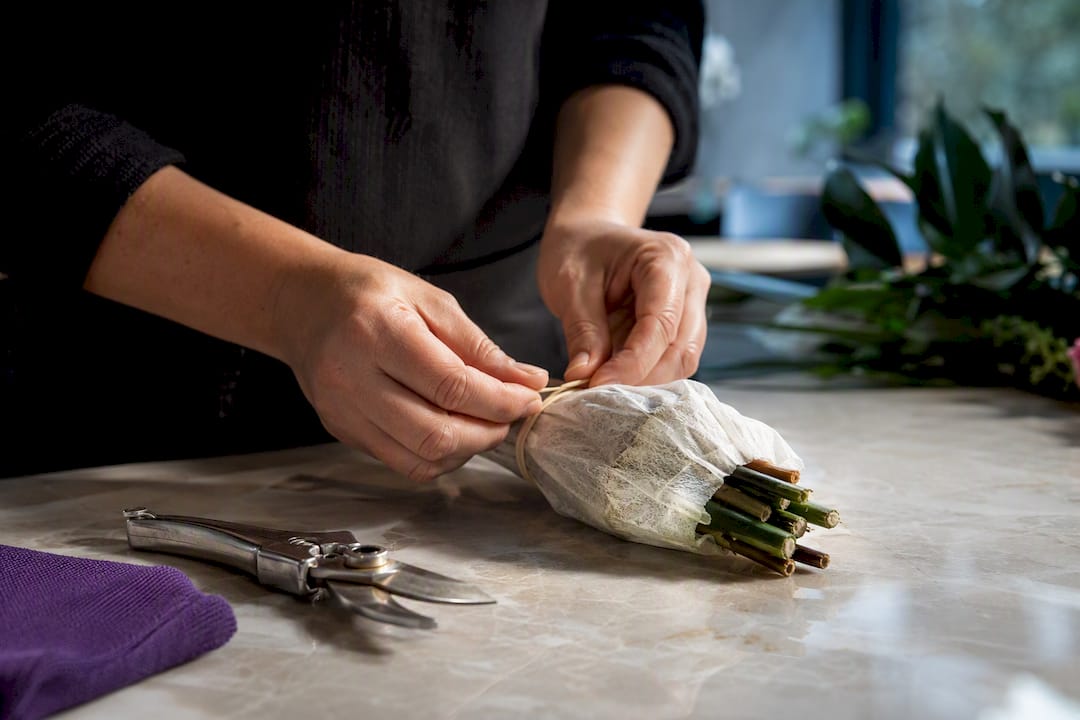
Chrysal’s Arrive Alive Eco is the most documented product in this category. Its product sheet reports hydration lasting 2 to 5 days, and the wrap itself is made mostly of FSC-certified wood fiber bonded with a starch-based binder, so the whole unit composts along with the flowers if it ends up soiled.
Why this matters beyond convenience: horizontal shipping in flat boxes cuts transport weight compared to upright buckets of water, which lowers shipping emissions per stem. The trade-off is one of humidity control versus weight, and the wrap format is built to hold that balance for multi-day transit.
Using a hydration wrap correctly:
- Cut stems fresh and remove any foliage that will sit below the wrap line.
- Soak the fiber wrap fully in flower food solution before applying it to stem ends.
- Seal the compostable bag tightly with the rubber band to prevent the reservoir from drying out.
- Pack flowers horizontally in a flat box, stems supported so the wrap stays in contact.
- On arrival, remove the wrap, re-cut stems, and place directly in a vase.
- Compost the wrap and bag together where industrial composting is available, or bin them per local rules if not.
Pro Tip: Test hydration time against your actual shipping route before committing to it for a wedding order. A wrap rated for 5 days performs differently across a 6-hour local delivery than a 2-day cross-province shipment, so match the product to your real transit window.
What Are the Best Alternatives to Floral Foam?
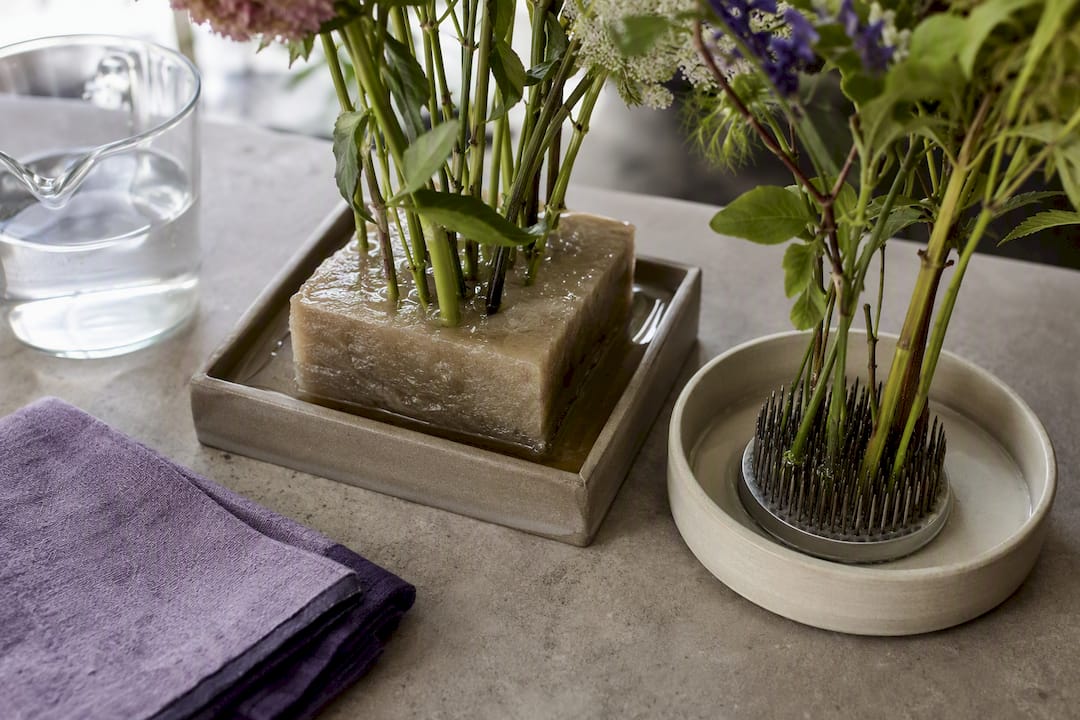
The Sustainable Floristry Network is blunt about this: designing out floral foam entirely, rather than finding a “green” version of it, is the goal. Foam doesn’t biodegrade in any meaningful timeframe, and it sheds microplastics as it crumbles.
The practical substitutes now cover most use cases:
- Kenzans (pin frogs): metal, reusable indefinitely, ideal for low arrangements and ikebana-style work.
- Agrawool: a compostable, foam-like structural material for large installations that still need foam’s holding power.
- OshunPouch and TerraBrick: newer compostable mechanics built specifically as drop-in foam replacements for florists who don’t want to relearn their whole process.
- Chicken wire and hand-tied structures: zero material cost beyond the wire itself, reusable, and often faster once you’ve practiced the technique.
Each option trades something. Kenzans are heavier to ship and store. Agrawool needs more soaking time than foam. Hand-tied work demands more skill and takes longer per arrangement until it becomes muscle memory.
Pro Tip: Run a small batch of any new mechanic on practice stems before a client order. Watch for stem blockage and early wilting, and adjust your cut angle and soak time before it ever touches a paying customer’s bouquet.
Which Packaging Formats Work Best for Retail and Shipping?
Format choice depends entirely on how the flowers travel. A walk-in customer carrying a bouquet three blocks needs different protection than a box going into a courier van for two days.
- Bouquet wraps (paper or plant-based film): best for same-day, walk-in, or local delivery where presentation matters more than structural protection.
- Sleeves: a fast, low-material option for grab-and-go stems at a counter or farmers market stall.
- Boxes with protective inserts: necessary for any parcel shipment, where recycled corrugated pads cushion blooms against movement.
- Water-based coated cardboard: holds up against humidity better than uncoated stock without resorting to plastic lamination.
Suppliers like Koen Pack now offer florist-specific sleeves, sheets, and boxes built around recyclability, with production reach into Canada, which matters if lead time is a concern.
Branding doesn’t have to compromise the material. Soy-based inks print cleanly on kraft stock, and a single stamped logo reads as more intentional than a full-color wraparound design anyway.
Parcel shipment checklist:
- Box sized to the arrangement, not oversized (extra void space means extra padding material).
- Hydration wrap or reservoir secured at stem base.
- Recycled corrugated insert cushioning the bloom heads.
- Minimal printed branding, one ink color where possible.
- Clear disposal instructions printed on the box itself.
How Do You Choose the Right Eco-Friendly Packaging?
Start with what the packaging needs to survive, not what looks best on a shelf. A bouquet leaving the shop in someone’s hands for ten minutes has completely different requirements than one riding in a delivery van for two days.
- Match durability to transit time. Local walk-outs can use lightweight paper wraps; shipped orders need boxes and hydration reservoirs.
- Check the compostability standard, not just the word “compostable.” BNQ’s certification programs test against ISO 17088:2021 and ISO 18606:2013, and issue a Canada-recognized conformity mark. TUV and OK compost marks work the same way for European-sourced products.
- Confirm FSC status on any printed paper or cardboard, since retailers and increasingly consumers recognize the FSC label as a baseline, not a bonus.
- Ask suppliers about lead time and minimum order quantities, because sustainable stock often ships from fewer regional distributors than conventional plastic film.
- Weigh cost per unit against waste-handling savings. Compostable materials sometimes cost more upfront but can cut disposal fees where commercial composting is billed by weight.
By the numbers: BNQ’s lab testing covers disintegration, biodegradation, and contamination limits before a compostable product earns its mark, which is a higher bar than a supplier simply printing “eco-friendly” on the label.
Timeline matters too. If you’re relying on a hydration wrap rated for 2 to 5 days, build in a buffer for customs delays or courier rerouting rather than shipping right at the wrap’s limit.
How Can Sustainable Wraps Still Look Premium?
Kraft paper reads as intentional when it’s styled with confidence, not apologized for. Layered tissue in complementary tones, a visible certification stamp, and natural jute or cotton twine instead of ribbon all signal a deliberate choice rather than a cost-cutting one.
- Use one dominant kraft or recycled tone with a single accent color in the tissue layer.
- Tie with cotton twine or raffia, never plastic ribbon curls.
- Print or stamp the FSC or compost certification mark somewhere visible; customers notice it.
- Offer a reusable fabric wrap, like a pastel pouch, as an upgrade option for repeat customers who want something to keep.
Explain the choice out loud at checkout instead of leaving it unspoken. A short line like “this wrap composts at home in a few weeks” reframes plain paper as a feature, not a limitation.
What Business Benefits Come From Switching to Eco Packaging?
Waste reduction is the most direct benefit, and it compounds. A shop that swaps foam for agrawool and kenzans isn’t just avoiding foam dust in the trash bin; it’s cutting the volume of non-recyclable material going out the door with every single order, week after week.
Brand value follows close behind. Customers who care enough to search for sustainable options tend to talk about the shops that deliver them, whether that’s a mention in a review or a photo shared because the packaging itself looked good enough to keep. That kind of unpaid visibility is hard to buy through advertising.
Consumer demand for this is not a niche preference anymore. Buyers increasingly expect some acknowledgment of packaging impact, especially for gifting occasions like anniversaries or new-baby deliveries where the presentation is part of the gift itself. A florist who can answer “is this recyclable?” confidently, on the spot, closes that hesitation before it becomes a lost sale.
There’s also a quieter operational upside: many compostable and recycled materials cost less to dispose of where composting programs bill differently than landfill waste, and vendors offering FSC or BNQ-certified stock are increasingly competitive on price as demand scales up.
What Happens to Eco-Friendly Packaging After Use?
End-of-life handling determines whether “eco-friendly” claims hold up in practice. Paper wraps and FSC-certified boxes go into standard paper recycling streams without issue. Compostable films and hydration wraps are a different story, and this is where most confusion happens.
Materials certified to BNQ, TUV, or OK compost industrial standards typically need a commercial composting facility that hits specific temperature and moisture conditions. They will not break down properly, or at all, in a home backyard bin. Anything explicitly labeled home compostable is the exception, and it’s worth confirming that distinction before telling a customer to just toss it in their garden.
Best practice for florists: print disposal instructions directly on the packaging rather than assuming customers will look it up. A one-line note, “compostable at commercial facilities, check local programs,” prevents a compostable wrap from ending up in a landfill where it behaves no differently than plastic. For shops without access to industrial composting themselves, partnering with a local composting service for studio waste closes that loop entirely.
Reusable elements like kenzans, fabric wraps, and cotton twine skip the disposal question altogether, which is part of why they’re worth building into a standard workflow rather than treating them as occasional upgrades.
Does Eco-Friendly Packaging Affect Flower Freshness?
The honest answer is that it depends on the format, not the “eco” label itself. Some sustainable options match or beat conventional materials on freshness; others require a slight adjustment in handling.
Bio-based hydration wraps like Arrive Alive Eco are built specifically to maintain freshness during transit, with product sheets reporting hydration performance of 2 to 5 days under standard conditions. That’s comparable to bucket transport for most stems, with the added benefit of lighter shipping weight.
Foam-free mechanics can shift shelf life slightly depending on the material. Agrawool holds water well once fully soaked, but it takes longer to saturate than foam, so a rushed setup can leave stems under-hydrated at the base. Kenzans and hand-tied structures place stems directly in open water, which several florists report actually extends freshness compared to foam, since there’s no foam blockage restricting water uptake at the cut.
Paper and cardboard packaging has a neutral effect on freshness; its job is protection and presentation, not hydration, so the real freshness variable is whatever hydration method sits underneath it.
What’s Next for Sustainable Flower Packaging?
The most active area right now is compostable mechanics built as direct foam replacements. Products like OshunPouch and TerraBrick exist because florists wanted something that handles like foam but disappears like paper, and that category is still expanding as more manufacturers enter it.
On the transport side, bio-based hydration reservoirs are getting refined for longer hold times and lighter builds, driven by the same logic behind Arrive Alive Eco: less shipping weight without sacrificing bud humidity over multi-day transit.
Certification is catching up too. BNQ’s ISO-based compostable programs are relatively new, and as more Canadian suppliers seek that mark, florists will have an easier time verifying compostability claims instead of taking a label at its word.
Combining sustainable sourcing with sustainable packaging is also gaining traction as a full-loop approach rather than a packaging-only fix. Pairing local, seasonal blooms with low-waste studio practices addresses both ends of the supply chain instead of just the wrapping stage.
A Studio-Level View on Making the Switch Work
Switching materials only works when staff actually understand why they’re doing it, not just told to do it. Testing new wraps and foam alternatives on slow days, before they touch a client order, catches problems early. Some florists build seasonal blooms and a satisfaction guarantee into every arrangement, and applying that same quality-control instinct directly to packaging ensures that if a new material doesn’t hold up, it doesn’t go out the door.
— Reza
Sustainable Options From Malik Flowers
Some flower shops build every arrangement by hand, including the packaging choices around it. Handcrafted bouquets for birthdays, sympathy, anniversaries, new babies, and weddings are shipped with attention to detail, and sustainable wrapping options may be part of that offering rather than a separate upsell. Satisfaction guarantees can provide refunds if a design doesn’t meet expectations.
That guarantee extends to the recurring flower subscription as well, so regular deliveries get the same care and the same packaging standards every time, not just on the first order. Browse the full product catalog to see current seasonal arrangements and pick a bouquet that fits the occasion, or check the spring collection if you’re shopping for something timed to the season. Placing an order takes a few minutes, and same-day delivery is available for anyone in Metro Vancouver who needs flowers on the ground today.
Sources
- Product sheet – Chrysal Arrive Alive
- Floral foam alternatives - Sustainable Floristry Network
- The BNQ announces the implementation of two new certification programs for compostable products
- Plastics and packaging waste in floriculture (University of Surrey report)
FAQ
What Is the Most Eco-Friendly Flower Packaging?
FSC-certified paper combined with a bio-based hydration wrap is currently the strongest combination, since it pairs certified, traceable fiber with compostable transport hydration instead of plastic sleeves or floral foam.
What Is the 3:5:8 Rule for Flowers?
The 3:5 rule is a floral design guideline for arrangement proportion, using odd-numbered groupings to build visual balance; it relates to design technique rather than packaging or sustainability.
What Do Florists Use to Wrap Flowers?
Florists commonly use kraft paper, recycled or FSC-certified tissue, cellophane or plant-based films, and cotton twine, choosing the material based on whether the bouquet is walking out the door or shipping in a box.
What Are Some Ideas for Eco-Friendly Packaging?
Practical options include recycled kraft paper with cotton twine, FSC-certified printed boxes, bio-based hydration wraps like Arrive Alive Eco for shipping, and reusable fabric pouches for in-store customers who want a keepsake wrap instead of disposable paper.