
Best Engagement Flower Ideas for Proposals and Parties
Best Engagement Flower Ideas for Proposals and Parties
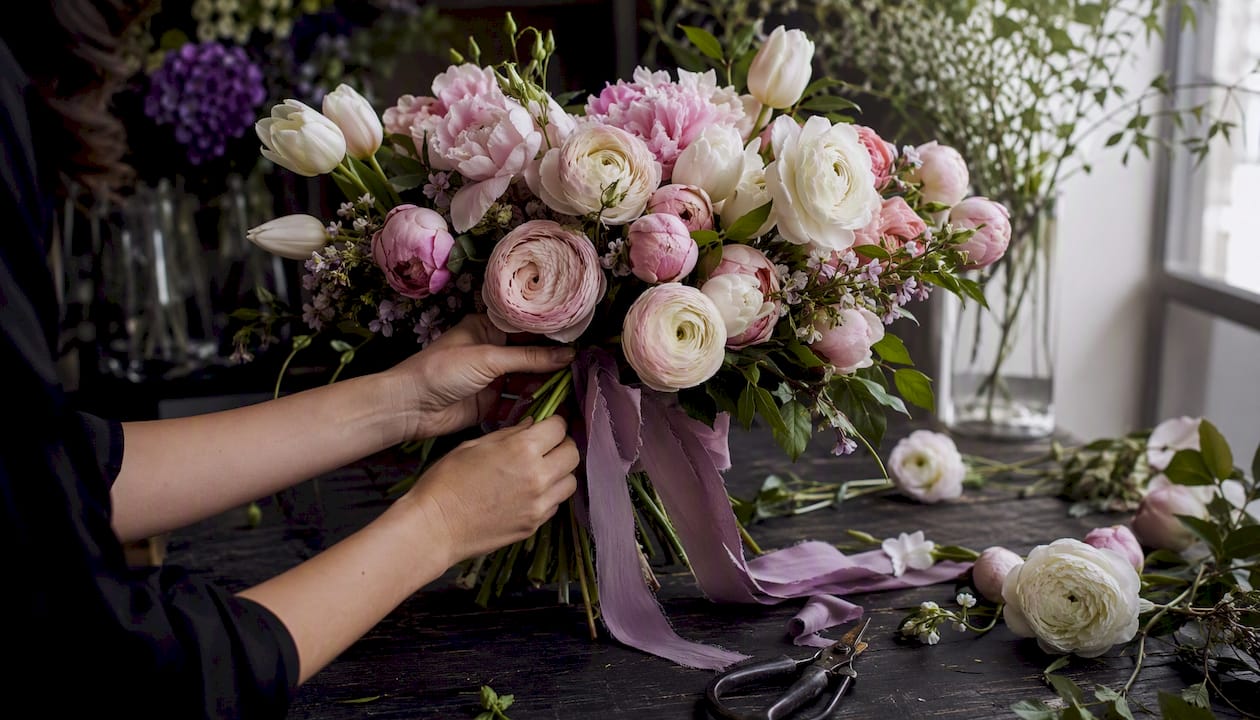
For proposals and engagement parties, the most reliable choices are roses, peonies, tulips, hydrangeas, orchids, ranunculus, calla lilies, and mixed seasonal bouquets. Each brings something distinct: roses for romance, peonies for lush texture, orchids for sculptural drama, calla lilies for clean modern lines.
Here’s a quick shortlist to match your moment:
- Romantic proposal (single stem or petite bouquet): Red or blush roses, a single calla lily, or a small ranunculus cluster
- Joyful engagement party centerpieces: Hydrangeas, garden roses, and seasonal greenery in low runners
- Modern sculptural look: White orchids, calla lilies, or asymmetrical mixed stems with exposed foliage
- Budget-friendly seasonal pick: Tulips in spring, dahlias in summer, chrysanthemums in fall, amaryllis in winter
- Personalized mixed arrangement: Ask your florist to combine your partner’s favorite bloom with a seasonal filler
- Wearable or boutonnière accent: A single ranunculus or small rose bud with eucalyptus
For a single intimate proposal, one well-chosen stem often lands harder than a full bouquet. For a party, you want volume, texture, and something that photographs well across a table. If you’re in Metro Vancouver, Malikflowers offers custom engagement designs with same-day delivery.
Key Takeaways
The most effective engagement flower choices combine the right bloom for the moment (proposal vs party), a palette that photographs well, and a brief that gives your florist a real story to work from.
| Point | Details |
|---|---|
| Top bloom choices | Roses, peonies, calla lilies, orchids, ranunculus, and tulips cover proposals and parties reliably. |
| Order timing | Same-day works for simple stems; custom party designs need 2–4 weeks minimum. |
| Palette matters | Cloud Dancer whites, Butter Yellow, and moody burgundy-green are the leading 2026 palettes. |
| Personalize with a story | Share a short personal anecdote with your florist — it produces better results than a color swatch alone. |
| Malikflowers for Metro Vancouver | Custom engagement designs, same-day delivery, and a satisfaction guarantee for local orders. |
Table of Contents
- What are the best flowers for an engagement, and why?
- Which color palette sets the right mood for your engagement?
- How do proposal flowers differ from engagement party florals?
- DIY engagement flower ideas you can actually pull off
- When should you order, and what will it cost in Canada?
- How to personalize your flowers and what to tell your florist
- Canadian florist tips and 2026 trends worth knowing
- Common mistakes to avoid with engagement flowers
- How to keep your engagement flowers looking their best
- Proposal in-person vs engagement party: what changes about delivery and display
- Where to source engagement flowers in Canada
- Custom engagement flowers, delivered across Metro Vancouver
- Sources
- FAQ
What are the best flowers for an engagement, and why?
Proposal flower roundups consistently name roses, peonies, tulips, orchids, and lilies as the most reliable choices, and for good reason: they’re photogenic, widely available, and carry clear emotional weight.
Roses are the default for a reason. Red signals romantic love; blush and white read as tender and timeless. They hold well out of water for 30–45 minutes, which matters if you’re hiding them before a proposal.
Peonies bring lush, layered texture that photographs beautifully. They’re a spring bloom (April through June in Canada), so expect premium pricing outside that window.
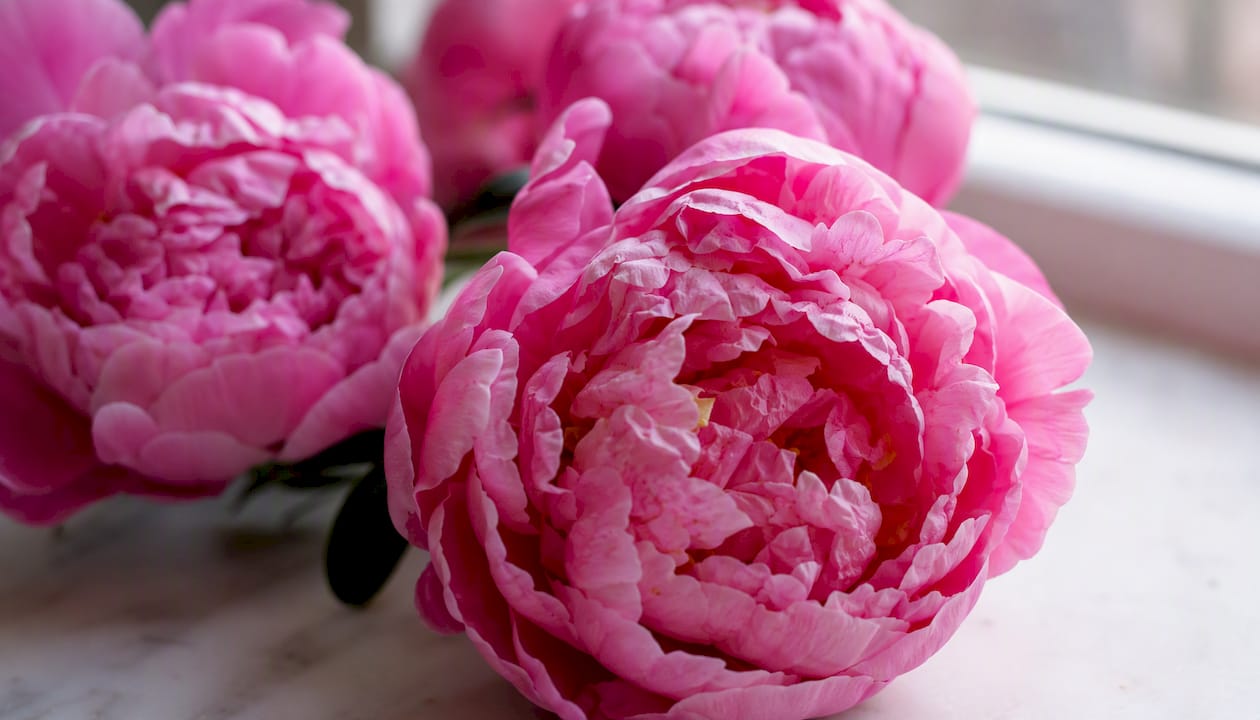
Tulips are underrated for proposals. A tight cluster of cream or coral tulips in a simple wrap looks intentional and modern, not generic. Peak season: March through May.
Hydrangeas work best for party arrangements rather than proposals. One stem fills a vase. Use them as the volume base in centerpieces and layer in accent blooms on top.
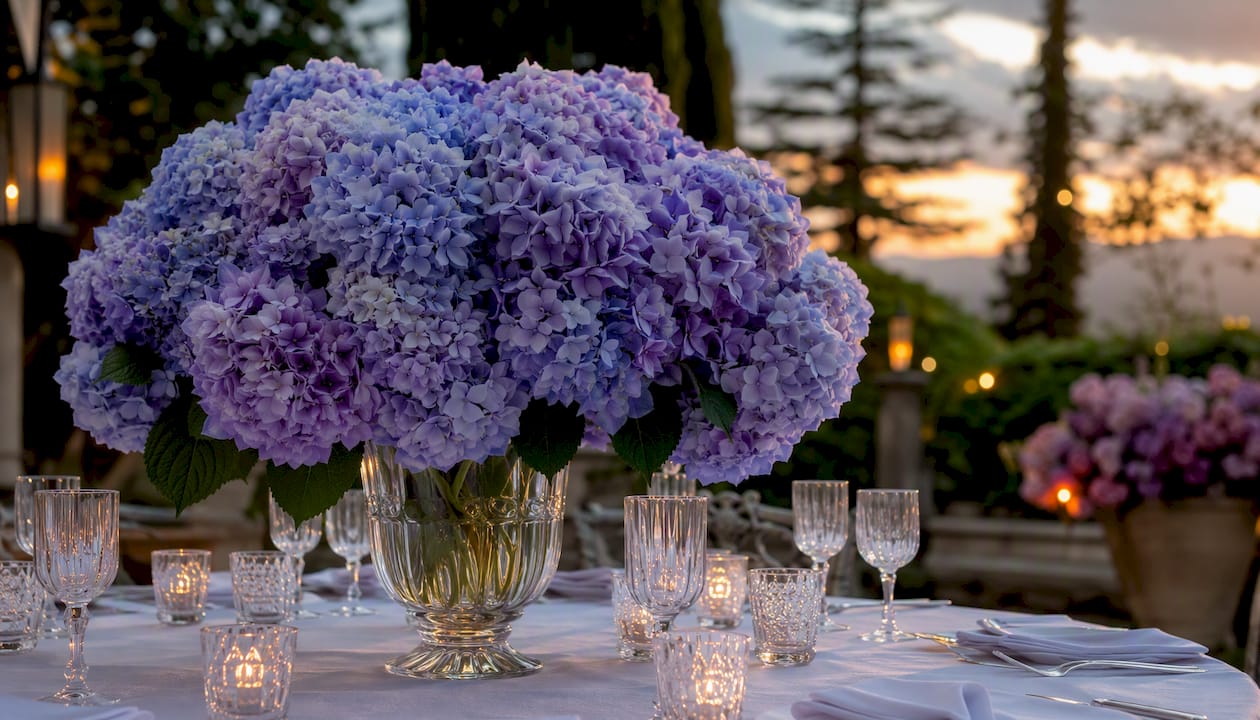
Orchids (especially Phalaenopsis or cymbidium) read as sophisticated and long-lasting. A single white orchid stem in a bud vase is a strong minimalist proposal choice.
Ranunculus is the florist’s secret weapon: layered petals that look like a rose and a peony had a baby. Available spring through early summer; worth requesting by name.
Calla lilies offer clean, sculptural lines. One or three stems, no filler, wrapped in a ribbon. That’s a complete proposal bouquet.
Mixed seasonal bouquets let your florist work with what’s freshest and most affordable. Choosing in-season blooms generally lowers cost and improves freshness, so ask your florist what’s peaking when you order.
Which color palette sets the right mood for your engagement?
Palette is where most people underestimate the difference between a good arrangement and a great one. The flowers matter, but the tones you choose determine how the moment feels and how it photographs.
For proposals, lean toward:
- All-white or cream (Cloud Dancer palette): Ivory garden roses, white ranunculus, and silver-green eucalyptus. Intimate, timeless, and photographs cleanly against almost any background.
- Soft blush and champagne: Blush peonies, pale peach roses, and dusty miller. Warm and romantic without being loud.
- Deep moody tones: Burgundy roses, plum dahlias, and lush dark greens. Striking for evening proposals, especially indoors.
For engagement parties, you have more room to play:
- Butter Yellow and warm neutrals: Cheerful, current for 2026, and flattering under warm event lighting.
- Bright coral or tangerine: High-energy and joyful for outdoor summer parties.
- Monochrome white with varied textures: White hydrangeas, white lisianthus, white sweet peas. The texture carries the visual interest.
2026 wedding-floral reporting highlights a shift toward neutral pastels and monochrome sculptural minimalism, alongside moody textured palettes combining deep burgundy, blush, and lush greens.
Pro Tip: Ask your florist to vary petal size and leaf shape within a single palette. A monochrome arrangement with five different textures reads far richer in photos than one with five different colors.
When briefing your florist on photography, request contrast between the arrangement and the background, at least one open bloom for focal depth, and negative space so the composition doesn’t read as a wall of color.
How do proposal flowers differ from engagement party florals?
The core difference is simple: a proposal arrangement is for one person in one private moment; party florals are for a room full of people over several hours.
Proposal presentation options:
- Single stem with a ribbon wrap (calla lily, long-stem rose, or orchid)
- Petite hand-tied bouquet, 5–9 stems, no more than 30cm across
- Wearable blooms: a small wrist corsage or pinned boutonnière if the proposal involves a shared activity
Engagement party florals:
- Low table runners (the Sunken Meadow style places blooms at or just above table level, encouraging conversation and a sensory, immersive feel)
- Cluster bud-vase groupings: 3–5 small vases at varied heights, mixed blooms
- Statement installations: arches, hanging arrangements, or a floral bar where guests build their own stems
For same-day delivery, single stems and small bouquets are the most practical. Large installations need at least 1–2 weeks of lead time and often require on-site setup. If you’re transporting a proposal bouquet yourself, choose sturdy stems (roses, calla lilies) over fragile open blooms like peonies or ranunculus, which bruise easily.
Pro Tip: A boutonnière for the proposer, using one bloom from the proposal bouquet, ties the moment together visually and makes for a better photo.
DIY engagement flower ideas you can actually pull off
Three builds that work without professional training:
1. Proposal single-stem wrap
- Choose one long-stem rose, calla lily, or orchid.
- Strip lower leaves, leaving the top third intact.
- Wrap the stem in floral tape from just below the bloom down.
- Add a 60cm ribbon in satin or velvet; tie a loose knot at mid-stem.
- Keep in water until 30 minutes before the proposal.
2. Cluster bud-vase runner (party centerpiece)
- Gather 5–7 small glass vases or bottles of varied heights.
- Fill each with 5–8cm of water and a drop of bleach to slow bacteria.
- Cut stems at a 45-degree angle; vary heights so blooms sit at different levels.
- Use one hero bloom per vase (rose, ranunculus, tulip) and fill gaps with eucalyptus or fern.
- Space vases 15–20cm apart down the table center.
3. Simple boutonnière
- Choose one small bloom (ranunculus bud, rose, or spray carnation) plus two small foliage sprigs.
- Hold the bloom between thumb and forefinger; layer foliage behind it.
- Wrap the stems tightly with floral tape, starting just below the bloom.
- Trim stems to 5cm; pin with a boutonnière pin through the lapel from behind.
For materials, you’ll need floral tape, a sharp knife or floral scissors, pin frogs or chicken wire for vase mechanics (the industry has largely moved away from floral foam for environmental reasons), and a spray bottle to mist arrangements before display. Budget-friendly substitutions: use seasonal filler flowers like waxflower, baby’s breath, or lisianthus instead of premium blooms; add dried pampas grass or small fruit accents for texture without cost.
When should you order, and what will it cost in Canada?
Order as early as you can. Custom designs need time; same-day orders limit your options.
Before you call your florist, have these ready:
- Date, time, and delivery address
- Delivery window (morning, afternoon, or specific hour)
- Budget ceiling (not a range — a ceiling)
- Photo references (Pinterest board, screenshot, magazine tear)
- Any allergies or flowers to avoid
- Transport note: will you carry it, or does it need delivery packaging?
How to personalize your flowers and what to tell your florist
The single most effective move: share a short story. Not “I want something romantic” but “she grew up with a garden full of sweet peas and her grandmother always kept white roses in the kitchen.” That one sentence gives a florist more to work with than a mood board alone.
Canadian florists in 2026 recommend designs that feel “carried with intention” — bespoke arrangements that reflect the couple’s personality rather than catalog defaults.
Tell your florist:
- Your partner’s favorite flower (or their least favorite — equally useful)
- Color swatches or a photo of the outfit/venue
- The symbolic meaning you want to convey: red roses signal romantic love, white lilies suggest purity, sunflowers carry happiness
- Whether the arrangement needs to travel (car, pocket, bag)
- Your budget ceiling and whether you’re flexible on bloom substitutions
Personalization ideas that go beyond color: tuck in a single bloom from your first-date bouquet if you still have dried stems; request a flower native to your partner’s hometown; add a small ribbon in a meaningful color; include a handwritten card tucked into the wrap.
One thing to avoid: centerpieces taller than 40cm at a seated dinner table. Guests talk around them, not through them, and sightlines matter more than height.
Canadian florist tips and 2026 trends worth knowing
The clearest shift in 2026 engagement florals is away from volume-for-volume’s-sake and toward intentional, sculptural arrangements where every stem earns its place. Ottawa Wedding Magazine’s 2026 floral trend coverage calls out Cloud Dancer whites, Butter Yellow, and Sunken Meadow low installations as the defining looks, alongside still-life accents using fruit, vegetables, and non-floral botanicals for texture and seasonal authenticity.
Practically, this means:
- Foam-free mechanics are now standard among Canadian florists. Pin frogs, chicken wire, and moss replace floral foam, which is better for the environment and often produces cleaner, more natural-looking arrangements.
- Asymmetrical, looser shapes are replacing tight round bouquets. Today’s Bride’s 2026 bouquet trend coverage highlights exposed stems, crescent shapes, and petite sculptural looks as the dominant direction.
- Still-life accents (small citrus, berries, artichokes) add texture and a seasonal, editorial feel to party tables. These materials need extra mechanical support and sometimes refrigeration, so flag this with your florist early.
Pro Tip: In Canada, winter engagements are actually a strong time to order. Amaryllis, evergreen branches, and imported orchids are plentiful and often less expensive than peak-season peonies or tulips. Ask your florist about the spring collection or current seasonal availability before locking in a bloom list.
Common mistakes to avoid with engagement flowers
Ordering too late. Same-day works for simple arrangements; anything custom needs at least a week. For a party with 10+ tables, book 3–4 weeks out.
Choosing fragile blooms for a proposal you’re carrying all day. Gardenias bruise from touch. Peonies wilt fast without water. If you’re proposing at sunset after a full day out, choose roses or calla lilies.
Ignoring scent. Lilies and gardenias are beautiful but intensely fragrant. In a small indoor space, that can overwhelm. Ask your florist about scent level when ordering for a party.
Matching flowers too literally to a color scheme. A monochrome arrangement with varied textures reads better than one where every element is the exact same shade. Contrast within a palette is what makes arrangements look designed rather than assembled.
Skipping a test run for wearable or nonstandard arrangements. If you’re ordering a wrist corsage, purse bouquet, or any wearable design, florists recommend a test run to confirm the mechanics hold. Wiring is generally more secure than glue for these applications.
How to keep your engagement flowers looking their best
Cut stems at a 45-degree angle and place them in clean, cool water immediately after delivery. Change the water every 24 hours and re-cut stems every two days. Keep arrangements away from direct sunlight, heating vents, and fruit bowls (ripening fruit releases ethylene gas, which accelerates petal drop).
For drying and preserving: hang stems upside down in a dry, dark room for 2–3 weeks. Roses, lavender, and statice dry well this way. Peonies and hydrangeas can also air-dry but need low humidity. Silica gel drying (burying blooms in silica crystals in a sealed container for 5–7 days) preserves color better than air-drying and works well for single roses or ranunculus.
Pressing is the simplest long-term option: place blooms between two sheets of parchment inside a heavy book, add weight on top, and leave for 3–4 weeks. Pressed flowers can be framed, used in resin keepsakes, or incorporated into a wedding invitation design.
If you want a professional preservation, resin casting studios can encapsulate individual blooms or a full bouquet in clear resin blocks or spheres. This is a growing option in Canada for engagement and wedding flowers.
Proposal in-person vs engagement party: what changes about delivery and display
A proposal arrangement is a private object. It needs to arrive or be carried without being seen, hold up for hours without water, and look perfect the moment it’s revealed. That means compact, sturdy, and wrapped.
An engagement party arrangement is a public display. It needs to fill a space, photograph well from multiple angles, and last 4–6 hours on a table. That means volume, stability, and a mechanics setup (vases, pin frogs, or floral foam alternatives) that keeps stems hydrated throughout the event.
For proposals: Request delivery in an opaque box or bag if your partner might see it arrive. Ask for a water tube on the stem ends if the arrangement needs to sit for more than two hours before the moment.
For parties: Confirm whether your florist provides setup or delivers in transport containers you arrange yourself. Large centerpieces and installations almost always require on-site setup time, which affects your event timeline.
Where to source engagement flowers in Canada
Local florists give you the most control: you can brief them in person, see samples, and adjust designs before the order is finalized. For custom engagement work, a local florist is almost always the better choice over a generic online order.
Online delivery services offer convenience and speed for simpler arrangements. Same-day delivery is available through several platforms in major Canadian cities, but customization is limited to what’s pre-built in their catalog.
The tradeoff is straightforward: local florists cost more and require more lead time, but the result is a design made for your specific moment. Online services are faster and cheaper for standard bouquets, but you’re choosing from a fixed menu.
For Metro Vancouver, Malikflowers offers custom engagement and wedding arrangements with same-day delivery across the metro area, a satisfaction guarantee, and the ability to brief a designer on your specific vision rather than selecting from a preset catalog.
What I’ve learned from making engagement arrangements
The most common request I get is “something romantic but not cliché.” That’s actually a useful brief, because it tells me the client wants feeling over formula. What it usually means in practice: a single unexpected bloom (a garden rose variety they’ve never seen, or a ranunculus in a color they didn’t know existed) paired with something familiar. The surprise is what makes it memorable.
At Malikflowers, every engagement order starts with a conversation about the couple, not the flowers. The flowers come second. If you’re not sure where to start, reach out and we’ll help you figure out what fits your moment.
Custom engagement flowers, delivered across Metro Vancouver
Malikflowers designs handcrafted engagement arrangements built around your specific moment, not a catalog template. Whether you need a single sculptural stem for a proposal tonight or a full party setup with custom centerpieces, every order is made fresh and delivered across Metro Vancouver.
What Malikflowers offers for engagements:
- Custom proposal bouquets and single-stem presentations, same-day available
- Engagement party centerpieces and table arrangements
- Congratulations and celebratory bouquets for the announcement moment
- Love and romance arrangements tailored to your palette and story
- Satisfaction guarantee: if the design isn’t right, Malikflowers makes it right
Browse the full arrangement catalog or go straight to the wedding and event page to start a custom consultation for your engagement.
Sources
Check seasonality with your florist before finalizing any bloom list — availability shifts by region and year.
- Petals & Palettes: The 5 Floral Trends Defining 2026 Weddings - Ottawa Wedding Magazine
- Carried with Intention: 2026 Bouquet Trends - Canadian Florist
- Bridal bouquet trends that are taking over 2026 weddings - Today’s Bride
- Here are the 8 Best Flowers for Proposing Marriage - The Knot
- Engagement Flowers: The 2026 Ultimate Guide - Simply Elegant Corp
- Flower Meanings Guide: What Every Bouquet Says | Laris Florist
FAQ
What flower symbolizes engagement?
Roses are the most recognized symbol of romantic commitment, with red roses specifically associated with love. Diamonds and rings aside, a single red or blush rose remains the most universally understood engagement flower.
What kind of flowers do you give for an engagement?
Roses, peonies, orchids, tulips, and calla lilies are the most common choices for proposals and engagement celebrations. The right pick depends on the setting: single stems for intimate proposals, fuller mixed bouquets for parties.
Which flowers work best for an engagement party?
Hydrangeas, garden roses, ranunculus, and seasonal greenery work well for party arrangements because they provide volume, hold up for several hours, and photograph cleanly. Low Sunken Meadow-style runners with mixed textures are a strong 2026 choice.
What is the 3-5-8 rule for flowers?
The 3-5-8 rule is a design guideline suggesting you use blooms in odd-numbered groupings (3, 5, or 8 stems) to create visual balance. Odd numbers tend to look more natural and less symmetrical than even groupings, which reads as more organic in arrangements.