
Event Floral Basics in 8 Steps, Workshop Method for New Florists
Event Floral Basics in 8 Steps, Workshop Method for New Florists
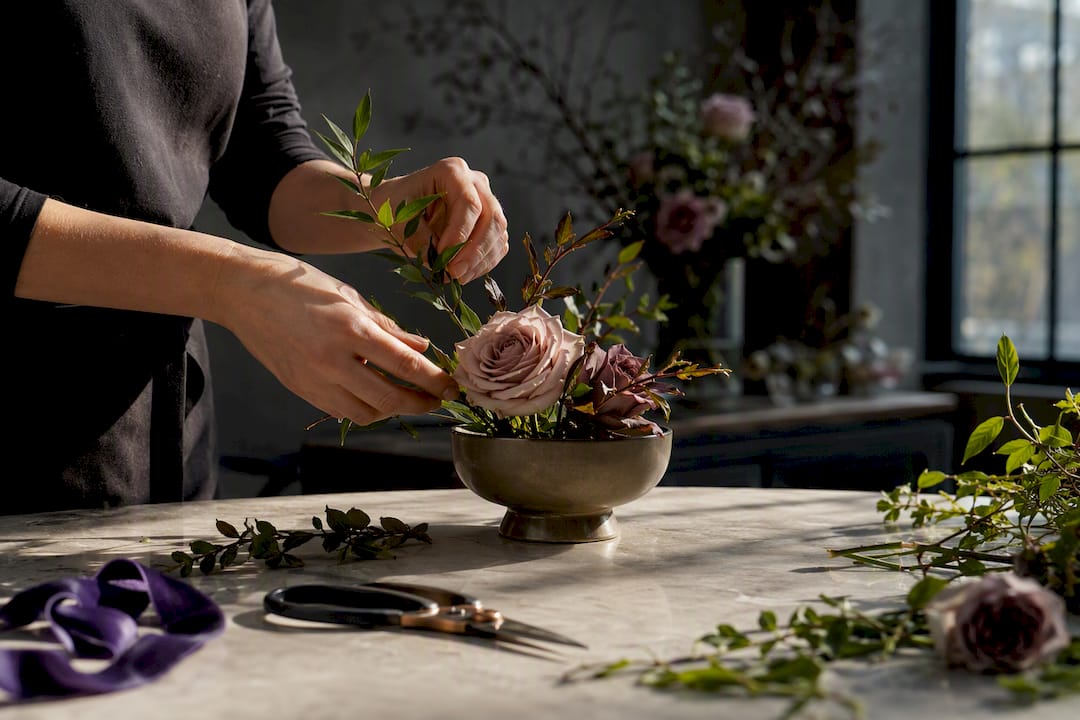
For event florals, build a strong greenery base first, then set line and focal flowers, layer in secondary blooms and filler, and finish with delicate detail stems. That sequence gives you a stable, photogenic centerpiece that survives a car ride and a room full of moving elbows. The one rule that trips up beginners more than any other: leave sightlines open on dining tables so guests can actually see each other across the flowers.
TL;DR:
- Using greenery as a stable base before adding flowers ensures a durable, visually balanced centerpiece suitable for transport and handling.
- Applying the rule of three, flowers should be grouped in odd numbers, and arrangement height should be about one and a half times the container for proper proportions.
- Selecting durable flowers like garden roses and chrysanthemums, and avoiding heavily fragrant varieties, prevents wilting and scent clashes during events.
- Proper conditioning, smart packing, and pre-arrival on-site adjustments are essential to prevent wilted or unstable arrangements upon delivery.
- Outsourcing floral design to professional services like Malikflowers provides guaranteed quality, speed, and adherence to style guidelines for large or complex events.
Table of Contents
- Event Floral Design Basics: The Principles That Keep Arrangements From Looking Random
- Materials and Mechanics: What to Buy Before You Touch a Stem
- How to Build an Event Centerpiece Step by Step
- Sizing and Sightlines: Rules That Change by Table Type
- Picking Flowers That Actually Survive an Event
- Care, Staging, and Transport: The Checklist That Prevents Disasters
- A Florist’s Workflow: Briefing, Building, and Delivering for an Event
- What I’d Tell Every Beginner Before Their First Event Order
- Let Malikflowers Handle the Flowers While You Handle Everything Else
- Sources
- FAQ
Event Floral Design Basics: The Principles That Keep Arrangements From Looking Random
Every arrangement, no matter how loose or wild it looks, rests on a handful of building blocks. Learn these once and you can judge any bouquet on sight, including your own.
The elements are the raw materials: line (the stems that create shape and movement), form (the overall silhouette), color, texture, space (the gaps that let a piece breathe), and size (scale relative to the container and table). The principles are how you organize those elements. Proportion keeps the flowers in scale with the vase. Balance distributes visual weight evenly, even in an asymmetrical design. Dominance gives one flower or color the lead role instead of letting everything compete. Rhythm moves the eye through repeated color or shape. Unity ties the piece together, and contrast keeps it from going flat.
A few field-tested shortcuts do most of the heavy lifting for beginners:
- The rule of three: group flowers in odd numbers (three, five, seven) because odd groupings read as more natural than even ones.
- The 1.5× rule: flowers should stand roughly one and a half times the height of the container for a classic proportion.
- The 1/3 vase rule: the container itself should make up about a third of the arrangement’s total visual height.
These aren’t arbitrary. Extension programs and floral trade groups have taught them for decades because they work, and they’re formalized in resources like the NGC Handbook for Flower Shows, which codifies proportion and balance as judging criteria.
Materials and Mechanics: What to Buy Before You Touch a Stem
Mechanics are the hidden scaffolding that holds your design in place, and picking the wrong one for the job is the fastest way to watch a centerpiece collapse mid event.
- Tape grid: floral tape crossed over a vase opening in a grid pattern. Cheap, invisible once flowers go in, best for wide-mouthed vases.
- Chicken wire: crumpled and stuffed into a container for structure. Reusable, holds heavier stems, ideal for large urns and pedestal arrangements.
- Flower frogs: metal or glass pin holders for low, shallow bowls. Great for compote-style centerpieces with visible water.
- Floral foam: holds the most water and the widest stem angles, but it’s single-use and not biodegradable, so many event florists now reserve it for installations where mechanics alone won’t hold the shape.
Round out your kit with sharp snips, floral tape and wire, hydration tubes for delicate stems, a cooler for holding flowers before setup, and sturdy transport boxes that keep vases from tipping in the van.
Pro Tip: Match the container to the mechanic before you buy flowers. A narrow bud vase needs no mechanics at all, while a low, wide compote almost always needs a frog or a tight tape grid to keep stems from sliding.
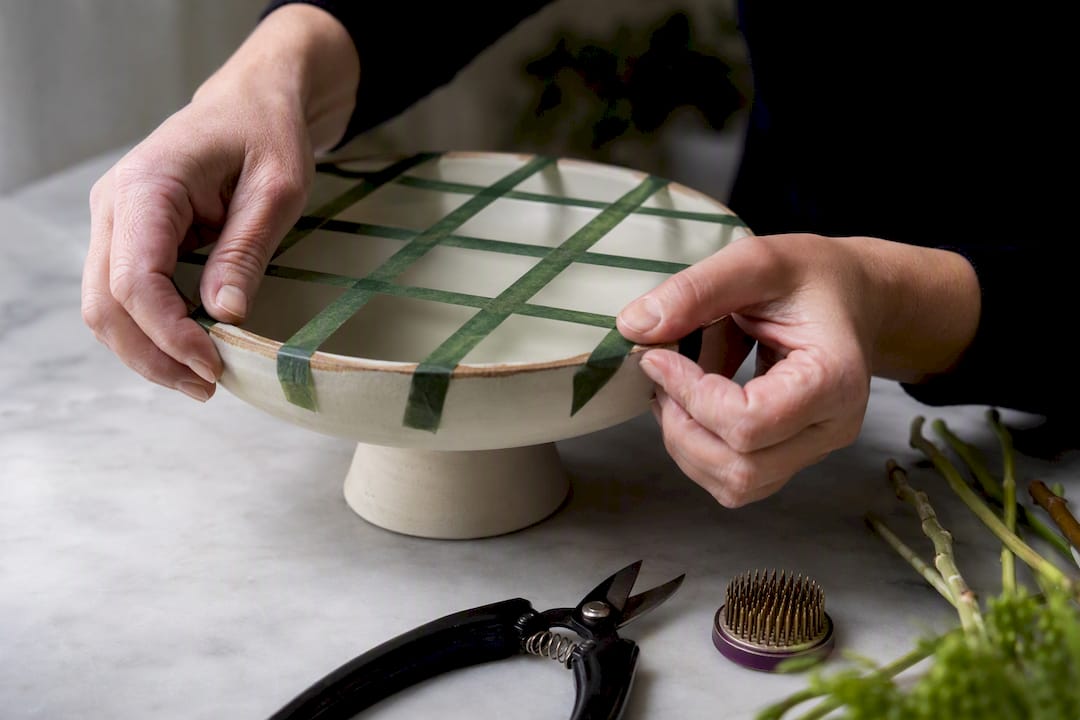
Martha Stewart’s step-by-step arranging guide notes that the right mechanics let you build airy, less crowded designs, using fewer stems while still holding their shape through a long event.
How to Build an Event Centerpiece Step by Step
This is the same sequence professional florists use, whether they’re building one centerpiece or eighty.
- Condition your flowers first. Cut each stem at a 45 degree angle under running water, strip any leaves that would sit below the waterline, and let everything drink for a few hours before you start designing.
- Set your mechanics. Tape, wire, or foam should already be secured in the container before a single stem goes in.
- Build the greenery base. This defines the overall shape and gives later stems something to lean on. Skip this step and everything above it will slide.
- Place line flowers. Branches, snapdragons, or delphinium establish the outline and height.
- Add focal flowers in odd-number clusters. Three or five garden roses, peonies, or similar showstoppers become the visual anchor.
- Layer in secondary flowers, then filler. Spray roses, solidago, or waxflower fill gaps without competing with the focal blooms.
- Finish with delicate detail stems. Sweet peas, astilbe, or trailing greenery go in last since they bruise easily.
- Check from every angle, hide any visible mechanics, top up the water, and refrigerate the piece until it’s time to load it for delivery.
Pro Tip: Turn the arrangement in a full circle before you call it done. A centerpiece that looks perfect from one side and bare from the other will embarrass you the moment a guest walks around the table.
This foliage-to-detail sequence isn’t a personal preference. It’s standard practice across extension programs, including Iowa State’s Yard and Garden guide to floral arrangement.
Sizing and Sightlines: Rules That Change by Table Type
Proportion isn’t just about looking nice. At an event, the wrong height blocks a guest’s view of the person across the table, and the wrong width crowds place settings.
- Keep dining table centerpieces low, or tall and narrow above eye level, so sightlines stay clear either way; for tips on enhancing these arrangements with room decor, see how to choose a calming sculpture for your reception area.
- Cocktail and standing reception tables can go taller since no one’s seated behind them.
- Stage, altar, and entrance pieces can scale up dramatically since they’re viewed from a distance, not across a shared surface.
- For a standard 60-inch round table, plan five to nine focal stems in the centerpiece. Smaller cocktail tables need as few as three.
Following the 1.5× and 1/3 vase ratios covered earlier keeps these pieces visually anchored no matter the table size, a principle detailed in West Virginia University Extension’s Bloom Room floral design guide. For a closer look at matching stem counts to container size, Malikflowers’ own bouquet size guide breaks down proportions by vessel type.
Picking Flowers That Actually Survive an Event
Not every gorgeous bloom belongs at a wedding reception. Some wilt within hours; others carry a scent strong enough to compete with dinner.
- Durable focal flowers: garden roses, standard roses, and chrysanthemums hold up well through hours of handling and travel.
- Reliable secondary and filler: spray roses, solidago, and waxflower stay fresh and don’t bruise easily in transit.
- Sturdy greenery: eucalyptus is a workhorse for event work, it’s flexible, long lasting, and cheap enough to use generously.
- Seasonal substitutions: if peonies aren’t in season, garden roses or ranunculus fill a similar role; always ask your supplier what’s fresh that week rather than forcing an out-of-season order.
- Scent caution: skip heavily fragrant varieties like oriental lilies or hyacinth at seated dinners, where guests are eating close to the centerpiece.
Choosing durable, less fragrant stems for crowded or food-focused events is standard guidance in professional flower arranging resources, and it’s one of the easiest ways to avoid a complaint at a client’s dinner. For inspiration on pairing colors across a season, Malikflowers’ flower color palette guide walks through combinations that photograph well under event lighting.
Care, Staging, and Transport: The Checklist That Prevents Disasters
Design skill means nothing if the flowers arrive wilted or the centerpiece tips over in the van.
- Condition overnight with a floral preservative and strip all foliage that would sit below the waterline.
- Pack stems tight in transport boxes so they can’t shift, and keep everything cool, ideally below 40°F, until an hour or two before the event.
- Stage in delivery order, so pieces going to the farthest tables or hardest-to-reach rooms load last and unload first.
- Re-trim stems on-site, top up water, and anchor centerpieces with museum wax or rubber pads on tables that will see a lot of movement.
Pro Tip: Build in a 30 minute buffer before guest arrival for last-minute re-trims. Flowers droop slightly during transport even when conditioned properly, and a quick fresh cut revives them almost instantly.
Conditioning and consistent water changes remain the single biggest factor in vase life, according to Iowa State’s extension guide, and that holds just as true for a centerpiece sitting in a warm reception hall as it does for flowers on a kitchen counter.
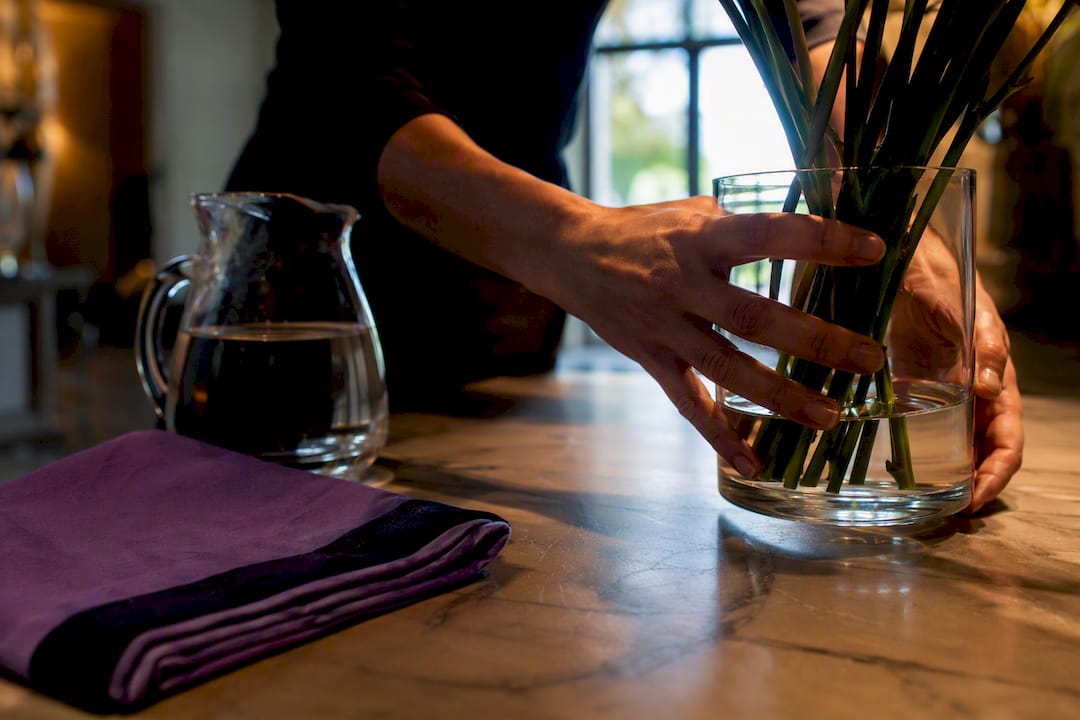
A Florist’s Workflow: Briefing, Building, and Delivering for an Event
Watching how a professional handles a wedding order shows you what a well-run event floral job actually looks like, start to finish. Malikflowers builds each order around a detailed brief: guest count, table dimensions, color palette, venue logistics, delivery timeline, and budget. That client-provided information from Malikflowers’ guide to briefing a florist shapes everything from stem count to which mechanics get used.
From there, a florist stages pieces in delivery order, keeps them cool until the last possible moment, and times drop-off around venue access windows rather than a fixed clock. Custom designs and a satisfaction guarantee with refunds if a client isn’t happy provide added assurance. The lesson for a beginner briefing their own florist, or building their own arrangement, is the same: nail down the details before a single stem gets cut.
What I’d Tell Every Beginner Before Their First Event Order
The most common mistake isn’t a design flaw. It’s cramming in too many stems because empty space feels like a mistake, when negative space is actually doing the work. Treat proportion rules as tools, not laws: build a small vase arrangement, time yourself, then try it again five minutes faster. Speed forces you to trust the structure instead of overworking it.
— Reza
Let Malikflowers Handle the Flowers While You Handle Everything Else
Building your own centerpieces is a great skill, but a big event with a fixed timeline leaves little room for a beginner’s learning curve. This service offers an alternative to guessing your way through table florals: arrangements handcrafted around guest count, palette, and venue details, backed by a satisfaction guarantee that offers a refund if the design isn’t right.

Before reaching out, gather the basics: your color palette, guest count, table sizes, venue address, delivery window, and budget range, the same information a professional briefing would ask for. For weddings specifically, Malikflowers’ wedding flower delivery service handles the full build and staging process, and larger corporate gatherings can work through the office and event flower program instead of piecing it together stem by stem. If you’d rather walk through the design choices with someone first, start with a guided florist experience and get a custom plan built around your event.
Sources
- How to create a floral arrangement | Yard and Garden (Iowa State)
- How to Make a Flower Arrangement Step by Step | Martha Stewart
- The Bloom Room: Floral Design Basics (WVU Extension)
FAQ
What is the 3-5-8 rule in floristry?
It’s a proportion guideline where flower heights or groupings follow a 3:5:8 ratio, roughly matching the golden ratio, to create pleasing visual balance between focal, secondary, and filler elements without any one group overpowering another.
What are the 7 principles of floral design?
Most floral design programs teach proportion, balance, dominance, rhythm, unity, contrast, and scale as the core principles, with the NGC Handbook formalizing these for exhibition judging.
What are the 5 elements of floral design?
Line, form, color, texture, and space form the foundation, with size sometimes added as a sixth, and each one shapes how a finished arrangement reads to a viewer standing at a distance versus up close.
What are the basic rules of floral design?
Build from greenery to focal to filler, group stems in odd numbers, size flowers at roughly 1.5 times the container’s height, and keep the container itself around a third of the total visual height.
How much do event florals cost from Malikflowers?
Pricing depends on the design and occasion, with custom sympathy and tribute arrangements listed from $75, and current pricing for weddings and corporate events available directly on the Malikflowers site.