
Flower Subscriptions: Save 15–25% and Choose a Local Florist for Gifts
Flower Subscriptions: Save 15–25% and Choose a Local Florist for Gifts
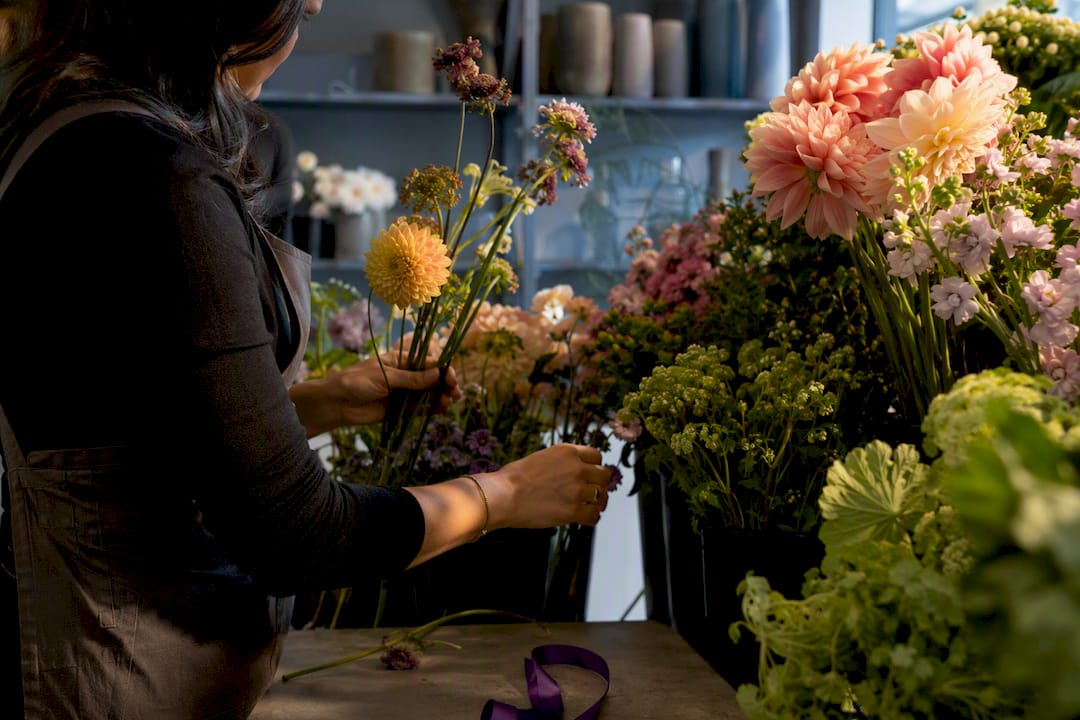
A flower subscription is a recurring order that sends fresh arrangements to your door on a set schedule, usually weekly, biweekly, or monthly, with a florist handling the design each time. It works best for frequent gift-givers, offices that want a lobby that never looks tired, and anyone who likes having fresh flowers around without placing a new order every time. If you send flowers occasionally or want full control over a single big arrangement, a one-time order usually serves you better.
TL;DR:
- Local florist subscriptions with arrangements in water tend to stay fresh longer than shipped boxed stems, especially with same-day delivery.
- Weekly plans usually feature smaller, simpler arrangements, while monthly options offer larger, more elaborate designs.
- Subscriptions typically save 15% to 25% per arrangement compared to one-time orders, making them more cost-effective for frequent use.
- Flexibility varies; confirm notice periods for skipping or pausing deliveries, and ensure the florist delivers within your chosen area.
- A subscription is most valuable if you have at least three occasions in six months that would otherwise require last-minute flowers.
Table of Contents
- Flower Subscription Explained: How Signing Up Actually Works
- Subscription Formats: Vases, Boxes, and Specialty Plans
- The Real Trade-Offs: Cost, Freshness, and Control
- Who Actually Benefits From a Subscription
- How to Choose a Subscription Without Getting Burned
- Malik Flowers: What a Florist-Led Subscription Looks Like
- A Simple Rule for Deciding If You Should Subscribe
- Ready to Start a Subscription With Malik Flowers
- Sources
- FAQ
Flower Subscription Explained: How Signing Up Actually Works
Every subscription follows roughly the same setup, whether you’re gifting or ordering for yourself. The details vary by florist, but the sequence rarely changes.
- Pick your cadence. Weekly, biweekly, and monthly are the standard options, and this choice alone drives most of your total cost.
- Choose a size or style. Most florists offer tiers, a compact desk arrangement, a standard bouquet, or a premium centerpiece, and some let you set preferences like a color palette or “no lilies” note.
- Provide delivery details. This includes your address, preferred delivery day, and any access instructions for offices or apartment buildings.
- Confirm payment. You authorize the card on file for recurring billing, and charges process automatically each cycle until you cancel or the term ends.
Two billing structures cover most subscriptions. The first renews indefinitely until you cancel, which suits people who want flowers as an ongoing habit. The second runs for a fixed term, say three or six months, then simply stops, which works well as a gift you don’t have to remember to cancel on someone else’s behalf.
Before you commit, confirm three policies with the florist directly: how much notice they need to skip or pause a delivery, whether there’s a minimum number of cycles you’re locked into, and what delivery window to expect on your chosen day. Florists generally build in flexibility here, letting subscribers skip a cycle or update an address without penalty, but the terms differ enough from one shop to the next that it’s worth asking before you pay for the first delivery.
Subscription Formats: Vases, Boxes, and Specialty Plans
The format you choose changes both the effort required and how long the flowers last. Two broad categories dominate the market.
- Ready-to-display vase arrangements arrive already cut, conditioned, and arranged in water, so you unbox them and set them on a table. This is the standard model for local florist subscriptions.
- Boxed stems ship flat, often across long distances, and require you to trim stems and arrange them yourself once they arrive. This model trades convenience for typically lower per-box pricing.
- Orchid and potted plant plans swap cut flowers for longer-lasting greenery, a good fit if you want visual impact without weekly upkeep.
- Corporate plans are usually sized for reception desks or conference tables and scheduled around business days rather than weekends.
Frequency and format scale together in a fairly predictable way. Weekly plans tend toward smaller, simpler arrangements, since a huge centerpiece every seven days gets expensive fast. Monthly plans lean the other direction, with florists building a fuller, more generous piece since it only has to happen once a month. If you want variety, look for shops offering seasonal collections that rotate stems by time of year rather than repeating the same five flowers on a loop. Customization requests, like avoiding a particular scent or sticking to a specific color family, are common and worth stating upfront rather than hoping the florist guesses right.
The Real Trade-Offs: Cost, Freshness, and Control
The convenience is real: once you set a subscription, deliveries happen without another decision from you, which matters if gift-giving has ever slipped your mind at the worst possible moment. Cost is the second draw. Many florists price subscriptions at roughly 15% to 25% less per arrangement than an equivalent one-time order, since recurring customers cost less to retain than new ones to acquire.
Quick math: if a single arrangement runs $65 and a comparable subscription tier saves 20% per delivery, that’s roughly $13 back on every cycle, which adds up fast across a six-month plan.
The trade-offs are just as real, though.
- You give up some control over the exact look of each delivery, especially with “florist’s choice” plans.
- The recurring charge keeps hitting your card whether or not that particular week is convenient.
- Travel and schedule changes mean you have to remember to pause deliveries, or they show up to an empty house.
One nuance worth knowing: freshness tends to track distance more than price. A locally sourced arrangement delivered same-day and arranged directly in water generally holds up longer than a boxed subscription shipped cross-country, partly because local delivery routes cut out the days a box might sit in transit. That’s a qualitative pattern, not a guarantee tied to any one brand, but it’s a fair question to ask any florist before you subscribe.
Who Actually Benefits From a Subscription
Not everyone needs one, and the right cadence depends heavily on why you’re buying.
- Busy professionals who want flowers at home without shopping for them do well with a biweekly or monthly plan.
- Offices and reception areas usually look best on a weekly or biweekly cycle, since a lobby arrangement wilts faster under foot traffic and HVAC airflow than a countertop bouquet.
- Someone buying flowers as a recurring gift, for a parent, partner, or friend, tends to prefer monthly delivery or a short three to six month gift term rather than an open-ended commitment.
Weddings, sympathy arrangements, and highly customized one-off requests are better handled as individual orders, since those occasions call for a single, carefully specified piece rather than a repeating template. If you’re unsure, start with a monthly plan or gift a three-month term. It’s long enough to judge quality and reliability without locking into a full year.
How to Choose a Subscription Without Getting Burned
A little due diligence before you subscribe saves you from a bad surprise on delivery day. Run through this checklist with any florist you’re considering:
- Does their delivery area actually cover your address, not just the general city?
- What frequency options do they offer, and can you switch between them later?
- Is the arrangement delivered in water, or shipped as loose boxed stems?
- How much notice do they require to pause or skip a cycle?
- Is there a satisfaction guarantee, and what happens if a delivery disappoints?
- Can you see real photos of past arrangements, or only stock images that never change?
- Are there hidden delivery fees added on top of the subscription price?
- Is there a minimum term, or can you cancel after a single delivery?
- Who do you contact if a delivery is late or damaged?
- Can you customize color, scent, or specific flowers you want excluded?
Pro Tip: Ask directly, “Do you deliver in water, or do I need to arrange the stems myself?” The answer alone tells you whether you’re buying a local florist subscription or a shipped commodity box.
Watch for red flags: a cancellation policy that’s vague or buried in fine print, no clear statement of which neighborhoods or cities they actually deliver to, and a gallery of arrangement photos that look suspiciously identical month after month. Those are signs the plan isn’t as flexible, or as fresh, as the marketing suggests.
Malik Flowers: What a Florist-Led Subscription Looks Like
Malik Flowers runs its subscription model the way a hands-on local florist would: handcrafted arrangements, built fresh for each delivery cycle, sent across Metro Vancouver rather than shipped in from a warehouse. Every plan carries the same satisfaction guarantee that backs a one-time order, including a refund if the design doesn’t land the way you expected.
That florist-led structure changes what shows up at your door in a few specific ways:
- Arrangements arrive already conditioned and arranged in water, ready to set down and enjoy immediately.
- Seasonal stems rotate through the plan rather than repeating the same handful of flowers year-round.
- Occasion-specific options exist for recurring gifts, like a standing birthday or anniversary delivery, so the arrangement matches the moment instead of arriving generic.
If you’re weighing a plan for an office lobby, the same local-delivery logic applies to corporate flower programs, which run on the same weekly or biweekly cadence that keeps a reception area looking intentional rather than accidental. You can review current arrangement styles and sign up directly on the Malik Flowers subscription page.
A Simple Rule for Deciding If You Should Subscribe
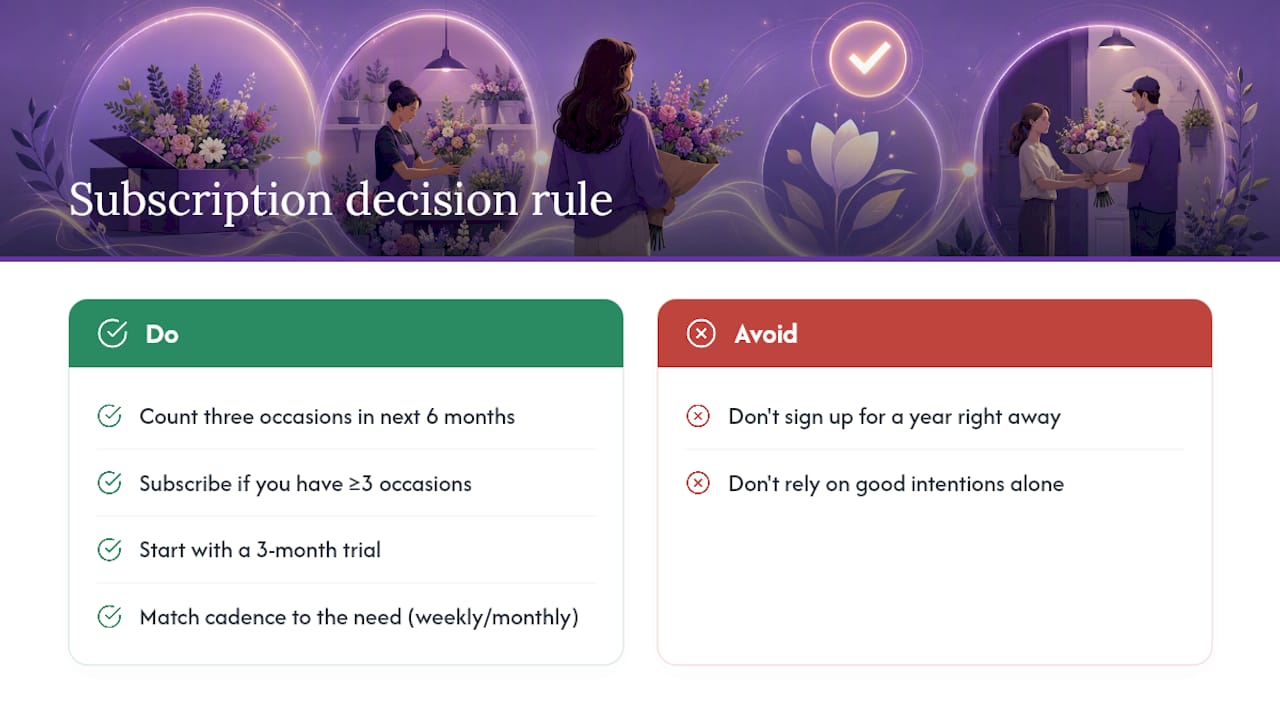
If you can name three occasions in the next six months where you’d otherwise be scrambling to order flowers last minute, a subscription probably pays for itself in saved effort alone. If you can’t think of three, a one-time order is the smarter buy.
Two quick examples: someone who sends their mother flowers “sometimes” but forgets more often than not is better served by a monthly plan than by good intentions. An office manager who wants the reception desk to always look presentable for client visits needs weekly or biweekly, since anything slower leaves visible gaps. Either way, test the relationship with a low-commitment three-month gift before signing up for a year you might regret.
— Reza
Ready to Start a Subscription With Malik Flowers
Malik Flowers gives you something the shipped-box services can’t: a real local florist arranging your flowers in water and delivering them fresh across Metro Vancouver, backed by a guarantee that refunds you if a design misses the mark.
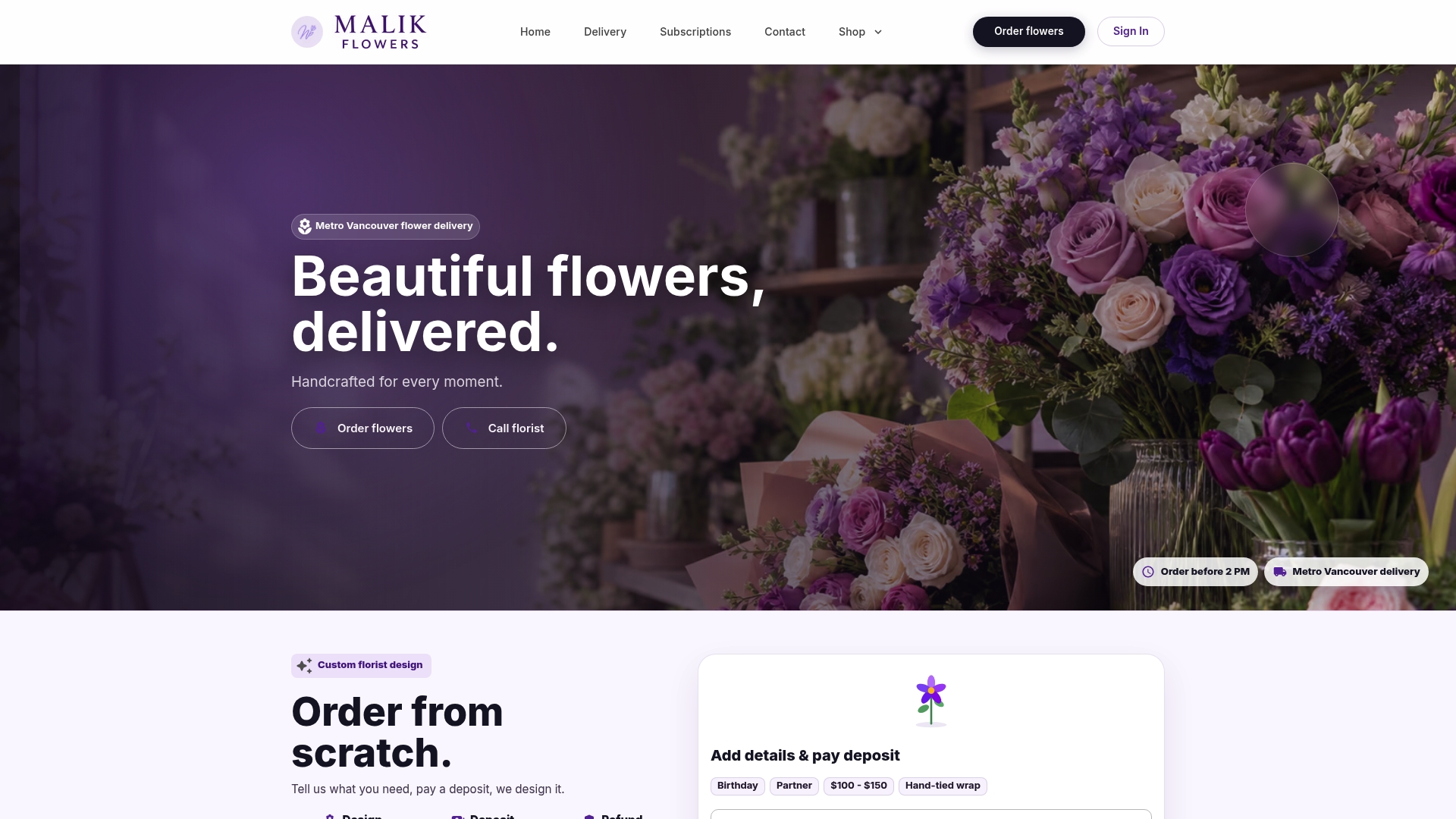
Getting started takes about the same time as placing a single order:
- Browse current arrangement styles and seasonal collections to see what a typical delivery looks like.
- Add your delivery address and payment details, and note any preferences, like colors to favor or flowers to skip.
Sources
FAQ
Are flower subscriptions worth it?
For frequent gift-givers, offices, or anyone who wants regular fresh flowers without reordering each time, subscriptions typically pay off through per-arrangement savings of roughly 15% to 25% and the convenience of automated delivery. If you only send flowers occasionally, a one-time order usually makes more sense.
What is the best monthly flower subscription?
The best monthly plan is one from a local florist who delivers arrangements already in water rather than shipping loose stems in a box, since that tends to preserve freshness and vase life better. Look for a shop with a clear satisfaction guarantee and transparent delivery coverage, like Malik Flowers’ subscription plans in Metro Vancouver.
What is the 3-5-8 rule for florists?
The 3-5-8 rule is a design guideline some florists use for arrangement sizing and stem counts, but definitions vary by shop and it isn’t a universal industry standard. It’s worth asking your florist directly how they size a subscription tier rather than assuming a fixed formula applies.
What is the best flower subscription?
There’s no single best plan since it depends on your cadence needs, budget, and how much control you want over each delivery’s look. A strong starting point is a florist offering flexible pause and skip options with arrangements delivered ready to display rather than requiring you to arrange stems yourself.