Buy Foam Free Floral Design Backed by a Satisfaction Guarantee
Buy Foam Free Floral Design Backed by a Satisfaction Guarantee
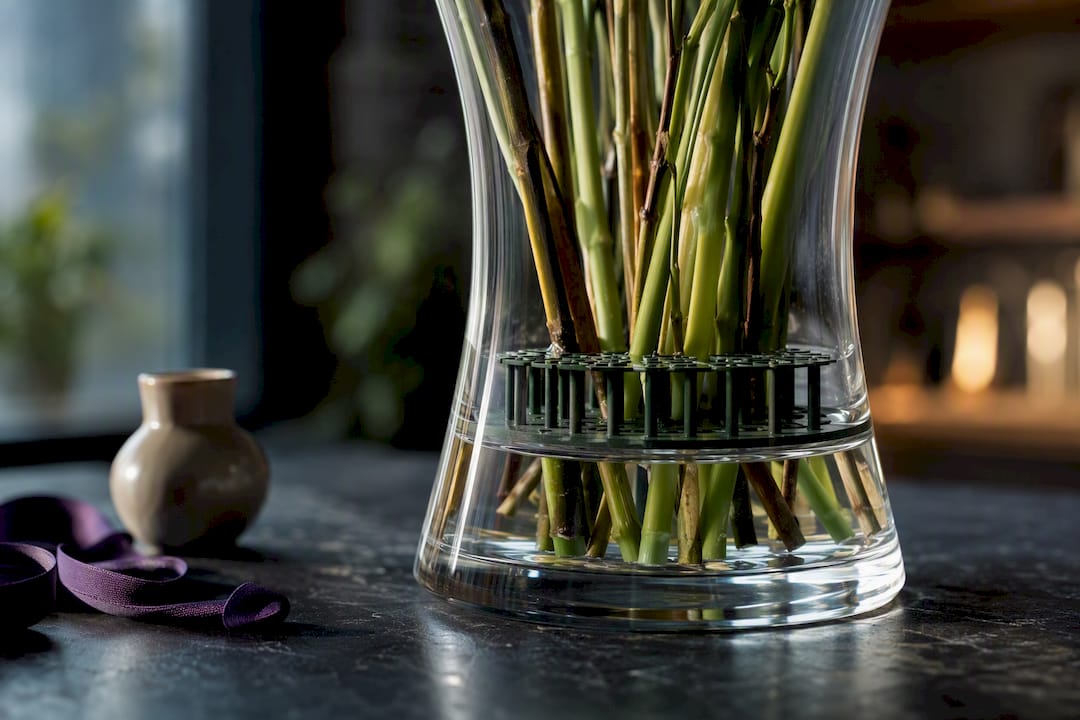
Foam free floral design, in the context of buying flowers, means handcrafted arrangements built with grids, chicken wire, or reusable frogs instead of single-use plastic floral foam. Choosing it keeps microplastics out of your bouquet and out of the landfill, without giving up a full, professional look. The move for you as a buyer is simple: check the product page or ask the florist directly whether foam is used, and favor shops that pair that claim with a satisfaction guarantee.
TL;DR:
- Foam-free floral arrangements often cost more due to the use of local and seasonal stems that support sustainability and freshness.
- These arrangements typically stay fresh for two to five days after delivery when paired with eco-friendly packaging and proper care.
- Confirm foam-free claims by asking directly about the use of floral foam and details about packaging, as vague claims often mask underlying mechanical methods.
- The aesthetic benefits of foam-free designs include airier, more natural-looking bouquets with visible stem structure, especially suitable for garden-style arrangements.
- Large event installations may still require structural foam or wire framing for stability, so foam-free methods are best for smaller, gift, or vase arrangements.
Table of Contents
- What Does “Foam Free” Actually Mean When You’re Buying Flowers?
- Why Shoppers Are Choosing Foam-Free Arrangements
- What to Check Before You Buy a Foam-Free Arrangement
- Lead Times, Pricing, and Freshness: What to Expect
- Why Malik Flowers Leans Into Foam-Free, Handcrafted Design
- Ready to Order Handcrafted Flowers Without the Foam?
- Sources
- FAQ
What Does “Foam Free” Actually Mean When You’re Buying Flowers?
Here’s the scope worth understanding before you shop: “foam free” in a buying guide refers to finished, handcrafted arrangements sold to you, not the mechanics a florist uses backstage to build an installation. That second version, the technical how-to on wiring and gridding for event designers, is a different topic aimed at florists, not shoppers, and this article skips it entirely.
For you, foam free means the florist swapped green floral foam blocks for a reusable structure, and the finished piece still holds water, still stands upright in a vase, and still looks intentional. On a product page, this usually shows up as a short line like “arranged without floral foam” or “eco-friendly mechanics,” sometimes paired with a note about the packaging material. Packaging matters here too. If a shop mentions FSC-certified or recyclable packaging alongside its foam-free claim, that’s a stronger signal than the phrase “eco-friendly” sitting alone with no detail behind it.
Why Shoppers Are Choosing Foam-Free Arrangements
Floral foam is plastic, and it breaks down into microplastics over time, adding to a problem the floral industry already struggles with through packaging waste and refrigerated long-haul shipping, according to CBC’s reporting on the flower industry’s plastic problem. Skipping foam removes that specific source of pollution from your bouquet, even though the broader shipping and packaging issues take more than one purchase decision to fix.
There’s also a design payoff. Foam-free mechanics like reusable grids and kenzans tend to produce airier, more natural-looking arrangements, since the stems aren’t crammed into a dense foam block, according to 46 & Spruce’s comparison of foam and foam-free methods. Stems have room to breathe, which tends to suit seasonal, garden-style bouquets better than tightly packed formal designs.
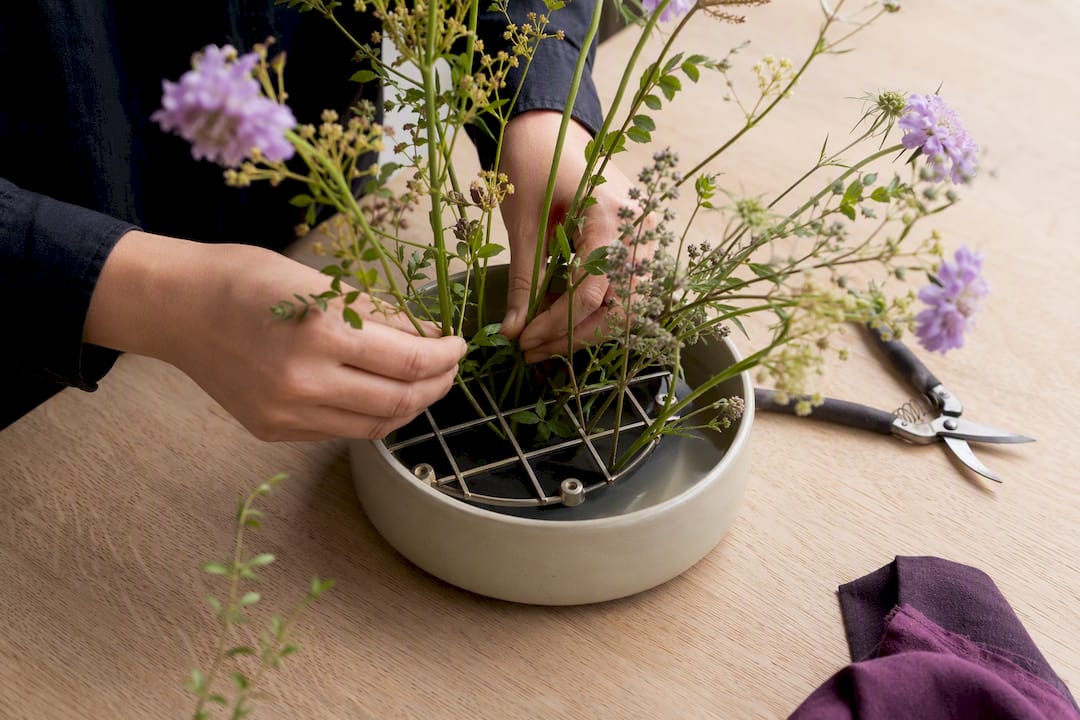
Many foam-free florists also lean into local and seasonal sourcing, part of what’s often called the slow flower movement in Canadian floristry. Buying local frequently means fresher stems that traveled a shorter distance, which supports growers closer to home and can mean a longer vase life for you.
What to Check Before You Buy a Foam-Free Arrangement
A vague “sustainable” label on a website tells you almost nothing. Look for specifics instead. Run through this before you commit to an order:
- A clear foam-free statement, not just a general sustainability claim, listed on the actual product or checkout page.
- Packaging details, ideally naming a certification like FSC, rather than just calling a box “eco-friendly.”
- Evidence of seasonal or local sourcing, such as named regional growers or a rotating seasonal collection.
- Reusable mechanics over single-use materials, since some “foam-free” claims still rely on plastic inserts that aren’t much better.
- A satisfaction guarantee or refund policy, which tells you the florist stands behind the actual design, not just the marketing.
- Real photos and reviews, so you can see finished work rather than stock imagery.
Asking a florist directly is faster than digging through a site. Try: “Is floral foam used in this arrangement?” “What do you do with stem scraps and offcuts?” and “What is the packaging made from?” Straight answers to those three questions tell you more than a paragraph of marketing copy.
Watch for a few red flags too: vague phrases like “nature-friendly” with no specifics, product photos that clearly show green foam blocks peeking through the stems, and listings with no delivery window or freshness information at all.
Pro Tip: Zoom in on product photos before you order. Foam-free arrangements are usually built with visible stem structure near the base, while foam-based designs often show a flat, packed cluster of stems cut to the same short length.
Lead Times, Pricing, and Freshness: What to Expect
A ready-made bouquet from a foam-free florist typically ships same-day or next-day. Fully custom arrangements, built around your color preferences or a specific occasion, usually need more lead time. If you’re planning a wedding, a large event, or a corporate order, build in extra days.
- Lead time. Ready-made pieces move fastest; custom, occasion-specific designs need advance notice, especially around holidays when order volume spikes.
- Price. Foam-free arrangements built from local, seasonal stems sometimes cost more per stem than mass-imported flowers, but you’re generally getting fresher blooms and a lower lifecycle environmental footprint in return, according to FloristsReview’s coverage of Canadian flower farming.
- Freshness. With proper eco packaging, a foam-free arrangement can reasonably hold up for two to five days after delivery, depending on the flower variety and how you care for it at home.
- Best-fit occasions. Gift bouquets, vase arrangements, sympathy pieces, and office or corporate deliveries all suit foam-free construction well. Large-scale event installations, arches, or complex hanging pieces sometimes still call for structural foam or wire framing, since stability matters more than aesthetics at that scale.
Why Malik Flowers Leans Into Foam-Free, Handcrafted Design
Every arrangement Malik Flowers builds is handcrafted around the occasion you’re shopping for, whether that’s a birthday, a sympathy tribute, or a corporate order, and each one is backed by a satisfaction guarantee with refunds if the finished design doesn’t match what you expected. That guarantee is the single most concrete proof point a shopper can ask for, since it puts real accountability behind the design, not just a promise.
On the sustainability side, Malik Flowers uses FSC and BNQ certified eco-friendly packaging built to help arrangements hold their freshness for two to five days after delivery, while cutting down on single-use packaging waste. Paired with seasonal blooms and a Metro Vancouver delivery footprint, that combination checks nearly every box from the buyer checklist above: certified packaging, freshness transparency, and a refund policy that puts the risk on the florist, not on you.
— Reza
Ready to Order Handcrafted Flowers Without the Foam?
If you’ve made it this far, you already know what to check for. Malik Flowers gives you a faster shortcut: skip the vetting process and order directly from a florist that already publishes its eco-packaging certifications and backs every design with a satisfaction guarantee.
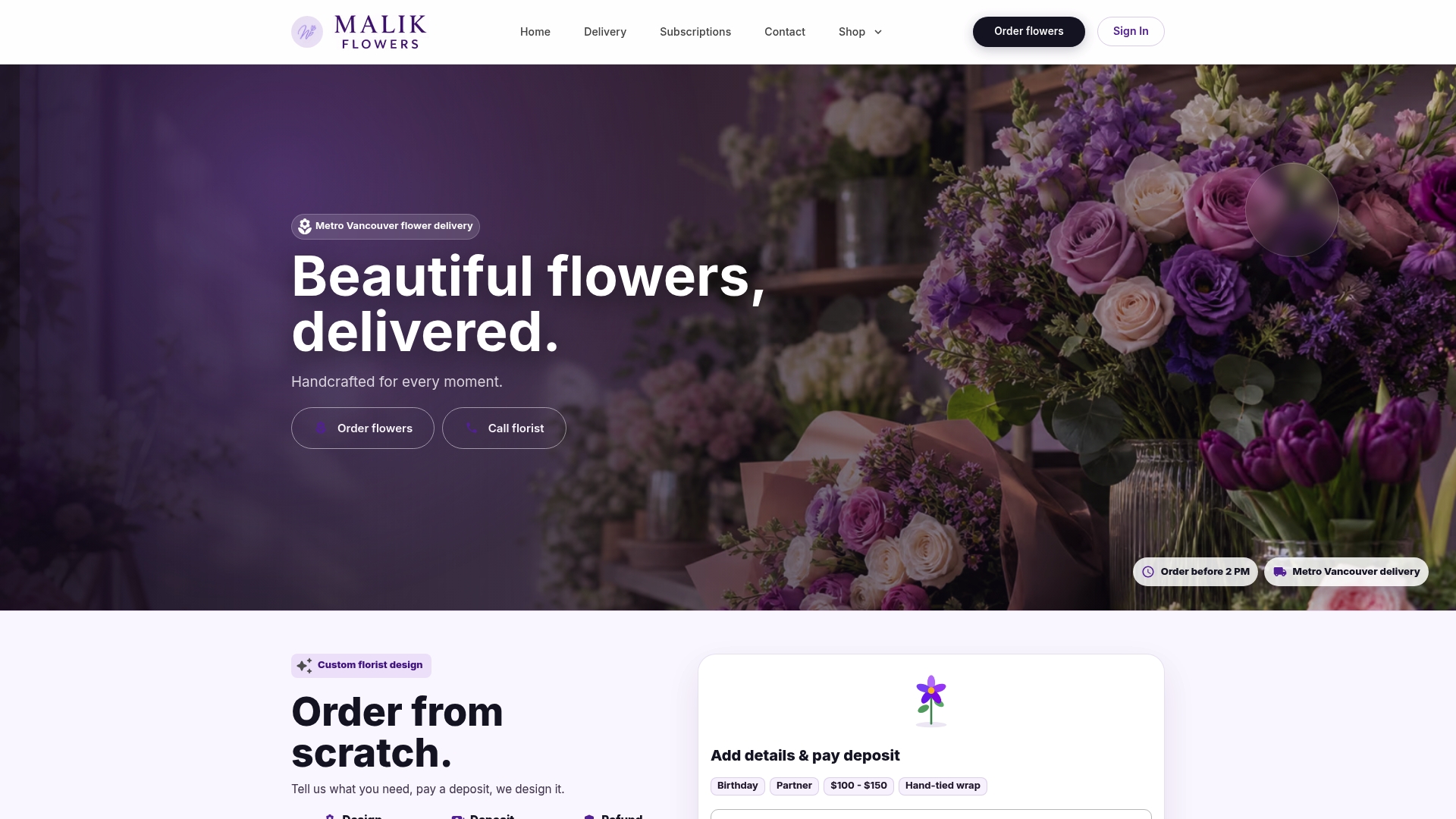
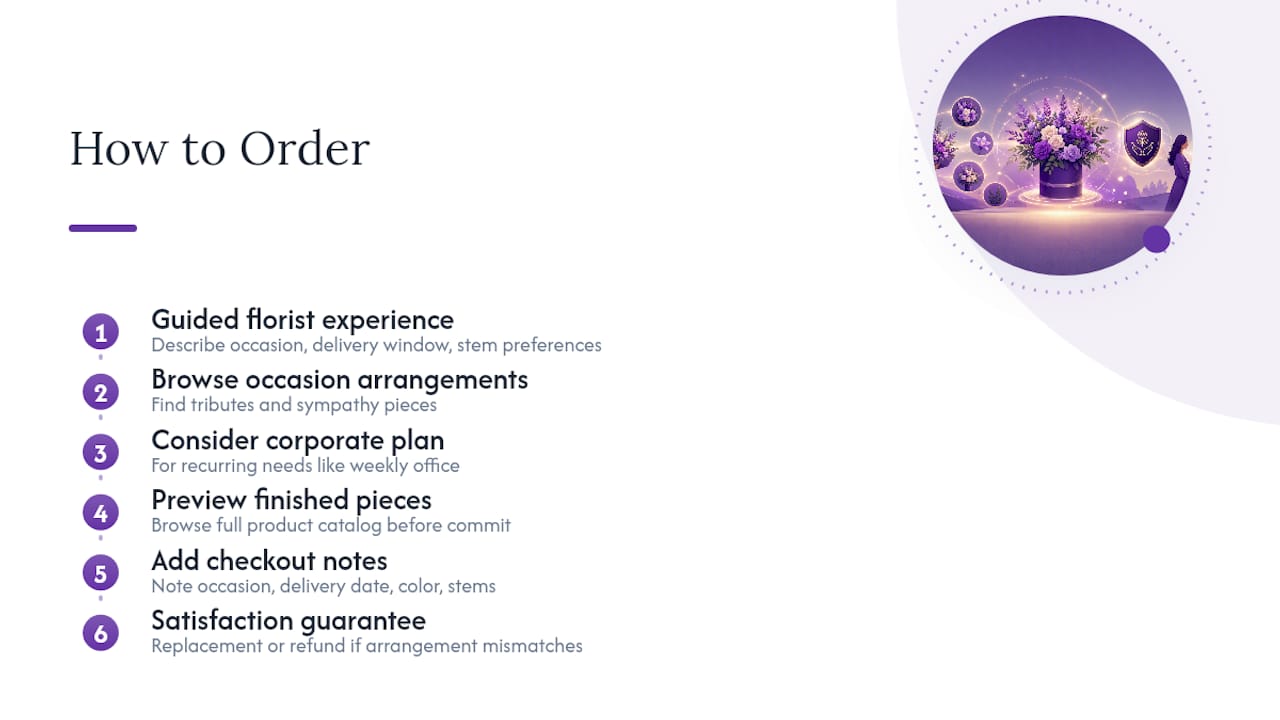
Start with a guided florist experience, where you can describe the occasion, your delivery window, and any preferences for seasonal stems directly to the team building your arrangement. For tributes and sympathy pieces specifically, browse the occasion-specific arrangements built for that moment. Have a recurring need, like weekly office flowers? Look into the corporate flower plan instead of ordering one-off each time.
At checkout, note the occasion, your delivery date, and anything specific about color or seasonal stems you’d like included. If the arrangement that arrives doesn’t match what you pictured, the guarantee is there precisely for that scenario. Ready to see a finished piece before you commit? Browse the full product catalog and pick a starting point.
Sources
The environmental case against floral foam draws on CBC’s reporting on plastic in the flower industry, which covers microplastics and the broader packaging and shipping footprint of cut flowers. For a breakdown of how foam-free mechanics actually work and what they cost florists in time and materials, 46 & Spruce’s foam versus foam-free comparison lays out the trade-offs in detail. On sourcing and pricing, FloristsReview’s piece on supporting Canadian flower farmers explains why local, seasonal stems often carry a premium and what you get in return. Reusable packaging suppliers like Loots by Shiry also show what alternatives to single-use wrapping can look like at the retail level.
- The flower industry has a thorny environmental problem — and plastic is just part of it | CBC News
- Foam vs. Foam-Free: Time, Cost, and Environmental Impact – 46 & Spruce
- How Canadian florists can support their fellow flower farmers | FloristsReview
FAQ
Is foam-free floral design more expensive than regular arrangements?
Sometimes, since local and seasonal stems used in foam-free designs can cost more per stem than mass-imported flowers, according to FloristsReview. In exchange, you typically get fresher blooms and a smaller environmental footprint per stem.
How long do foam-free bouquets stay fresh?
With proper eco packaging, foam-free arrangements can hold their freshness for two to five days after delivery, depending on the flower variety and how they’re cared for at home. Trimming stems and changing the water regularly extends that window.
What questions should I ask a florist to confirm they’re foam-free?
Ask directly: “Is floral foam used in this design?” and “What packaging do you use for delivery?” A florist confident in its process will answer both without hedging or switching to vague sustainability language.
Is foam-free design suitable for weddings and large events?
It works well for bouquets, centerpieces, and vase arrangements, but large installations like arches sometimes still rely on structural foam or wire framing for stability, according to 46 & Spruce. For most gifting and mid-size event pieces, foam-free construction holds up just fine.