10 Handcrafted Wedding Bouquet Styles and the 3:5:8 Rule to Build Them
10 Handcrafted Wedding Bouquet Styles and the 3:5:8 Rule to Build Them
Hand-tied, round, cascade, posy, hoop, monofloral, and dried-fresh hybrid cover most of what you’ll want to carry down an aisle or hand to someone you love. Pick two or three that catch your eye, then either test a hand-tied mock-up at home using the 3:5:8 rule or book a guided florist consult to get it right the first time.
TL;DR:
- Most bouquets use 3 focal flowers, 5 textural stems, and 8 filler stems based on the 3:5:8 ratio, which helps achieve balance and proportion.
- The hand-tied style fanning out naturally uses a spiral technique with stems crossing at an even angle, ideal for garden-style or casual weddings.
- Seasonal availability influences flower choices, with spring favoring peonies and ranunculus, summer supporting dahlias and roses, and fall favoring chrysanthemums and dried elements.
- Larger or more complex bouquets like cascades or hoop styles require reinforcement and take longer to assemble, impacting overall cost and labor.
- A guided florist consultation provides tailored construction, ensuring the bouquet matches your dress, venue, and personal style without the guesswork.
Table of Contents
- Handcrafted Bouquet Styles at a Glance
- How the Most Popular Bouquet Shapes Come Together
- How to Build a Balanced Bouquet Step by Step
- Matching Your Bouquet to Your Dress and Frame
- What You’ll Need to Build One Yourself
- What a Guided Florist Consult Actually Looks Like
- What Your Budget Actually Buys
- Choosing a Color Palette That Actually Fits
- Keeping a Handcrafted Bouquet Fresh Through the Day
- Why the Season You’re Getting Married In Shapes Your Options
- Why Intentional Design Beats Sheer Volume
- Ready to Turn Inspiration Into a Real Bouquet?
- Sources
- FAQ
Handcrafted Bouquet Styles at a Glance
Before you commit to one look, it helps to see the whole field. Each of these styles reads differently in photos, feels different in the hand, and suits a different kind of event or personality. Skim the list, save the two or three that pull at you, and bring those photos to whoever helps you build the real thing.
- Hand-tied: Stems left visible below the binding point, tied at one spot so the bouquet fans out naturally. Best for garden-style weddings and anyone who wants a “just gathered” look without looking messy.
- Round: A dense, domed silhouette where every bloom sits at roughly the same height. Best for classic and formal weddings, especially with structured gowns.
- Cascade: A waterfall shape that trails below the hand, often 12 to 24 inches long. Best for dramatic, formal affairs and ball gowns with volume to match.
- Posy/nosegay: A small, tightly packed round bouquet, usually under 10 inches across. Best for bridesmaids, vow renewals, or brides who want something easy to carry all day.
- Pageant/arm sheaf: Long-stemmed flowers cradled in the crook of the arm rather than held upright. Best for old-Hollywood glamour or a nod to pageant and presentation traditions.
- Hoop/wrist/purse: Flowers built onto a hoop frame, a wrist corsage base, or a small handbag-style frame. Best for Soho or vintage themes and for brides who want their hands free.
- Monofloral/single-stem: One flower type, sometimes even one single bloom, carried with intention. Best for minimalist floral design and modern, editorial-style weddings.
- Dried-fresh hybrid: Fresh blooms mixed with dried grasses, pampas, or preserved foliage. Best for fall and winter weddings or anyone who wants a keepsake that lasts beyond the day.
- Oversized/free-form: Loose, asymmetric, and intentionally irregular, with long trailing stems and negative space built in on purpose. Best for outdoor, garden-style, or editorial shoots where scale is part of the story.
- Pomander: A ball of flowers on a ribbon handle, sized anywhere from a flower girl’s tiny orb to a full bridal version. Best for flower girls, but increasingly popular as a modern bridal alternative.
Visual cues matter more than names when you’re scrolling inspiration boards. A hand-tied bouquet shows stems; a round bouquet hides them under a wrap or ribbon collar. A cascade drops weight low and long; a posy stays compact and high in the hand. If you’re not sure what you’re looking at in a photo, check where the visual weight sits. Weight up top and stems visible means hand-tied. Weight trailing down means cascade. Weight even all around in a tight dome means round.
How the Most Popular Bouquet Shapes Come Together
Every style has its own construction logic, and knowing it changes what you ask for, whether you’re building it yourself or briefing a florist.
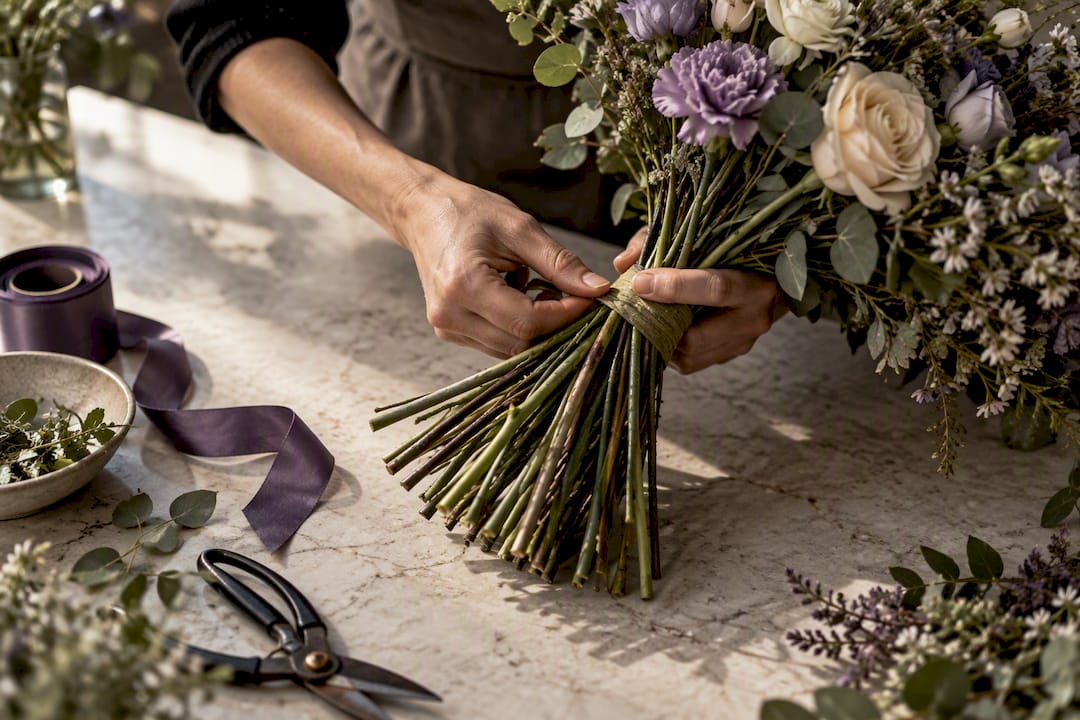
- Hand-tied. This uses the spiral technique: each new stem crosses the last at roughly the same angle instead of stacking straight up, which lets the bouquet fan open naturally at the top while staying tight at the binding point. A medium hand-tied bouquet typically uses a moderate number of stems mixing focal flowers, textural filler, and some trailing greens.
- Round. Built by packing stems tightly so heads sit at a uniform height, this style relies on a spiral or a bouquet holder to keep everything domed rather than flat. Decide early whether you want a front-facing design, which looks best in photos taken from one angle, or a full 360-degree version meant to be seen from every side.
- Cascade or asymmetric. The trailing stems need their own support, usually wire and floral tape reinforcing the lower “waterfall” section so the weight doesn’t snap weaker blooms. Keep the cascading portion proportionally limited, as too much can make the bouquet feel front-heavy and awkward to carry through a full ceremony.
- Monofloral. With one flower type doing all the visual work, sizing and spacing carry the whole design; too few stems looks sparse, too many loses the clean statement. Twelve to eighteen stems of a substantial bloom like garden roses or ranunculus usually reads as intentional rather than skimpy.
- Dried and fresh hybrid. Dried elements get wired or taped in first since they’re rigid and won’t wilt, then fresh stems are added last and given a water pick if the piece needs to survive several hours. This combination also gives you a built-in keepsake, since the dried portion outlasts the fresh flowers by months.
Pro Tip: If you’re testing a style at home before committing, build a small posy first. The mechanics scale up cleanly to a full-size bouquet, but mistakes are cheaper and less discouraging on a nine-inch practice piece.
How to Build a Balanced Bouquet Step by Step
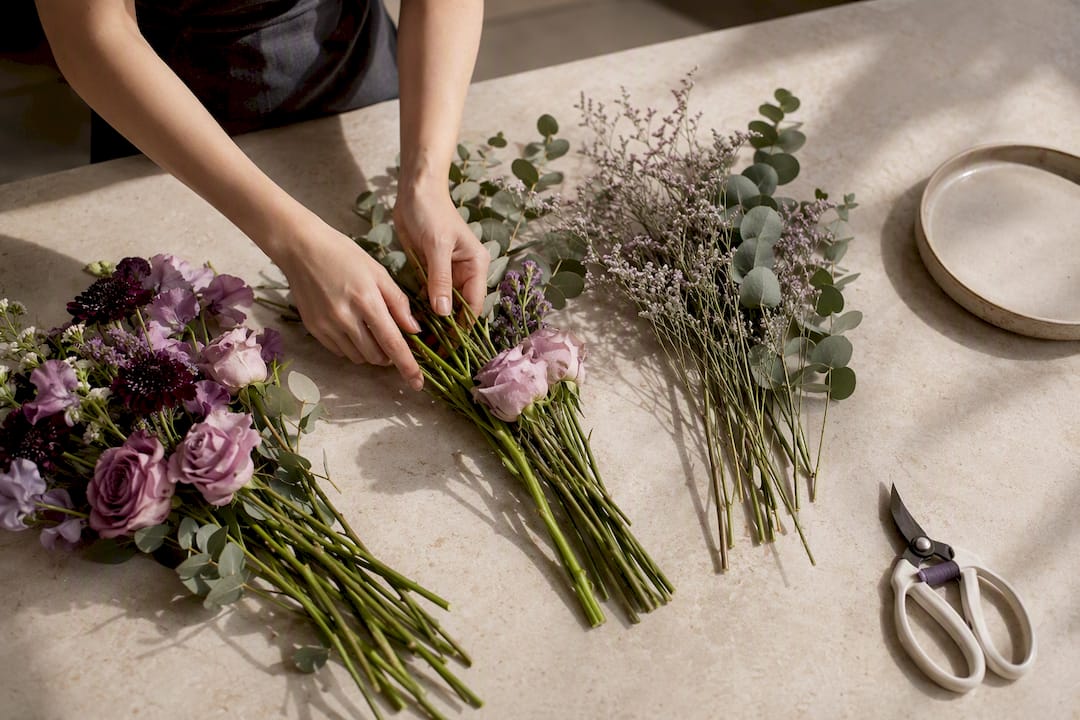
The 3:5:8 rule is the fastest way to stop a bouquet from looking either sparse or overstuffed: use 3 focal flowers, 5 textural or secondary stems, and 8 filler stems as your baseline ratio. Digital Florists frames it as a flexible starting point rather than a strict formula, since designers routinely flip the proportions for low, wide centerpieces or break it entirely for cascades and asymmetric work.
To build a hand-tied bouquet using this ratio:
- Start with your filler and textural stems, crossing each new stem at roughly a 45-degree angle against the last.
- Rotate the bouquet a quarter turn after every stem so the spiral stays even on all sides, a technique RealSimple walks through for home builders.
- Add your 3 focal blooms last, spacing them so they anchor the eye rather than clustering in one spot.
- Bind at the point your hand naturally grips, then measure your intended carry height before you trim a single stem.
Scale the ratio up for a larger bouquet: a bridal-size arrangement might run 5 focal, 8 textural, and 13 filler stems, roughly doubling in proportion rather than in exact numbers. Once assembled, wire any weak or heavy stems, wrap with floral tape below the binding point, then give the finished piece a gentle shake and a short carry test to confirm nothing shifts before the ribbon goes on.
Matching Your Bouquet to Your Dress and Frame
A ball gown carries a round or cascade bouquet well because the volume balances the skirt, while a sheath or column dress usually looks cleaner with a minimalist hand-tied or single-stem design. Structured A-line gowns sit comfortably with a medium hand-tied bouquet that echoes the dress’s own lines. Height matters too: a petite frame can disappear behind an oversized cascade, while a taller bride often needs more stems and length just to keep the bouquet from looking small in photos.
- Outdoor ceremonies with wind call for a compact posy or round bouquet over a loose free-form design that can shift or tangle.
- Long ceremonies favor lighter bouquets, since a heavy cascade held for 30 minutes starts to feel like a workout.
- Garden-style venues pair naturally with a hand-tied, organic floral design that echoes the surrounding landscape.
Pro Tip: If you genuinely can’t decide, choose a structured hand-tied bouquet. It flatters nearly every dress silhouette, photographs well from multiple angles, and holds up better over a long day than more delicate or heavily wired styles.
What You’ll Need to Build One Yourself
A basic kit covers most DIY builds: floral snips, paddle wire, floral tape, ribbon for the binding point, and a handful of water picks if you’re assembling ahead of time. For sourcing, wholesale flower markets give you the best selection and florist-grade stems, farmers markets offer fresher local blooms in season, and grocery store stems work fine for practice runs but wilt faster.
- Fresh flowers give the truest color and scent but need same-day or next-day assembly.
- Preserved flowers keep their shape and softness for months with almost no maintenance.
- Dried flowers last longest of all but shift in color and texture over time, which some people love and others don’t.
Check freshness before buying by looking at stem ends (they should look freshly cut, not slimy) and petal edges (crisp, not browning). If a specific bloom isn’t in season, ask about a substitution with a similar shape and color rather than forcing an out-of-season order that costs more and arrives less fresh.
What a Guided Florist Consult Actually Looks Like
A professional turns your loose inspiration into a real bouquet through a repeatable process: translate your brief into a stem list, test the mechanics for weight and durability, then finish and deliver. Malik Flowers builds its handcrafted arrangements this way, backed by a satisfaction guarantee that offers a refund if you’re not happy with the design.
Bring three favorite inspiration photos, a picture of your dress, notes on your venue, and how you plan to carry the bouquet (walking down an aisle, standing for photos, both). That handful of details lets a florist skip the guesswork and go straight to building something that matches your dress and event style rather than a generic default.
What Your Budget Actually Buys
Stem count and flower choice drive cost more than style name does. A posy needs fewer stems than a cascade, and a monofloral design built on peonies costs more per stem than one built on ranunculus or spray roses, even though both are single-flower designs. Filler and greenery stretch a budget further than adding more focal blooms, since a few extra eucalyptus stems cost far less than a few extra garden roses.
Complexity adds labor cost too. A cascade or hoop bouquet takes longer to wire and reinforce than a simple hand-tied bunch, and that assembly time shows up in the price even before you factor in the flowers themselves. If budget is tight, a tightly built posy or a smaller hand-tied bouquet using in-season, local stems usually looks more intentional than a larger bouquet stretched thin with cheaper filler. Dried and preserved elements can also lower cost for out-of-season colors, since you’re not paying import premiums on flowers grown across the globe. Deciding your stem budget before you fall in love with a specific rare bloom keeps the whole process less stressful.
Choosing a Color Palette That Actually Fits
Color theory doesn’t require an art degree, just a basic sense of what sits next to what. Analogous palettes, colors that sit near each other on the color wheel like blush, peach, and cream, feel soft and cohesive and suit garden-style or romantic themes. Complementary palettes, colors that sit opposite each other like deep burgundy and sage green, create contrast and read well in photos, especially outdoors.
Monochromatic palettes built from a single color in different shades work particularly well for minimalist floral arrangements and monofloral designs, since the eye focuses on texture and form instead of color contrast. If your event already has a set palette, like bridesmaid dress colors or a venue’s existing decor, pull one or two of those exact tones into the bouquet rather than trying to match everything, which tends to look flat. A single unexpected accent color, a dark burgundy dahlia in an otherwise pale bouquet, for example, often does more visual work than an entire palette shift.
Keeping a Handcrafted Bouquet Fresh Through the Day
Most cut flowers start declining the moment they leave water, so timing matters as much as technique. Keep the bouquet in a cool room away from direct sunlight until it’s needed, and if you have water picks built into the design, check them the morning of the event.
- Mist delicate petals lightly a few hours before the ceremony if the venue is warm or dry.
- Avoid storing bouquets in a car trunk or anywhere temperatures swing, even for a short drive.
- Keep the stems wrapped in a damp cloth or floral bag until the last possible moment before photos.
- Ask your florist which flowers in your specific mix are most heat-sensitive so you know what to watch.
A bouquet built with sturdier blooms, garden roses, ranunculus, and most greenery, holds up through a full day far better than one leaning heavily on delicate flowers like poppies or sweet peas. If longevity matters more than a specific flower’s look, ask about swapping in a hardier substitute with a similar color and shape.
Why the Season You’re Getting Married In Shapes Your Options
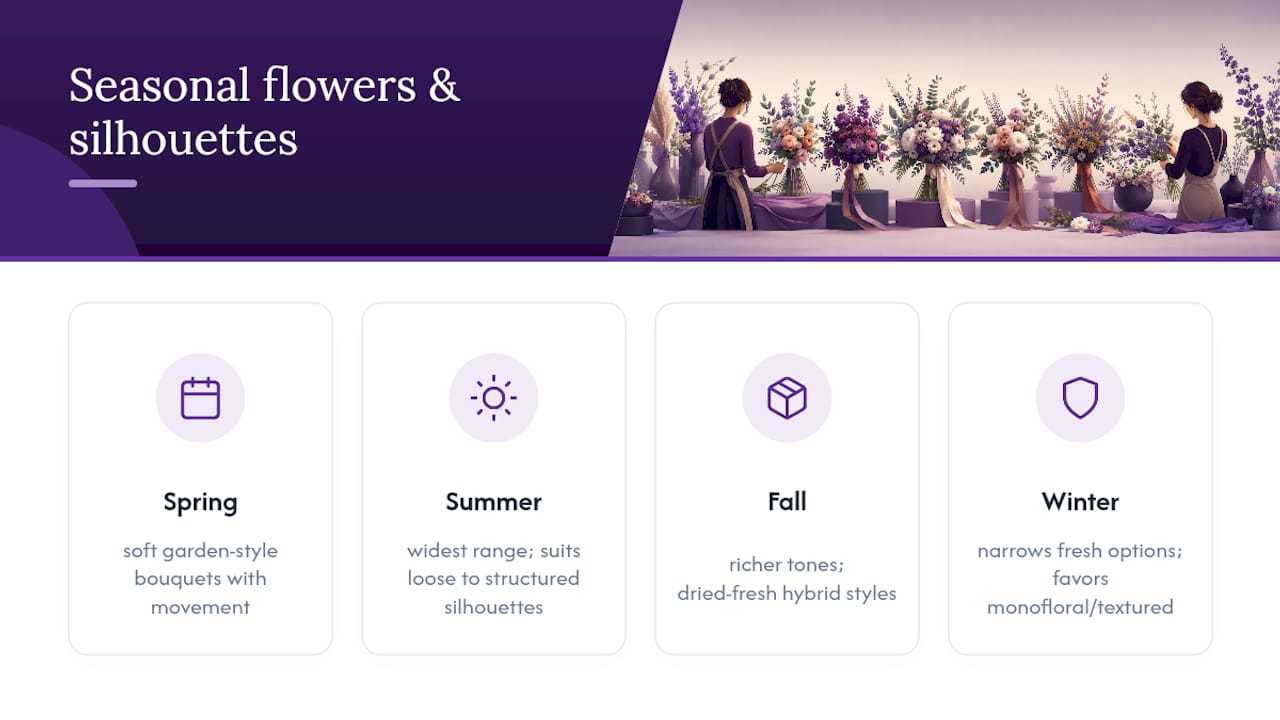
Spring brings peonies, ranunculus, and tulips, all of which lend themselves to soft, garden-style bouquets with movement and texture. Summer opens up the widest range, with dahlias, garden roses, and zinnias supporting almost any style from a loose hand-tied design to a structured round bouquet. Fall favors richer tones, chrysanthemums, dahlias, and the first dried elements like pampas grass, which pair naturally with a dried-fresh hybrid style. Winter narrows fresh options but makes a strong case for amaryllis, anemones, and evergreen foliage, often leaning into monofloral or heavily textured designs that don’t depend on a wide color range.
Choosing a style before checking what’s actually in season backward can get expensive fast, since out-of-season blooms get shipped in and priced accordingly. It’s usually smarter to pick a general silhouette you love, hand-tied, round, cascade, and then let seasonal availability decide the exact flowers and palette. Flora Magazine’s 2026 trend coverage points to a broader shift toward intentional, structured looks over oversized maximalist bouquets, which happens to pair naturally with whatever a given season offers in strong, well-shaped blooms rather than sheer volume.
Why Intentional Design Beats Sheer Volume
The garden-style, “wild” bouquets everywhere right now aren’t accidents. Every loose stem and every gap of negative space got placed there on purpose, which is exactly why the good ones look effortless and the bad ones look like they fell apart. Craft beats abundance every time.
If you take one thing from this guide, test it small. Build a posy, try the 3:5:8 ratio, feel how the spiral technique actually works in your hands, or book a guided consult if you’d rather watch someone who does this daily.
— Reza
Ready to Turn Inspiration Into a Real Bouquet?
If you’ve picked your favorite styles but don’t want to wire, tape, and trim your way through a first attempt, that’s exactly what a guided florist experience is for. Some florists build handcrafted arrangements around your dress, palette, and venue, sometimes offering same-day delivery in certain locations and satisfaction guarantees.
Whether you’re after a structured hand-tied bouquet, a full cascade, or a modern monofloral statement, the process starts with a conversation, not a catalog like the luxury handcrafted jewelry collections that inspire elegant bridal accessories. Bring your inspiration photos and dress details to a guided florist experience and walk away with a stem list and a plan instead of another afternoon of scrolling. If you’re planning around a wedding date specifically, the wedding flower page is the fastest way to see options and book delivery.
Sources
- The 3-5-8 rule for flower arranging (Country Living)
- The 3:5:8 rule for flowers, explained (Digital Florists)
- The ‘3-5-8’ Rule Is Every Florist’s Secret to Creating Stunning Flower Arrangements (RealSimple)
- Carried with intention: 2026 bouquet trends (Flora Magazine)
FAQ
What are the different styles of bouquets?
The main handcrafted bouquet styles are hand-tied, round, cascade, posy, pageant or arm sheaf, hoop or wrist, monofloral, dried-fresh hybrid, oversized free-form, and pomander. Each suits a different dress style, venue, and personal taste, so most people narrow their choice by silhouette and event formality first.
What is the 3:5:8 rule for bouquets?
The 3:5:8 rule is a proportion guide using 3 focal flowers, 5 textural stems, and 8 filler stems to build a balanced arrangement. It’s a flexible starting point rather than a fixed formula, and florists routinely adjust the ratio for cascades, centerpieces, or larger bridal bouquets.
What bouquet style is trending now?
2026 trends point toward intentional, structured designs: sculptural line, deliberate negative space, monofloral statements, and refined cascades instead of oversized maximalist bunches. The look reads as effortless, but it comes from precise placement rather than accident.
What are the different types of bouquet arrangements?
Beyond shape, bouquets vary by material mix: fully fresh, dried and fresh hybrids, and preserved arrangements built for longevity. Malik Flowers builds custom handcrafted designs across these categories, tailored to your dress, palette, and event with a satisfaction guarantee backing the final result.
How many stems does a typical bouquet need?
A medium hand-tied bouquet typically uses a moderate number of stems mixing focal flowers, textural filler, and some trailing greens following the 3:5:8 ratio. Larger bridal bouquets scale the same ratio up rather than simply adding more of everything at random.