
5 Hotel Lobby Flower Styles and a Weekly Program
5 Hotel Lobby Flower Styles and a Weekly Program
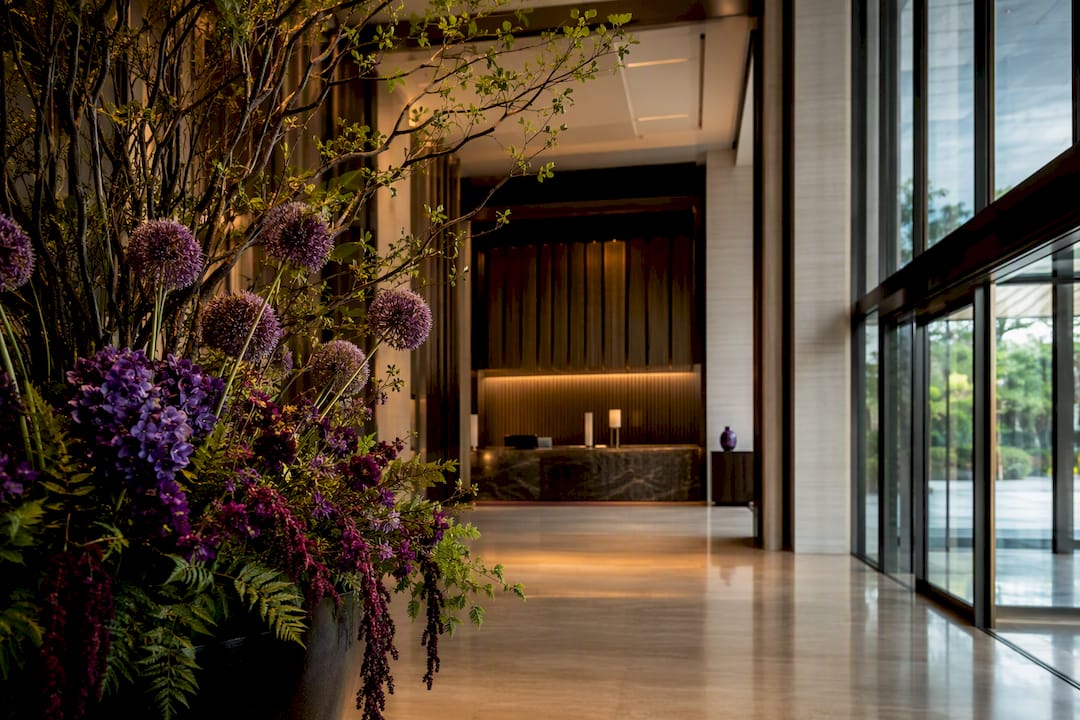
Choose one scaled hero arrangement on a weekly refresh schedule, built from long-life stems like orchids, hydrangea, or garden roses, and support it with one or two smaller pieces at the desk or lounge. This gives guests the strongest first impression, keeps maintenance predictable, and lets you budget with confidence instead of guessing. The rest comes down to picking a style, sizing it to the room, and locking in a service cadence that never lets the display slip.
TL;DR:
- The hero arrangement should be scaled to the lobby’s height and placement, with tall pieces suited for high ceilings and low spreads for lower spaces.
- Orchids, hydrangea, garden roses, and calla lilies are the most durable flowers for lobby conditions and hold their shape longer between service visits.
- Weekly floral contracts should include a mid-week check, a dedicated account manager, and clear escalation steps to maintain arrangement quality and consistency.
- A single, well-sized hero piece paired with one or two supporting containers creates a more luxurious look than numerous small vases scattered across surfaces.
- Budgeting should consider scope, scale, seasonal demand, and need for a trial period to ensure the florist’s weekly refresh promise is reliable.
Table of Contents
- What Style of Hotel Lobby Flowers Fits Your Brand?
- How Big Should the Hero Arrangement Be?
- Which Flowers Actually Last in a Hotel Lobby?
- How Does a Weekly Flower Contract Actually Work?
- What Vase or Container Works Best for a Lobby?
- How Do Seasonal Flowers Keep a Lobby Feeling Current?
- What Should You Expect From a Professional Weekly Program?
- Scale First, Then Palette
- Bring a Weekly Program to Your Lobby
- Sources
- FAQ
What Style of Hotel Lobby Flowers Fits Your Brand?
Most hotel lobby flowers fall into five workable categories, and the right one depends less on personal taste than on what the space and brand are already saying.
- Architectural or modern: orchids in a monochrome palette, clean lines, and negative space. Reads sharp on camera and suits contemporary boutique properties.
- Lush garden style: garden roses and hydrangea packed into a rounded, romantic silhouette. This is the classic luxury look guests photograph in the lobby mirror.
- Textural and autumnal: dahlias, berries, and unexpected foliage for warmth and tactile interest, strong for properties leaning into a seasonal or rustic identity.
- Sculptural branches or blossom: magnolia or cherry blossom used as a dramatic, oversized gesture near the entrance. One branch can do more work than a dozen stems.
- Low supporting compotes: smaller, quieter pieces for the front desk or lounge tables that don’t compete with the hero piece or block sightlines.
Pick one lane and let the hero piece carry it. Mixing all five styles across one lobby usually reads as clutter, not abundance.
How Big Should the Hero Arrangement Be?
Scale and placement decide whether a lobby arrangement reads as intentional or accidental, and getting it wrong is the single most common mistake hotels make. Start by walking the arrival path a guest actually takes and finding the visual center: the point where eyes land first when someone crosses the threshold. That’s where the hero arrangement belongs, not wherever there happens to be an empty console table.
Ceiling height sets the rules from there. High ceilings and grand entrances call for a tall hero piece, often built on branches, that fills vertical space without narrowing the walkway. Lower ceilings do better with a wide, low spread that reads as generous rather than cramped. From there, map the lobby into zones: the entry gets the hero, the front desk gets a smaller companion piece that doesn’t block staff sightlines to guests, the lounge gets low arrangements suited to seating height, and corridors usually need nothing at all unless there’s a natural pause point.
The most frequent misstep is scattering many small vases across every surface instead of committing to one dominant piece. A single hero piece plus one or two supporting pieces reads better than many small vases, since scale matters more than stem variety when it comes to perceived luxury. Before choosing a single stem, mark the arrival path, find the visual center, and check ceiling height and scale the way any good floral designer would before quoting a job.
Which Flowers Actually Last in a Hotel Lobby?
Lobby flowers face conditions most home arrangements never see: constant foot traffic, HVAC drafts, direct sun through glass doors, and days between service visits. That means vase life matters as much as visual impact. Orchids, anthuriums, garden roses, hydrangea, and calla lilies are the workhorses of hospitality floral design because they hold their shape and color under stress far longer than delicate seasonal blooms. Structural greenery fills out a hero arrangement and buys extra days of freshness between refreshes.
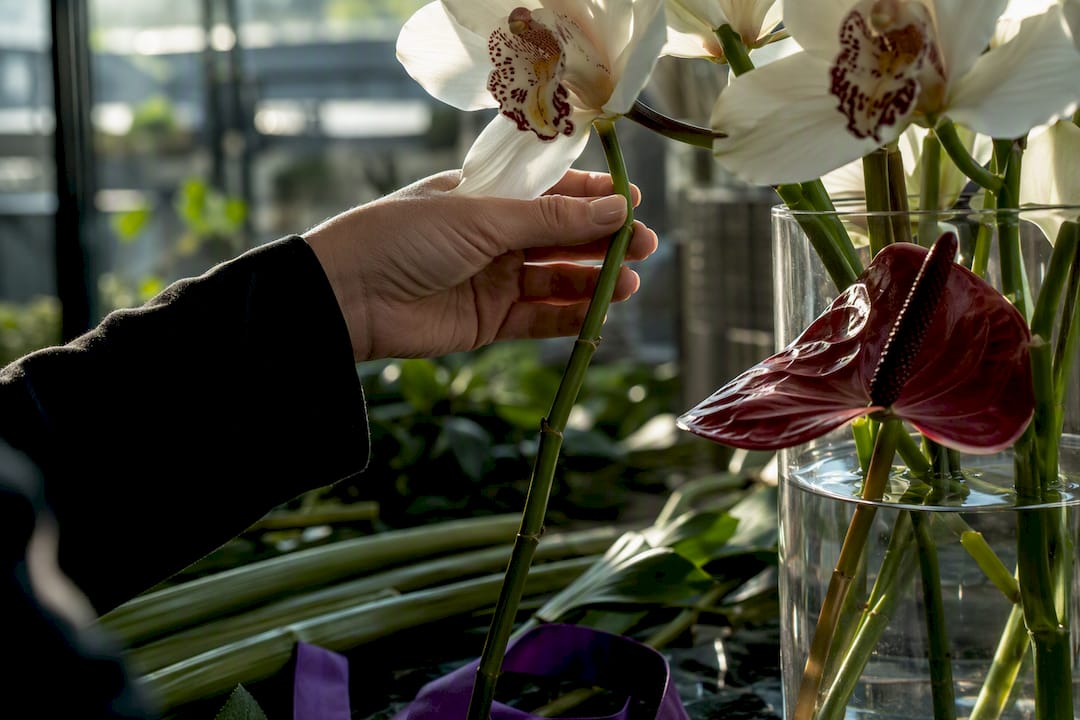
There are trade-offs worth knowing before you commit. Anthuriums and orchids deliver dramatic shape but cost more per stem, while garden roses and hydrangea offer that lush, photographable fullness at a friendlier price point. If your lobby sits next to a restaurant or breakfast service, fragrance becomes an operational issue, not just an aesthetic one. Hotels sometimes prefer lower-fragrance palettes in dining-adjacent areas because strong scent competes with food service and can bother guests seated nearby.
Living, planted arrangements are worth considering for low-traffic corners with reliable natural light, since they reduce weekly replacement costs, but they need someone checking watering schedules, which not every property has staff for.
How Does a Weekly Flower Contract Actually Work?
A weekly service contract is the backbone of any lobby floral program that stays consistent instead of degrading between visits. Contract floristry typically runs on a weekly refresh cycle: a florist installs, checks mid-week if the install is high-traffic or fragile, and reassesses on the next scheduled visit. That mid-week touch matters more than people expect. A scheduled service is what prevents the lobby from ever hitting that stretch where the arrangement looks tired and forgotten, sometimes called the midweek drop.
A solid contract usually spells out:
- Delivery, vessels, design, and installation as one bundled service rather than line items you negotiate separately.
- A named account manager who owns the relationship, not a rotating cast of drivers.
- A written mid-week touch-up clause for any zone with heavy foot traffic or delicate stems.
- Clear escalation steps if an arrangement wilts early or a delivery is missed.
Pricing scales with the number of zones covered, the size of the hero piece, and how much you ramp up for holidays or events. Contract pricing is typically based on scope, scale, frequency, and seasonal demand, so a single-zone boutique property and a full-service downtown hotel with a restaurant and ballroom will land in very different budget brackets. Request a trial period of several weeks before signing a longer agreement. That window is usually enough to surface problems a walkthrough won’t catch, like a draft near the doors that dries stems faster than expected or a skylight that scorches petals by early afternoon.
Pro Tip: Ask any prospective florist how they define a “successful week.” The strong answers mention appearance, water clarity, and whether the arrangement still looks intentional several days after install, not just whether it survived.
What Vase or Container Works Best for a Lobby?
The vessel matters almost as much as the flowers, especially once you’re running a weekly program. Tall glass, ceramic, and low compotes each solve different problems: glass adds height and shows off clean water, but it also shows algae and cloudiness fast if maintenance slips. Ceramic feels grounded and hides water issues, though it’s heavier to move during weekly swaps. Low compotes protect sightlines across the desk or lounge, which matters more than people realize in a functioning lobby.
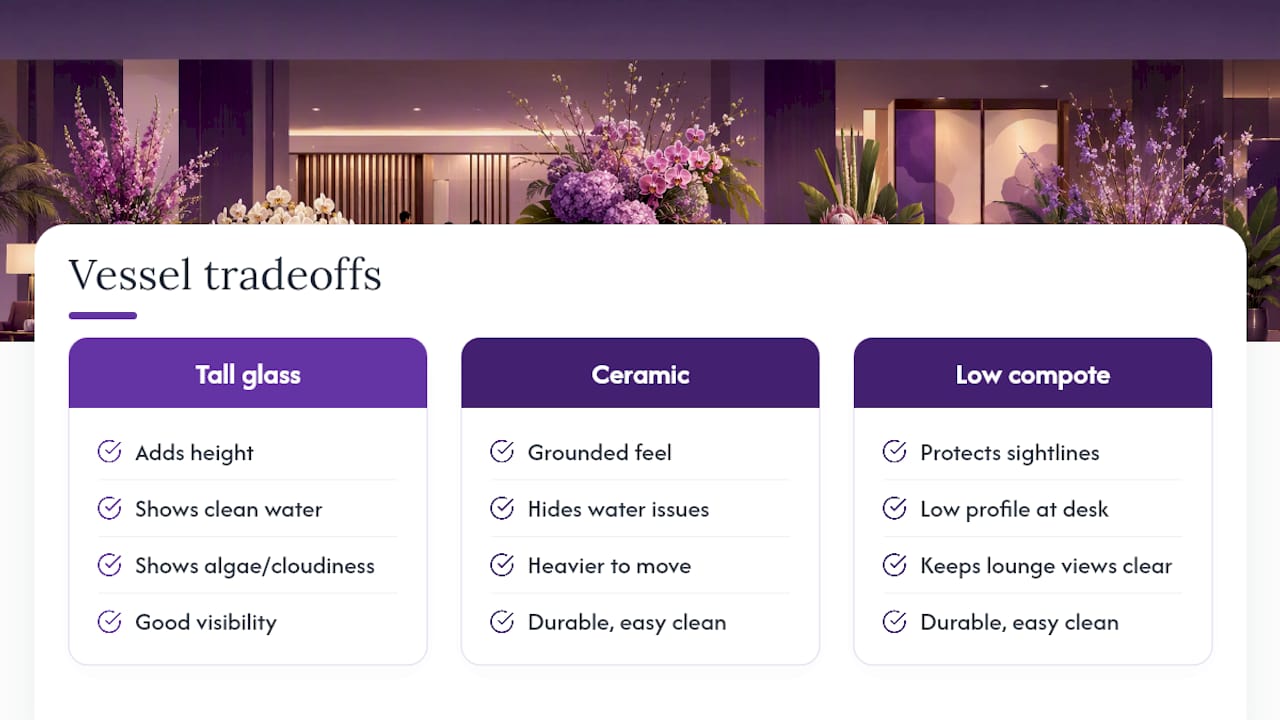
For a weekly program, durability and ease of cleaning matter as much as style. Reusable vessels the florist maintains as part of the contract cut waste and keep costs predictable compared to buying new containers for every rotation.
How Do Seasonal Flowers Keep a Lobby Feeling Current?
Seasonal rotation keeps a hotel lobby from feeling static, and guests notice the shift even when they can’t name it. Spring calls for blossom and tulips, summer for peonies and garden roses, autumn for dahlias and berries, and winter for amaryllis and evergreens. The trick is keeping one consistent thread, whether that’s a signature vessel, a repeated color family, or the same hero silhouette, so the lobby still feels recognizably “yours” across every season.
Budget for a bump during holidays and major events. A December installation with amaryllis and evergreen branches typically costs more than a standard autumn week, and it’s worth planning that into the annual budget rather than treating it as a surprise.
What Should You Expect From a Professional Weekly Program?
A property considering a weekly service should expect a site visit before any proposal, where the florist maps zones, checks light and ceiling height, and notes drafts or traffic patterns that affect stem life. Installs typically happen early morning, before guest traffic peaks, and vessels get cleaned and maintained as part of the same visit rather than left to accumulate residue between rotations.
Reliability and a single accountable point of contact separate the florists worth hiring from ones who treat hotel work as a side job. Malikflowers builds its arrangements by hand rather than from a standard template, and backs every design with a satisfaction guarantee, refunding clients who aren’t happy with the result. Before signing with anyone, ask for:
- A named account manager and a written response time for failures.
- Proof of insurance and a clear escalation path.
- Confirmation of who handles vessel cleaning and storage between visits.
- A sample seasonal plan, not just a one-off arrangement photo.
Scale First, Then Palette
If you take one thing from this, prioritize scale before color. A hero arrangement sized correctly for the ceiling and sightlines will outperform a perfectly color coordinated display that’s too small to register when someone walks through the door. Palette is the layer everyone obsesses over first, but it’s the easiest thing to fix later.
The practical move is a trial inspection: book a 4 to 6 week trial, then schedule your own mid-week check on week two, unannounced. That’s when you find out whether the florist’s “weekly refresh” promise actually holds up on day four, not just day one.
— Reza
Bring a Weekly Program to Your Lobby
Handcrafted arrangements should be designed around the space they’re going into, not pulled from a catalog template, and every design should carry a satisfaction guarantee so you’re never stuck with a hero piece that misses the brief. For hotels and hospitality teams weighing a weekly contract, that combination of custom design and accountability matters more than a long stem list.
If you’re mapping out a seasonal rotation, the spring collection shows how palette shifts without losing a consistent design thread, and the corporate flowers program is built for exactly the kind of recurring, brand-consistent service a lobby needs. Browse the full product catalog to see design range, then reach out for a proposal or a trial install scoped to your property across Metro Vancouver.
Sources
- Contract Flowers For Hotels: A Complete Guide | Blooming Haus
- Lobby Floral Arrangements Guide | Fiore Designs
- Hotel Lobby Floral Design Guide for Los Angeles | Pink Clover
FAQ
What Are Some Good Ideas for a Hotel Lobby Flower Arrangement?
A tall branch based arrangement with magnolia or blossom works well for high ceilings, while a lush garden style piece with roses and hydrangea suits a warmer, more classic lobby. Pair either with one low supporting piece at the front desk so sightlines stay open.
What Is the 3:5:8 Rule for Flowers?
The 3:5:8 rule is a design guideline suggesting arrangements look most balanced when built in odd-numbered groupings, using a layered approach with focal stems, supporting stems, and filler stems. It’s a starting ratio for visual balance rather than a fixed formula every florist follows.
What Types of Flowers Are Commonly Used in Hotels?
Orchids, hydrangea, roses, and structural greenery are the most common choices because they hold up well between service visits and deliver strong visual impact. Anthuriums and calla lilies also show up frequently for their long vase life and sculptural shape.
What Should Be in a Hotel Lobby Arrangement?
A hotel lobby arrangement should center on one scaled hero piece positioned at the visual center of the entry, using durable stems suited to the ceiling height and light conditions. Supporting pieces at the desk or lounge should stay lower profile so they don’t compete with the main display or block staff sightlines.
How Much Does a Weekly Hotel Flower Service Typically Cost?
Pricing depends on the number of zones covered, the scale of the hero arrangement, and seasonal demand, with contracts generally quoted by scope and frequency rather than a flat industry rate. Requesting a proposal after a site visit is the most reliable way to get an accurate figure for a specific property.