The Best Hypoallergenic Flowers for Allergy Sufferers
The Best Hypoallergenic Flowers for Allergy Sufferers
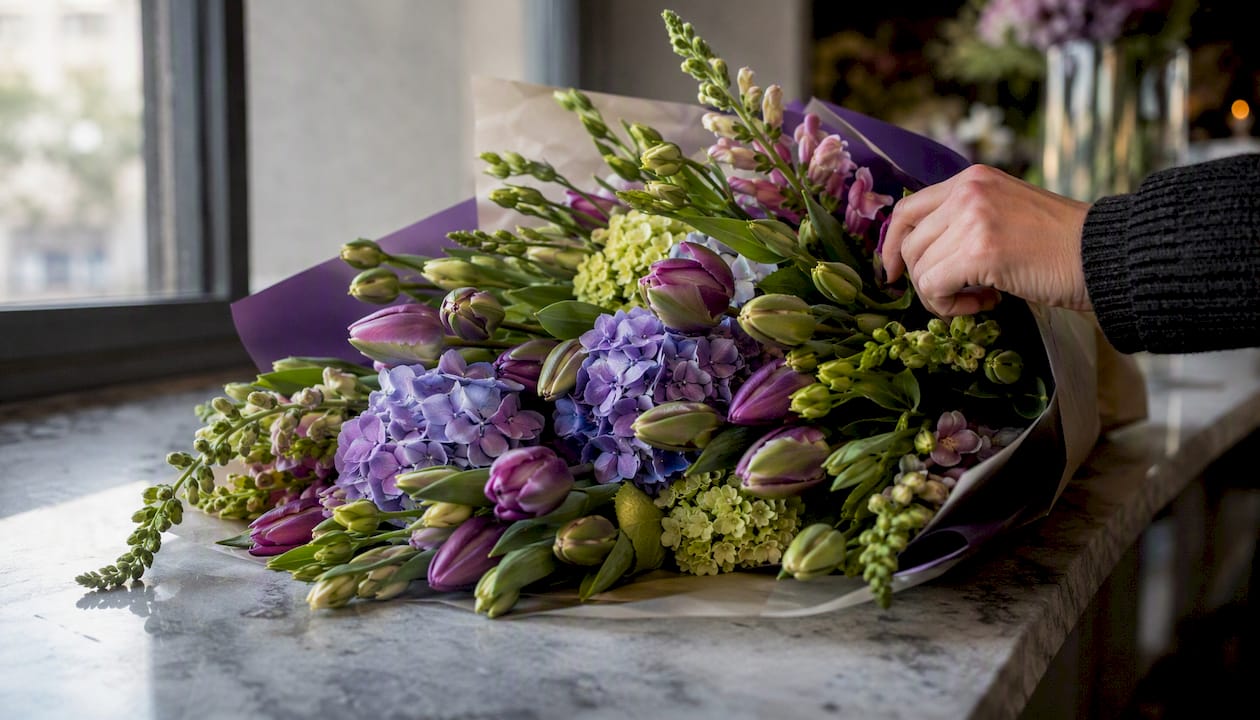
The safest flowers for allergy sufferers are insect-pollinated varieties with heavy, sticky pollen that stays on the bloom rather than drifting through the air. Orchids, roses, hydrangeas, carnations, tulips, snapdragons, peonies, and irises all fall into this category and are widely available from florists across Canada.
Quick reference: low-pollen flowers to request:
- Orchids — minimal airborne pollen, long-lasting, excellent for indoor arrangements
- Roses — low pollen release, widely available, request bud stage for best results
- Hydrangeas — heavy pollen, insect-pollinated, rarely triggers airborne reactions
- Carnations — low fragrance varieties available, reliably low pollen
- Tulips — low airborne pollen, but note contact-allergen caveat below
- Peonies — showy, insect-pollinated, low airborne risk
- Snapdragons — enclosed bloom structure limits pollen dispersal
- Irises — pollen is enclosed within the flower structure
If your sensitivity is severe or you have had unexplained skin reactions to flowers, scroll to the safety section before ordering.
Key Takeaways
Insect-pollinated, low-pollen flowers are the safest choice for allergy sufferers, and simple florist techniques like stamen removal and bud-stage ordering reduce exposure further.
| Point | Details |
|---|---|
| Choose insect-pollinated types | Orchids, roses, hydrangeas, carnations, peonies, and snapdragons release minimal airborne pollen. |
| Order buds, remove stamens | Closed blooms and stamen removal eliminate the main pollen source in most arrangements. |
| Avoid Asteraceae and exposed stamens | Daisies, chrysanthemums, and standard lilies are the most common bouquet triggers. |
| Contact dermatitis is separate from pollen | Tulips and Alstroemeria contain tulipalin A, which can cause skin reactions on direct contact. |
| Malikflowers custom orders | Malikflowers builds pollen-reduced arrangements on request with same-day Metro Vancouver delivery. |
Table of Contents
- What makes a flower hypoallergenic?
- 10 allergy-friendly flowers worth knowing
- 1. Orchids
- 2. Roses
- 3. Hydrangeas
- 4. Carnations
- 5. Tulips
- 6. Peonies
- 7. Snapdragons
- 8. Irises
- 9. Begonias
- 10. Pollen-free lily cultivars
- Flowers to avoid if you have hay fever
- How to choose, order, and prepare a bouquet to reduce reactions
- When flowers can still cause problems
- Why these recommendations hold up
- Malikflowers custom bouquets for sensitive households
- Sources
- FAQ
What makes a flower hypoallergenic?
“Hypoallergenic” is not a botanical certification. When florists and allergists use the term, they mean flowers that produce little to no airborne pollen, or whose pollen is heavy and sticky enough that insects carry it rather than wind scattering it. That distinction matters because airborne pollen from wind-pollinated plants — grasses, trees, and weeds — is what drives most seasonal allergic rhinitis, not the showy blooms in a vase.
The Missouri Botanical Garden makes this point clearly: colorful, insect-pollinated garden flowers are routinely blamed for hay fever that is actually caused by nearby grasses or trees. A bouquet of roses sitting on your kitchen table is almost never the culprit.
Fragrance is a separate issue. Strong scent does not equal high pollen, but volatile compounds in heavily perfumed flowers can irritate airways in people with asthma or chemical sensitivities. If fragrance is a trigger for you, ask for low-scent cultivars or unscented varieties when ordering.
Pro Tip: Ask your florist for flowers at the bud stage. Closed blooms release far less pollen than fully open ones, and stamen removal before arranging eliminates the main pollen source in flowers that have them. Single-variety test bouquets are also a smart first step if you are trying a new flower type.
10 allergy-friendly flowers worth knowing
1. Orchids
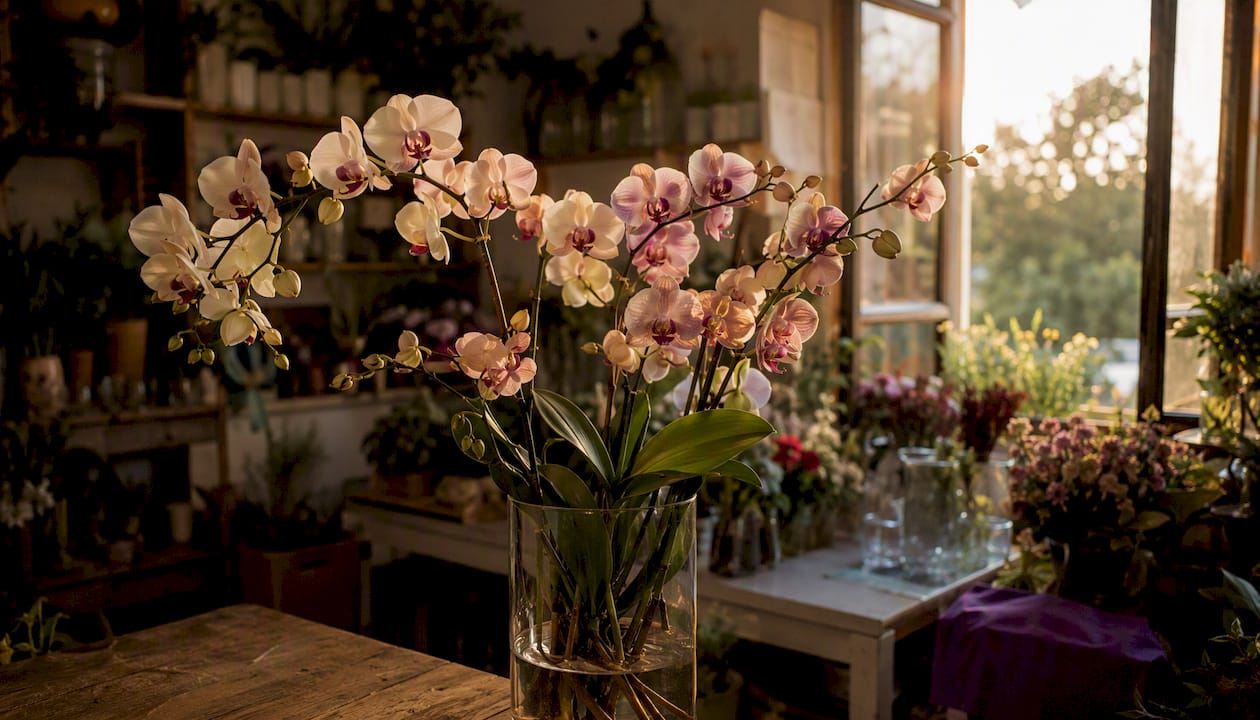
Orchids produce very little airborne pollen. Their pollen is packaged in waxy masses called pollinia that cling to pollinators rather than floating free, which is why the American Orchid Society notes their pollen is not dispersed by wind. For anyone with hay fever, a Phalaenopsis or Dendrobium arrangement is about as safe as cut flowers get. They also last two to four weeks in a vase, making them a practical gift choice.
2. Roses
Roses are among the most reliably low-pollen cut flowers available. Their pollen is heavy and produced in modest quantities, and most commercial rose cultivars have been bred for dense petals that further limit pollen exposure. WebMD’s plant allergy guide lists roses as one of the better choices for allergy sufferers. Request buds rather than fully open blooms for the lowest possible exposure.
3. Hydrangeas
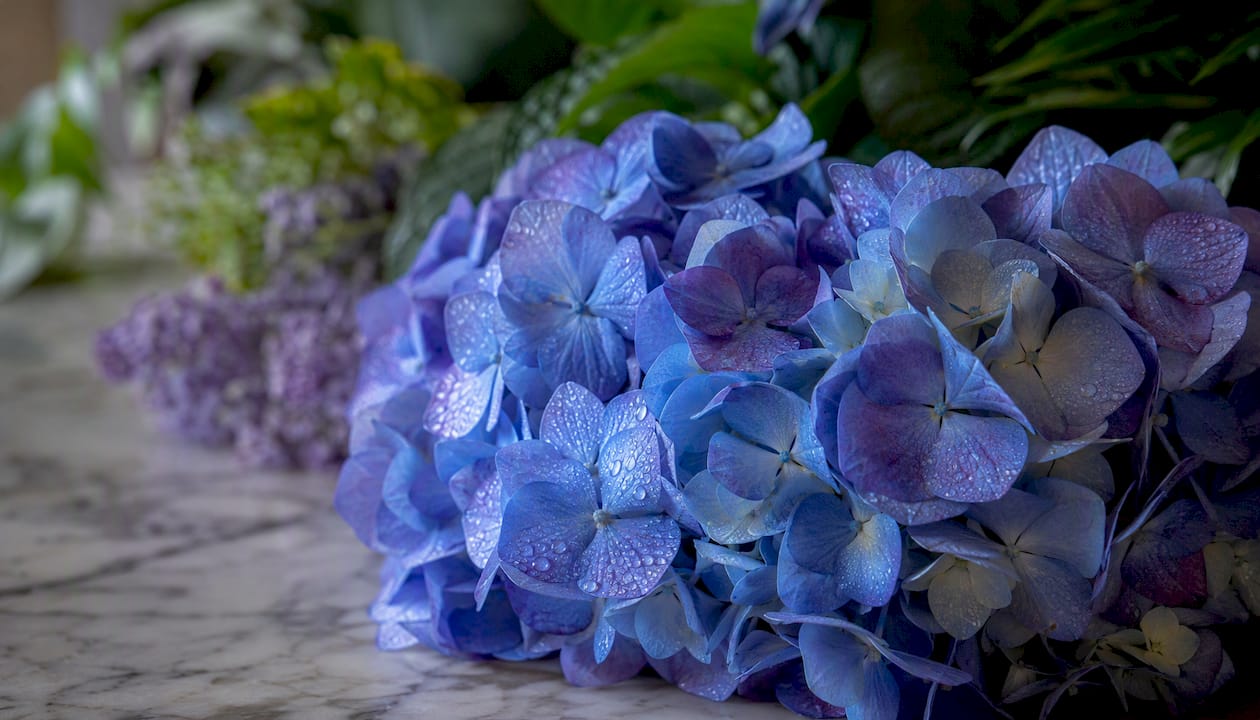
Hydrangeas are insect-pollinated and produce heavy, clustered pollen that does not travel through the air. Their large, dramatic flower heads make them a popular filler in bouquets, and they carry essentially no airborne pollen risk. They do have a mild sap that can irritate skin on prolonged contact, so wear gloves when trimming stems.
4. Carnations
Carnations have been a florist staple for decades partly because they are low-maintenance and long-lasting, but they also happen to be low-pollen. Their tightly packed petals physically limit pollen dispersal. Low-fragrance cultivars are easy to find if scent sensitivity is a concern.
5. Tulips
Tulips release very little airborne pollen and are a common recommendation for allergy-friendly bouquets. The caveat: tulipalin A, a compound found in tulip bulbs and stems, can cause allergic contact dermatitis in people who handle them frequently. For a gift recipient who will simply receive and display the bouquet, the risk is low. For florists or gardeners handling tulips daily, it is worth noting. More on this in the safety section.
6. Peonies
Peonies are insect-pollinated and their pollen is heavy and sticky. They are a popular spring and early summer choice in Metro Vancouver, typically available from late April through June. Their lush, full blooms are visually striking and their airborne pollen risk is low. Ask for buds if the recipient is particularly sensitive.
7. Snapdragons
The tubular, enclosed structure of a snapdragon bloom physically traps pollen inside the flower. Wind cannot carry what it cannot reach. Snapdragons are a reliable filler flower for allergy-friendly arrangements and come in a wide color range.
8. Irises
Iris pollen is enclosed within the flower’s structure and is not easily airborne. They are a spring staple and work well in mixed bouquets. One practical note: iris stems can irritate skin if the sap contacts a cut or sensitive area, so handle with gloves when trimming.
9. Begonias
Begonias are among the lowest-pollen flowering plants available. They are more commonly found as potted plants than cut flowers, which makes them an excellent alternative gift for someone with strong sensitivities. A potted begonia lasts far longer than a bouquet and keeps pollen contained.
10. Pollen-free lily cultivars
Standard Oriental lilies are a florist favorite, but their exposed stamens carry large amounts of heavy, rust-colored pollen that stains fabric and can trigger reactions in sensitive people. The solution is not to avoid lilies entirely. Breeders have developed pollen-free Oriental lily cultivars, such as those from Liber Lilies, specifically to eliminate this problem. Similarly, pollen-free lisianthus series like Solo® from Sakata Ornamentals offer the look of traditional blooms without the pollen. Ask your florist specifically for pollen-free cultivars when lilies are a must.
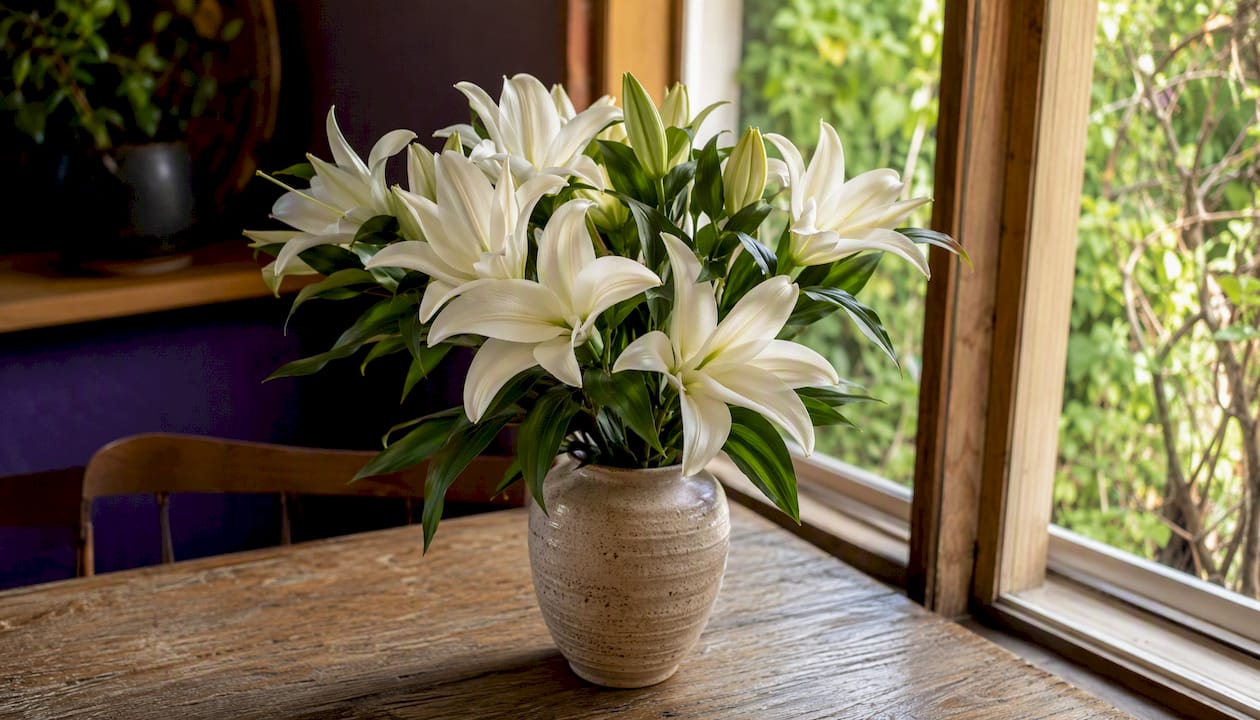
Pro Tip: When ordering from Malikflowers, mention that you want pollen-free or low-pollen flowers. The team can substitute pollen-free lily cultivars, remove stamens before arranging, and select from the low-pollen list above. You do not need to figure this out yourself.
Flowers to avoid if you have hay fever
Some flowers are reliably problematic for allergy sufferers and are worth excluding from bouquets or gardens entirely.
High-risk flowers to skip:
- Daisies and chamomile — members of the Asteraceae family, they produce abundant, light pollen
- Sunflowers — standard varieties release significant pollen; pollen-free cultivars exist but are not always available
- Chrysanthemums — high pollen producers and a common trigger for both airborne and contact reactions
- Traditional lilies with exposed stamens — the pollen is heavy but abundant and easily transferred by touch
- Baby’s breath (Gypsophila) — frequently used as filler but documented as a sensitizer in florists
Wind-pollinated outdoor plants are the bigger picture problem. Grasses, birch, alder, and ragweed are the dominant airborne pollen sources in most Canadian cities during spring and summer. A bouquet of roses indoors is not competing with those sources.
Contact allergens are not the same as airborne pollen. Tulips and Alstroemeria (Peruvian lily) both contain tulipalin A, a compound that causes allergic contact dermatitis on skin contact. This is a separate mechanism from inhaling pollen. Someone with no airborne pollen allergy can still develop a skin reaction from handling these flowers repeatedly. If you are buying a gift for someone who arranges their own flowers regularly, this is worth flagging.
How to choose, order, and prepare a bouquet to reduce reactions
The simplest approach: choose insect-pollinated, low-pollen flower types, order at the bud stage, ask for stamen removal, limit strong fragrances, and keep the bouquet away from sleeping areas while you test your tolerance.
Here is a practical sequence:
- Choose the flower types. Use the shortlist above: orchids, roses, hydrangeas, carnations, peonies, snapdragons, irises, or pollen-free lily cultivars. Avoid Asteraceae family flowers and anything with exposed, dusty stamens.
- Request buds and stamen removal. Ask your florist to deliver flowers at the bud stage and to remove stamens from any open blooms before arranging. This single step eliminates most of the pollen in a mixed bouquet.
- Unbox carefully. Open the delivery box outdoors or in a well-ventilated area. Rinse the vase with clean water before use.
- Place the bouquet thoughtfully. Keep it in a living room or kitchen rather than a bedroom, at least for the first few days. A cool, ventilated room slows bloom opening and reduces pollen release.
- Change the water every two days. Stagnant water accelerates bloom opening and can harbor mold, which is a separate allergen trigger.
If outdoor pollen is high on a given day, the EPA’s guidance on HEPA filtration is worth reading. A HEPA air purifier in the room where you keep flowers can reduce total airborne particulate load, which helps when pollen counts are elevated.
Pro Tip: Keep the bouquet out of your bedroom for the first three to four days. This is when blooms open most and pollen release peaks. Once the flowers are past full bloom, moving them to a bedroom is lower risk.
When flowers can still cause problems
Low-pollen flowers are not risk-free for everyone. Two distinct mechanisms can cause reactions even with the safest bouquet.
The first is airborne sensitivity in highly reactive individuals. Someone with severe allergic rhinitis may react to trace pollen levels that most people tolerate without issue. If you have had anaphylactic reactions or carry an epinephrine auto-injector, consult an allergist before introducing new flowers into your home.
The second is contact dermatitis. This is a skin reaction triggered by direct contact with plant compounds, not inhaled pollen. Research published in Plant Methods documents tulipalin A release from tulips and Alstroemeria, with measurable levels detected on mechanical injury to the plant. Florists who handle these flowers daily show documented patch-test positivity rates. For a gift recipient who simply places a bouquet in a vase, the exposure is minimal. For someone who trims, arranges, or gardens with these plants regularly, the risk accumulates.
Occupational allergy research in florists confirms that repeated exposure to specific floral proteins can produce IgE-mediated reactions over time. Individual sensitization varies, which is why testing tolerance with a single flower type before large purchases is practical advice, not just caution.
If you develop hives, persistent sneezing, eye irritation, or skin redness after contact with a specific flower, keep a simple symptom log — flower type, date, duration — and bring it to an allergist. Skin prick tests and patch tests can identify the specific trigger, which is far more useful than guessing. Asthma Canada and the Canadian Society of Allergy and Clinical Immunology both maintain directories of certified allergists if you need a referral.
Why these recommendations hold up
The shortlist above is grounded in three converging lines of evidence.
Primary sources:
- AAFA pollen allergy guidance — explains the wind vs. insect pollination distinction and why showy flowers are lower risk
- Missouri Botanical Garden — horticultural evidence that insect-pollinated blooms are routinely misidentified as allergy triggers
- WebMD plant allergy guide — widely used clinical reference for best and worst plants
- Respiratory Care WA low-allergen garden guide — regional guidance on plant selection and seasonal timing to reduce pollen exposure
- PubMed occupational allergy research — florist sensitization data
The botanical logic is consistent: insect-pollinated flowers produce pollen that is heavy, sticky, and not designed for airborne travel. Wind-pollinated plants produce the opposite. Choosing from the insect-pollinated shortlist reduces airborne exposure by design, not by accident.
The low-allergen garden guidance from Respiratory Care WA also notes that seasonal timing matters. In Metro Vancouver, tree pollen peaks in March and April, grass pollen runs May through July, and weed pollen extends into September. Ordering bouquets of low-pollen cut flowers during high-pollen outdoor seasons does not add meaningfully to your total pollen load.
A florist’s honest take on hypoallergenic bouquets
The most common request I hear is some version of “I want to send flowers but they have allergies.” The honest answer is that most bouquets from a thoughtful florist are already low-risk, because the flowers that look the most impressive — roses, orchids, hydrangeas, peonies — happen to be the ones with the least airborne pollen.
The tradeoff worth knowing: the flowers that photograph beautifully and last longest tend to be insect-pollinated, which means they are also the safest choices. The ones that cause problems are usually the inexpensive fillers — baby’s breath, chamomile sprigs, certain daisies — that get added for volume. Asking for a cleaner arrangement with fewer filler types often solves the problem without sacrificing appearance.
For anyone buying for a household with a new baby or someone recovering from illness, the new baby collection at Malikflowers is worth browsing. Custom requests for pollen-reduced arrangements are welcome.
Malikflowers custom bouquets for sensitive households
Allergy sufferers in Metro Vancouver do not have to choose between beautiful flowers and a comfortable home. Malikflowers builds custom, handcrafted arrangements using the low-pollen flower types covered in this article, and the team can remove stamens, substitute pollen-free lily cultivars, and avoid high-pollen fillers on request.
Same-day delivery is available across Metro Vancouver, and every order comes with a satisfaction guarantee: if the arrangement is not what you expected, Malikflowers will make it right. Browse the full product catalog to see current arrangements, or check the spring collection for seasonal low-pollen options. For birthdays, anniversaries, or any occasion where the recipient has sensitivities, note your preferences at checkout and the team will configure the bouquet accordingly.
Sources
- Asthma and Allergy Foundation of America (AAFA) — Pollen allergy
- WebMD — Best and worst plants for allergy sufferers
- Missouri Botanical Garden — Plants, pollen, and allergies
- Occupational allergy in florists — PubMed
- Rapid detection of Tulipalin A with SESI‑Orbitrap MS: an exploration across spring flowers | Plant Methods | Springer Nature
- Low allergen plants and gardens — Respiratory Care WA
- U.S. EPA — What is a HEPA filter?
- American Orchid Society — Orchids A to Z (Vanilla entry)
For local pollen counts in Metro Vancouver, Environment and Climate Change Canada publishes daily pollen bulletins during the spring and summer season, which can help you time deliveries and outdoor flower purchases.
This article is general information, not a substitute for advice from a qualified doctor. Consult a qualified healthcare professional about your own circumstances before acting on anything here.
FAQ
What flowers should you get someone who has allergies?
Orchids, roses, hydrangeas, carnations, peonies, and snapdragons are the most reliable choices. Ask the florist to deliver at the bud stage and remove stamens where possible.
Which flowers should you avoid if you have hay fever?
Daisies, sunflowers, chrysanthemums, baby’s breath, and standard lilies with exposed stamens are the most common triggers. Asteraceae family flowers produce abundant, light pollen.
Is there a flower with no pollen at all?
No flower is completely pollen-free, but pollen-free cultivars of Oriental lilies and lisianthus have been bred to eliminate exposed pollen. Orchids come close in practice because their pollen is enclosed in waxy masses that do not become airborne.
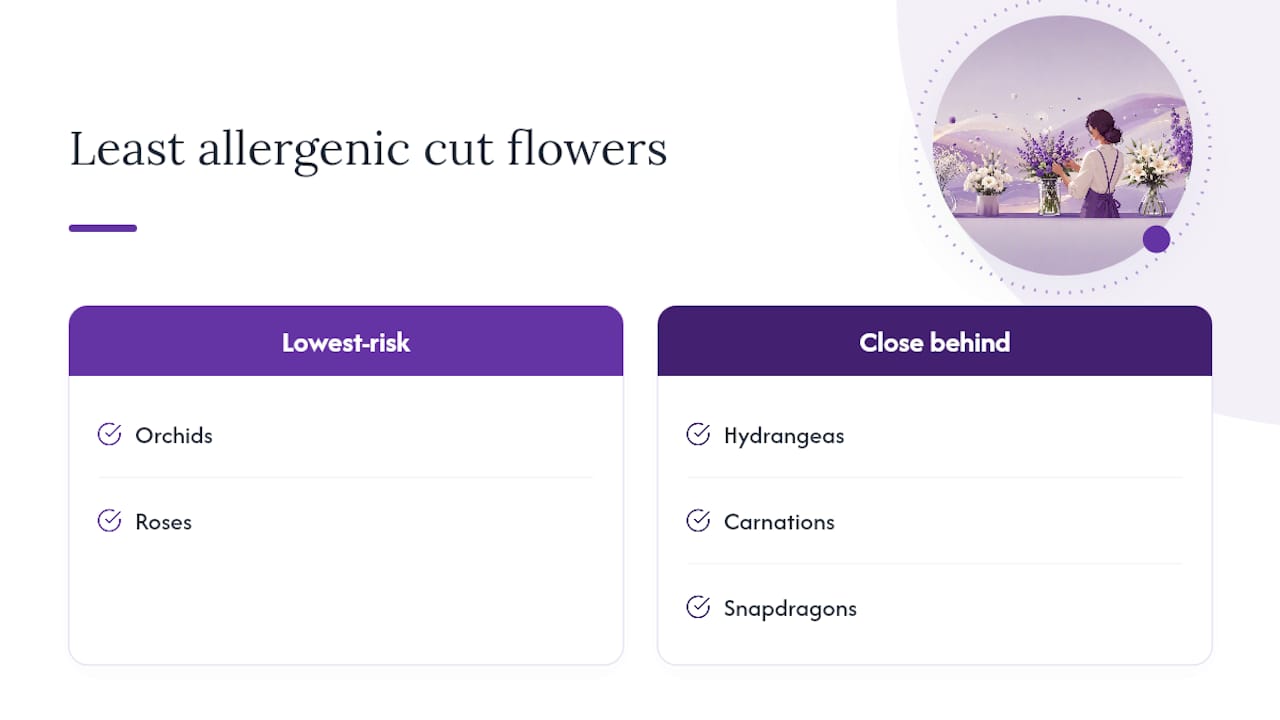
Which cut flowers are the least allergenic?
Orchids and roses are consistently rated the lowest-risk cut flowers for airborne allergies. Hydrangeas, carnations, and snapdragons are close behind. The key factor is insect pollination, which produces heavy pollen that does not travel through the air.
Can low-pollen flowers still cause skin reactions?
Yes. Tulips and Alstroemeria contain tulipalin A, which causes allergic contact dermatitis on direct skin contact. This is a separate mechanism from airborne pollen and can affect people who have no airborne pollen allergy at all.