Under 10 Inches: Intimate Event Flowers Designed for Micro Weddings
Under 10 Inches: Intimate Event Flowers Designed for Micro Weddings
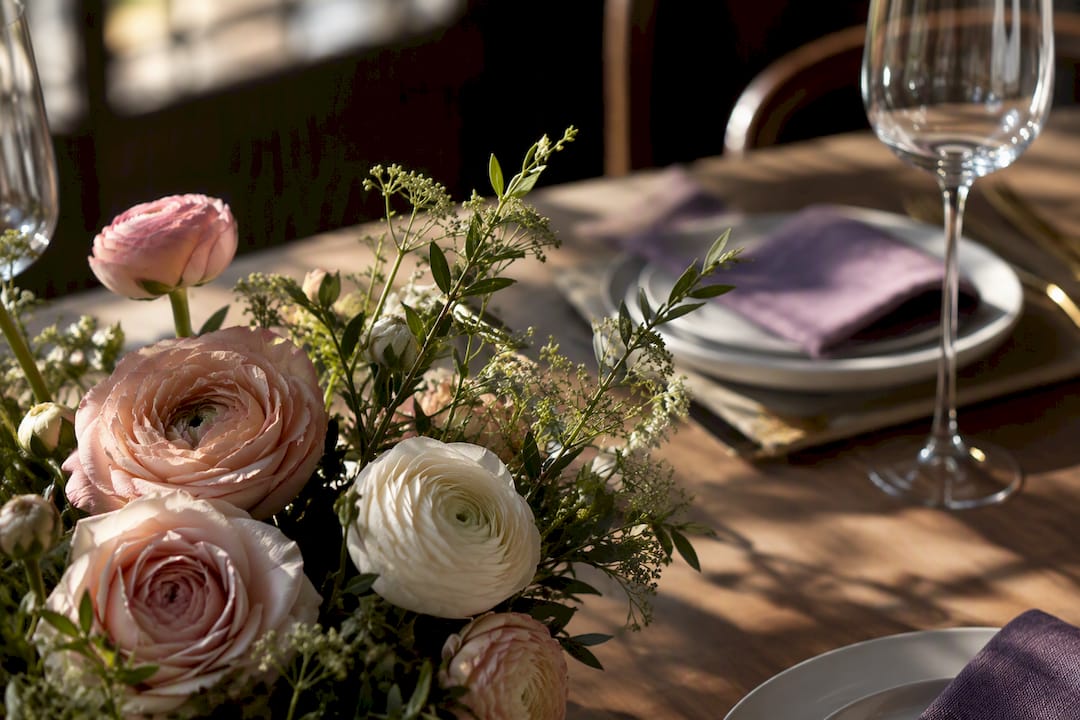
For micro weddings and private celebrations, the smartest move is small-format, high-impact arrangements built around one focal bloom and a single unifying motif. A low centerpiece, a posy, or a run of bud vases will always read better at a table for eight than a scaled-down version of a ballroom display, as seen in elegant setups with blossom trees for small-scale venue decoration. Skip the miniature, grand arrangement. Choose fewer, better stems, repeated with intention, and let the rest of this guide fill in the design rules, meanings, and ordering details.
TL;DR:
- Small arrangements should be built around one focal bloom and a unifying motif, with fewer stems repeated intentionally to maximize impact.
- Use arrangement formats that suit the table size and shape, such as low centerpieces, clusters of bud vases, or single dramatic blooms, rather than scaled-down large displays.
- Follow the 3-5-8 rule by grouping odd numbers of stems in layered counts to create depth while avoiding stiff symmetry, and keep arrangements scaled under 14 inches for intimate settings.
- Choose flowers with meaningful symbolism like roses, peonies, or agapanthus, but consider cultural context and use sparingly scented blooms to prevent overwhelming small rooms.
- Prioritize local, seasonal flowers and sustainable sourcing methods to improve freshness, reduce costs, and minimize environmental impact at small events.
Table of Contents
- Choosing Intimate Event Flowers by Arrangement Type
- The Design Rules Behind Every Great Small Arrangement
- What Different Flowers Say About Intimacy and Romance
- How to Order Flowers for a Small Event Without the Guesswork
- Keeping Arrangements Fresh Through the Whole Event
- Choosing Seasonal, Local Flowers for Freshness and Value
- Picking Fragrant Flowers That Won’t Overwhelm a Small Room
- Making Sustainable Choices for Your Event’s Florals
- A Florist’s Perspective: Why Handcrafted Choices Matter for Micro Events
- Hire Malikflowers for Your Intimate Event Florals
- Sources
- FAQ
Choosing Intimate Event Flowers by Arrangement Type
The format matters more than the flower count once you’re working at a small scale. A design that looks generous at a 20-person dinner can swallow a table meant for four, so match the shape of the arrangement to the role it plays in the room.
- Posy or nosegay: A tight, rounded handful of stems, often five to nine, ideal for a bridal bouquet, a place-setting accent, or a gift for a guest of honor.
- Low 360° centerpiece: Built to be viewed from every angle and kept under 10 inches tall so guests can talk across the table without a wall of stems in the way.
- Bud vases for guest tables: Three to five single-stem vases clustered together instead of one large arrangement. This is often the most budget-friendly route for a table of six to ten.
- Single-stem statement: One dramatic bloom, like a garden rose or a protea, in a sculptural vase near the entrance, cake table, or altar.
- Small-scale garland or runner: A short, loose runner of greenery and accent blooms for a head table or mantel, sized to the surface rather than stretched to fill space.
When you talk to a florist, describe the table dimensions and guest sightlines, not just a vague size. That single detail does more to keep the arrangement proportional than any adjective like “small” or “lush” ever will.
The Design Rules Behind Every Great Small Arrangement
Good small arrangements aren’t improvised. Professional florists lean on a handful of repeatable rules, and the most useful one for intimate events is the 3-5-8 rule: group your stems in odd numbers, typically 3 focal flowers, 5 secondary or textural stems, and 8 filler stems. The odd counts avoid the stiff, symmetrical look that even numbers tend to create, and the layered stem counts build depth without bulk. Bunches breaks this down further with front-facing versus 360° examples, which matters if your centerpiece will be viewed from all sides at a round table.
Three more rules worth applying before you ever place an order:
- Scale to the table, not the room. Keep centerpieces under 10 to 14 inches tall for a table setting where guests need to see each other, and reserve taller dramatic stems for entry pieces or a mantel.
- Use a 60-30-10 color split. Sixty percent of a dominant color, 30 percent of a supporting tone, and 10 percent of an accent shade keeps the palette cohesive instead of busy.
- Pick one focal bloom and repeat it. A single showstopper flower, whether that’s a peony or a ranunculus, should anchor every arrangement in the room so the eye recognizes a theme.
Pro Tip: Once you understand the 3-5-8 rule, feel free to break it. A single oversized stem placed off-center, or an intentionally asymmetrical cluster, often reads as more romantic than a perfectly balanced arrangement, especially for a candlelit dinner or a garden ceremony.
What Different Flowers Say About Intimacy and Romance
Flower choice carries meaning whether you intend it to or not, and picking blooms with the right symbolism adds a layer of intention that guests notice even if they can’t name why.
- Rose: The classic marker of romantic love, though the color changes the message: red signals passion, white leans toward purity, and blush tones read as tenderness.
- Peony: Associated with romance and good fortune, and a favorite for spring and early summer micro weddings because of its full, soft shape.
- Ranunculus: Prized for its layered petals, often linked to charm and being cherished, which makes it a strong secondary stem next to a bolder focal bloom.
- Agapanthus: Its botanical name fuses the Greek words agape, meaning unconditional love, and Athos, meaning flower, which is why the Oxford Herbaria profile describes it as a bloom tied to enduring, selfless devotion rather than fleeting romance.
Color and cultural background shift these readings, so it’s worth asking guests’ backgrounds into account when a flower carries strong meaning in a specific tradition. A broader look at floriography shows how much these meanings have shifted across eras, which is a good reason to treat any symbolism as a starting point for conversation with your florist, not a rulebook.
How to Order Flowers for a Small Event Without the Guesswork
Lead time depends entirely on how custom your design is. Simple, in-season arrangements can often be turned around quickly, while a fully custom seasonal design, especially one built around a specific color palette or rare bloom, needs more runway to source properly. Give yourself two to four weeks for anything custom, and treat same-day or next-day turnaround as an option for simpler, ready-made styles rather than a bespoke centerpiece order.
Before you contact a florist, put together a short brief:
- Guest count and number of tables or focal points
- Table dimensions, or at least whether seating is round, long, or mixed
- Your event date and drop-off or pickup timeline
- One unifying motif: a color, a single flower type, or a ribbon style
- Which pieces matter most if the budget has to flex (bouquet, centerpieces, or entry display)
Watch for red flags when booking: a florist who won’t commit to a delivery window, who can’t tell you what’s in season, or who quotes a price without asking a single question about your event. A “small” arrangement can mean anywhere from a handful of stems in a bud vase to a dozen-stem centerpiece, so always confirm stem count or visual size, not just the word “small,” before you agree to a price.
Keeping Arrangements Fresh Through the Whole Event
Even the best design falls apart by hour three if nobody thought about placement and hydration. A few habits make the difference between flowers that wilt by dinner and ones that still look sharp for the last photo.
- Re-cut stems at an angle right before placing them, and give every arrangement a fresh drink of water the morning of the event.
- Keep arrangements in a cool space, away from direct light, until an hour or two before guests arrive.
- Avoid placing centerpieces near heat vents, direct sun through a window, or a fruit bowl, since ripening fruit releases ethylene gas that speeds up wilting.
- For multi-day events, mist petals lightly and re-trim stems each morning to keep water uptake steady.
Pro Tip: If a bouquet looks tired mid-event, a quick fifteen-minute soak in cool water, stems fully submerged, often revives it enough for another round of photos.
Choosing Seasonal, Local Flowers for Freshness and Value
Flowers flown in from overseas during their off-season cost more and simply don’t last as long as blooms cut closer to your event date. Peonies in December or lilacs in August will run you a premium and arrive already stressed from cold storage and transit. Building your palette around what’s actually in season where you live solves both the cost problem and the freshness problem in one move.
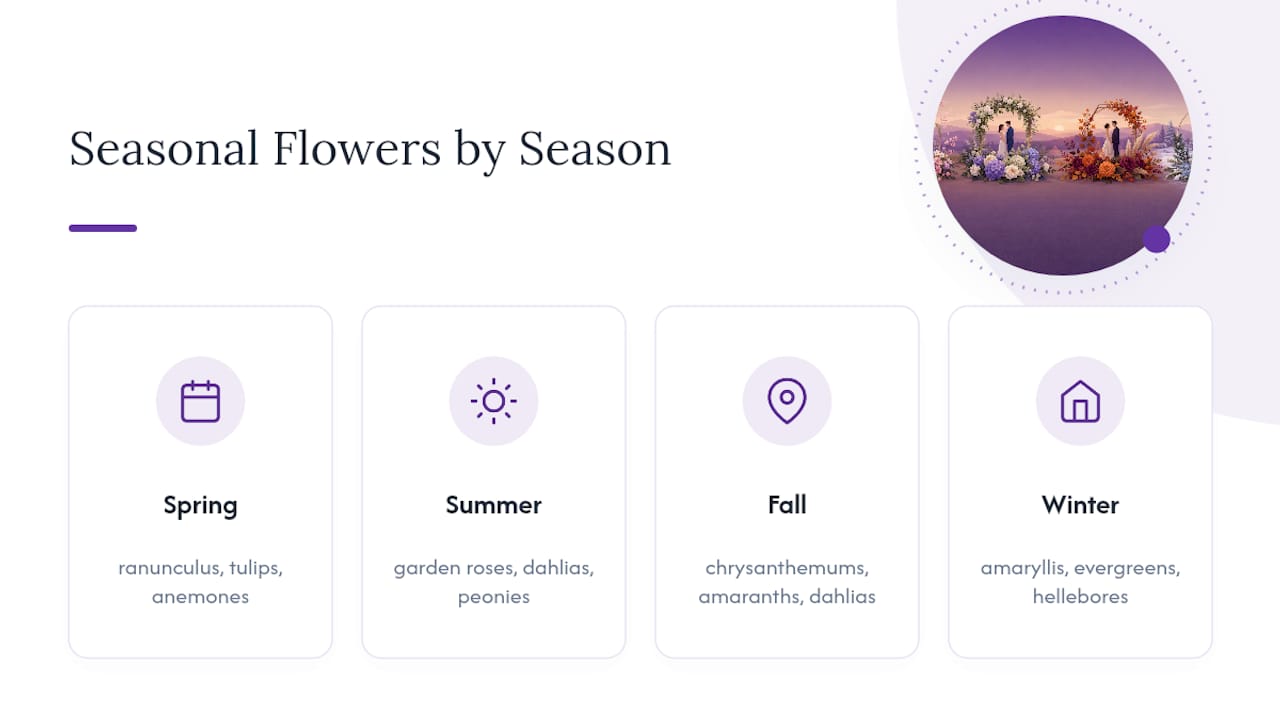
Spring tends to bring ranunculus, tulips, and anemones. Summer opens up garden roses, dahlias, and peonies. Fall shifts toward chrysanthemums, amaranths, and richly colored dahlias, while winter leans on amaryllis, evergreens, and hellebores. A florist working with local, seasonal stock can usually source better quality for the same budget than one trying to special-order an out-of-season bloom from across the country.
This doesn’t mean locking yourself into a rigid list before you talk to anyone. Share your color palette and mood with your florist and ask what’s actually thriving that month. A skilled designer can hit the same romantic, intimate feel with whatever is fresh and local, often for less than the cost of chasing a specific flower that has to travel a long way to reach you.
Picking Fragrant Flowers That Won’t Overwhelm a Small Room
Scent behaves differently in a small, close setting than it does in a large hall. A fragrance that feels lovely and subtle across a banquet room can become overpowering at a table where guests are sitting elbow to elbow for two hours, especially once you factor in food and wine.
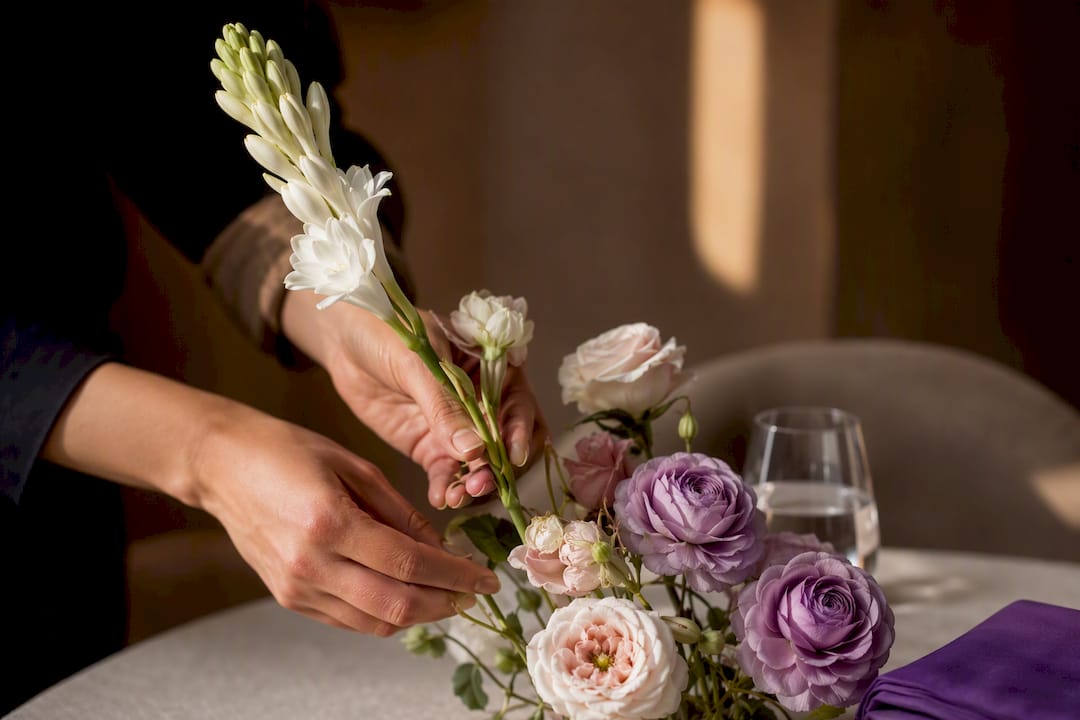
Lightly scented options like garden roses, ranunculus, and sweet peas add a pleasant note without dominating the room. Stronger-scented flowers, such as lilies, hyacinth, and tuberose, are worth using sparingly, maybe as a single accent stem near an entrance rather than massed on a dinner table. Gardenias and jasmine fall somewhere in the middle: gorgeous in small doses, but capable of overwhelming a small, warm room if used too generously.
If any guests have fragrance sensitivities or allergies, ask your florist about low-scent or scent-free options like most greenery, ranunculus, or dahlias, which give you the same visual richness without the perfume. A good rule for close settings: if you can smell an arrangement clearly from across the room before you’ve even sat down, it’s probably too much for a table where people will be eating.
Making Sustainable Choices for Your Event’s Florals
Sourcing matters as much as selection when it comes to the environmental footprint of event flowers. Imported blooms often travel by refrigerated air freight, which adds both cost and carbon impact compared to flowers grown closer to where they’ll be used. Choosing local and seasonal stems, the same approach that saves money and improves freshness, also happens to be one of the more meaningful ways to reduce that footprint.
Beyond sourcing, a few other choices add up. Reusable or rented vases beat single-use containers. Compostable floral foam alternatives, or foam-free designs built on chicken wire or reusable frogs, cut down on the plastic waste that traditional floral foam leaves behind. Arrangements sized appropriately for the event, rather than oversized for the sake of impact, also mean fewer stems cut and less waste at the end of the night.
Ask whether leftover flowers can be repurposed after the event: donated to a hospital, composted, or given to guests to take home. A well-planned intimate event rarely needs hundreds of stems, which is exactly what makes it easier to source responsibly than a large-scale wedding would be.
A Florist’s Perspective: Why Handcrafted Choices Matter for Micro Events
Small events leave no room to hide a rushed design. Every stem is visible, every choice gets studied up close, which is exactly why handcrafted work, not a generic template, matters more here than at a 200-person wedding. A florist builds each order around the client’s occasion and preferences, often backing it with a satisfaction guarantee and delivering fresh, because intimate events deserve the same care as the biggest ones.
— Reza
Hire Malikflowers for Your Intimate Event Florals
Malikflowers builds every arrangement around your specific event instead of pulling from a fixed catalog, which matters most when guests are close enough to notice every stem. Custom orders start with a guided florist experience where you talk through guest count, palette, and priority pieces before anything gets cut, and if the final design isn’t right, the satisfaction guarantee means a refund, not a compromise.
Planning a micro wedding specifically? Browse wedding flower options built for smaller guest lists, or start a custom order directly for same-day and scheduled delivery across Metro Vancouver. Either way, the next step is the same: tell Malikflowers your date, your table count, and your one unifying motif, and let the design work start from there.
Sources
- Agapanthus profile — online herbarium (Oxford Herbaria)
- What Is the 3-5-8 rule for floral arrangements? | Livingetc
- Almanac
FAQ
What flower represents intimacy?
Agapanthus is one of the clearest examples, since its name combines the Greek words for unconditional love and flower, as documented by the Oxford Herbaria. Roses and peonies are also widely read as romantic and intimate, with color shifting the exact tone of the message.
What is the 3:5:8 rule for flowers?
It’s a floristry guideline for building balanced small arrangements: 3 focal flowers, 5 secondary or textural stems, and 8 filler stems, all in odd counts to avoid a stiff, symmetrical look. The 3-5-8 rule works especially well for centerpieces and bouquets sized for intimate events.
What is a celebration flower?
There isn’t one universal “celebration flower.” The term generally refers to any bloom used in a shared ritual of exchange or gifting, a tradition documented in practices like Flower Communion, where the act of giving flowers builds a collective meaning around the occasion.
What flowers are most romantic?
Roses, peonies, and ranunculus consistently top the list for romantic events, each offering a full, soft shape that reads well in both bouquets and centerpieces. Agapanthus is a strong pick for couples who want a flower tied specifically to enduring, unconditional love rather than passionate romance.
How much do flowers cost for a small wedding or private event?
Costs vary by design complexity and season, but Malikflowers lists custom designs starting from $75 and vase arrangements in the $100 to $175 range as reference points for handcrafted work. Exact pricing for a guided florist experience or custom order is available directly through Malikflowers’ custom-order page.