
Keep Flowers 2+ Weeks: 13 Florist Backed Long Lasting Flowers
Keep Flowers 2+ Weeks: 13 Florist Backed Long Lasting Flowers
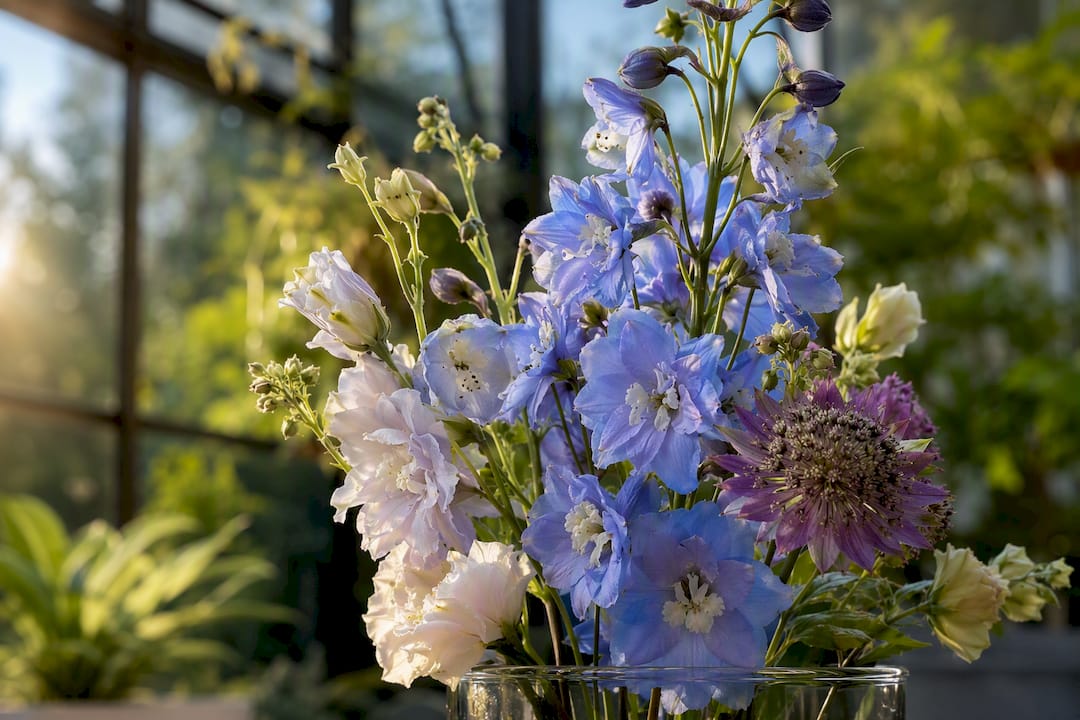
Chrysanthemums, carnations, alstroemeria, cymbidium orchids, lisianthus, and anthurium top any real long-lasting flowers list. They often hold on for two to four weeks or more with basic care. That’s not a guess. It’s the result of thick petal cuticles, slow-opening buds, and sturdy stems that resist wilting faster than delicate blooms like poppies or peonies. Pick the right species and treat the water right, and a bouquet that would normally die in five days can outlast the greeting card that came with it.
TL;DR:
- Chrysanthemums, carnations, and alstroemeria frequently last two weeks or more, making them reliable long-lasting flowers for bouquets.
- Cymbidium orchids can stay fresh up to 42 days with proper care, outperforming most common cut flowers in vase life.
- Proper conditioning, including recutting stems and changing water regularly, is crucial to maximize flower longevity at home.
- Long-lasting flowers are best paired with shorter-lived sprinters and greenery to maintain bouquet shape and visual appeal over time.
- Buying pre-conditioned bouquets from vendors like Malikflowers simplifies maintaining flower longevity without individual care routines.
Table of Contents
- The Long-Lasting Flowers List: 13 Species Worth Buying
- How to Make Cut Flowers Last Longer: The Care Routine That Works
- Pairing Long-Haulers With Short-Lived Sprinters
- The Malikflowers Approach to Building Bouquets That Last
- Get a Long-Lasting Bouquet Without Doing the Conditioning Yourself
- Sources
- FAQ
The Long-Lasting Flowers List: 13 Species Worth Buying
Not every flower earns a spot on a durability list, and some popular ones don’t belong here at all. What follows are the species florists reach for specifically because they survive shipping, sit well in a vase, and don’t quit the moment the room gets warm.
- Chrysanthemum: Often the longest-lasting grocery-store flower you can buy, commonly running 14 to 21 days. Thick, waxy petals resist water loss, and the flower head opens gradually rather than blowing out in a day. Look for stems with tight, unopened buds mixed among the open blooms.
- Carnation: A workhorse that regularly clears two weeks and sometimes three. Its ruffled petals and dense structure make it nearly bulletproof against handling damage. Buy stems with closed centers and no browning at the petal edges.
- Alstroemeria (Peruvian lily): Typically 14 to 21 days, and it keeps producing new blooms on the same stem as older ones fade. Firm, unspotted leaves and a mix of open and closed florets signal a fresh bunch.
- Cymbidium orchid: The heavyweight champion, with vase life stretching 21 to 42 days under decent conditions. The waxy petals barely transpire water, which is why event florists lean on orchids for anything that needs to survive a multi-day wedding weekend.
- Lisianthus: Looks like a rose, lasts far longer, often 10 to 14 days. Choose stems with several unopened buds; they’ll continue to open in the vase.
- Anthurium: A true long-hauler that can last several weeks. The glossy, waxy spathe is essentially a leaf, not a petal, which explains why it barely wilts. Skip any with brown spotting on the surface.
- Gerbera daisy: Usually about one to one and a half weeks, shorter than most on this list, but the thick stem and bold color make it a reliable filler flower when paired with true long-haulers.
- Freesia: About a week to 10 days, with a fragrance that fades before the flower does. Buy stems where only the bottom one or two buds have opened.
- Leucadendron: A protea relative that can last multiple weeks and sometimes longer, since it’s technically more foliage than flower. It dries beautifully too, so nothing goes to waste.
- Waxflower: Small, star-shaped blooms that hold for about two to three weeks and rarely drop petals. It’s a filler flower that outlasts most of the focal blooms around it.
- Eucalyptus: Not a flower, but the filler greenery every long-lasting bouquet needs. It can last three weeks or more and often roots in water if left long enough.
- Dendrobium orchid: A cousin of the cymbidium with a similar profile, typically about two to three weeks, and a slimmer profile that suits smaller arrangements.
- Hydrangea (with a caveat): Gorgeous but genuinely fussy. Hydrangea can last about one to two weeks, but only if you smash or slit the woody stem ends and keep them constantly hydrated; let the water level drop even once and the bloom can go from lush to crispy overnight.
A few cautions matter here. Daffodils release a sap that can cut the vase life of neighboring flowers roughly in half, so condition them separately in their own water for 12 to 24 hours before mixing them into an arrangement. Tulips and other bulb flowers also prefer cold water rather than the warm water many other species like, so don’t treat every stem the same way.
Vase-life ranges vary partly because of what happens before the flower ever reaches a shop. Cultivar choice and growing conditions shape how much carbohydrate reserve a stem carries and how sturdy its xylem structure is, which is why two bunches of the “same” flower from different farms can behave differently in your vase.
How to Make Cut Flowers Last Longer: The Care Routine That Works
Buying the right species only gets you halfway. What you do in the first 10 minutes after unwrapping a bouquet, and every few days after that, decides whether it makes it to week two or wilts by Thursday.
- Recut every stem at a 45-degree angle the moment you get flowers home, even if the florist already cut them. A fresh angled cut increases the surface area available for water uptake and removes any sealed, air-blocked tissue from transport.
- Strip foliage below the waterline. Leaves left underwater rot fast and feed bacteria, which is one of the biggest reasons vase life ends early.
- Use a clean vase, not just a rinsed one. Bacterial film clings to glass even after a quick wash, and a full scrub is far more effective than simply topping off old water.
- Mix in floral food. The packet that comes with most bouquets isn’t an afterthought. It combines sugar for energy, an acidifier that helps water travel up the stem, and a biocide that slows bacterial growth.
- Change the water completely every two to three days, not just top it up, and recut the stems each time you do.
- Match water temperature to the flower. Warm water around 100 to 110°F helps most cut stems absorb water quickly, but bulb flowers like tulips, daffodils, and hyacinths do better in cold water.
- Keep the arrangement away from heat, direct sun, and ripening fruit. Fruit bowls emit ethylene gas, which speeds up aging in flowers that are sensitive to it.
Pro Tip: If a stem ever sits out of water for more than a few minutes, recut it while holding it under running water. This prevents an air pocket from forming inside the stem, which can block water uptake for the rest of its vase life.
The science behind all this isn’t guesswork. Vase life ends through a combination of microbial buildup, physiological aging, and stem clogging, and hygiene is the single biggest lever you control at home. Different stem types need different handling too: hollow stems like delphinium benefit from being filled with water before arranging, while latex-producing stems such as poppies do better when you sear the cut end briefly to seal the sap.
Pairing Long-Haulers With Short-Lived Sprinters
Florists rarely build an arrangement out of one flower type, and there’s a reason beyond looks. The trick is pairing durable “framework” stems, like chrysanthemum, alstroemeria, or anthurium, with shorter-lived, showier “sprinters” such as ranunculus, peony, or garden roses. The long-haulers hold the shape and structure of the bouquet while the sprinters carry the visual punch for their first week.
- Place sprinters where they’re easy to pull without disturbing the rest of the arrangement, usually near the front or top.
- Once a sprinter fades, remove it rather than tossing the whole bouquet. The framework flowers often have another one to two weeks left in them.
- Use greenery like eucalyptus or waxflower to fill gaps left behind, keeping the shape intact.
- Never mix daffodils directly into a fresh arrangement without conditioning them separately first, since their sap will shorten everything else’s life.
This approach is standard practice among working florists precisely because it stretches an arrangement’s usable life well past what any single flower could manage alone.
The Malikflowers Approach to Building Bouquets That Last
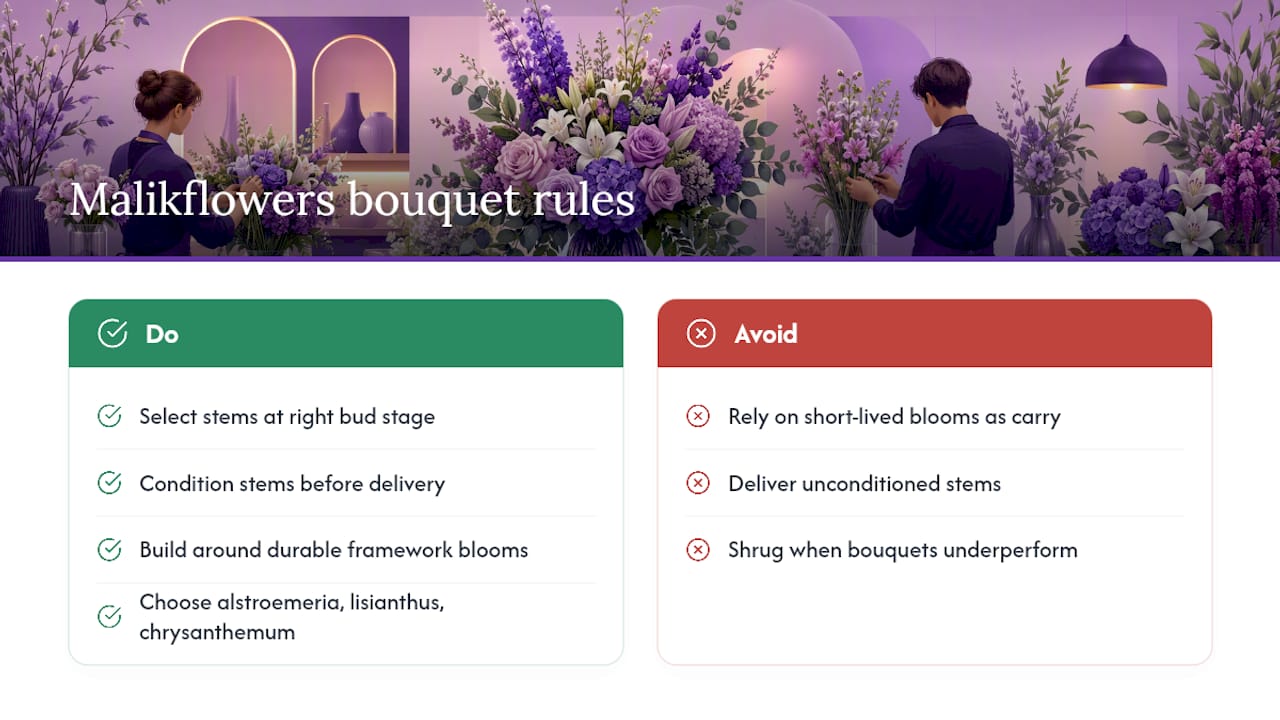
Every recommendation in this list reflects how we build arrangements at Malikflowers. We select stems at the right bud stage, condition them before delivery, and structure bouquets around durable framework flowers rather than relying on short-lived blooms to carry the whole design. Collections like our Spring Collection and anniversary arrangements lean on species like alstroemeria, lisianthus, and chrysanthemum for exactly the reasons outlined above.
If a bouquet doesn’t hold up the way it should, our satisfaction guarantee means a refund, not a shrug. That’s a deliberate choice, not a marketing line. Customers regularly note in reviews how full and fresh their arrangements still look a week or two after delivery, which is the whole point of choosing durable species and conditioning them properly in the first place.
— Reza
Get a Long-Lasting Bouquet Without Doing the Conditioning Yourself
Reading a care routine is one thing. Actually recutting stems every three days while running a household is another. Malikflowers exists for the second option: bouquets already built around long-lasting species, already conditioned before they leave our hands, so you get the vase life this guide describes without tracking water temperatures or scrubbing a vase mid-week.
Our product catalog features arrangements built specifically around durable stems like chrysanthemum, alstroemeria, and orchid, and the Spring Collection rotates in seasonal long-haulers as they come into season. If you want fresh flowers on a schedule instead of remembering to reorder, the flower subscription delivers on that same durability standard every time. Everything ships with same-day delivery across Metro Vancouver, and if a bouquet doesn’t hold up, our satisfaction guarantee covers a refund. Pair any arrangement with a decorative vessel at home for a display that matches the flowers’ staying power. Browse the product catalog and pick an arrangement built to last past the first week.
Sources
- Selecting & Caring for Cut Flowers - Gardening | NC State Extension
- Frontiers / PMC mini-review on postharvest quality and factors influencing cut-flower vase life
- How long do cut flowers last — Lacy Bird (vase-life by species)
- Bright blooms: how to care for flower bouquets — University of Illinois Extension
FAQ
What type of flower lasts the longest?
Cymbidium orchids top most vase-life comparisons, often lasting 21 to 42 days with proper conditioning, followed closely by anthurium and leucadendron.
What flower stays bloomed the longest?
Chrysanthemums and carnations both regularly hold their bloom shape for 14 to 21 days or more, thanks to thick petal cuticles that resist wilting and water loss.
Which plant gives 12 months of flowers?
No single cut flower blooms year-round in a vase, but for year-round color from a growing plant, gardeners typically turn to reblooming perennials or tropicals suited to their climate zone; this list focuses on cut-flower longevity rather than continuous garden bloom.
What are the best flowers for all year round?
For cut arrangements available across most seasons, chrysanthemum, carnation, alstroemeria, and orchid are the most consistently available and durable choices, which is why they anchor most long-lasting bouquets from Malikflowers year-round.