
Pastel Pink, Order Smart: Mother's Day Flower Meanings for Vancouver
Pastel Pink, Order Smart: Mother’s Day Flower Meanings for Vancouver
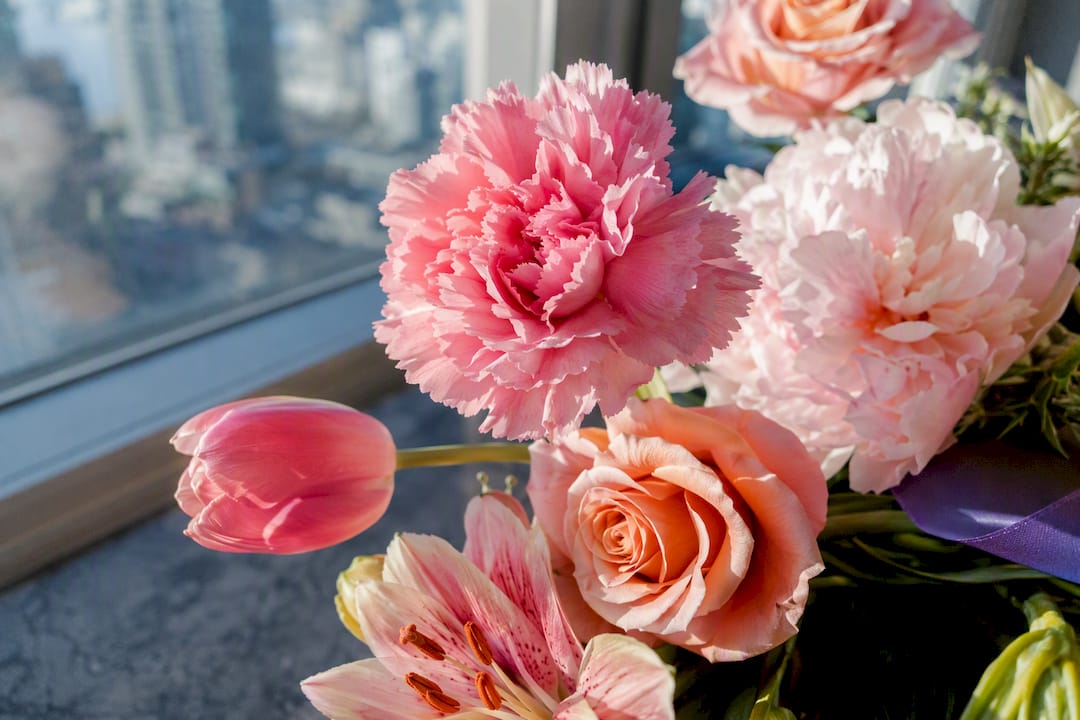
The carnation is the official Mother’s Day flower, with pink signifying a mother’s undying love and white marking remembrance for mothers who have passed. Beyond carnations, roses in light pink or peach commonly express gratitude, tulips generally signal perfect love, peonies often represent honor and prosperity, hydrangeas are used to convey heartfelt thanks, orchids tend to stand for elegance, and gerberas or sunflowers are known to deliver cheerfulness. Match the bloom and shade to the woman you’re honoring, and when you’re not sure, pastel pink is the safest bet.
TL;DR:
- Pink carnations remain the most symbolic Mother’s Day flower, representing a mother’s undying love, while white carnations honor mothers who have passed away.
- Seasonally, peonies, tulips, and roses are popular choices in spring, with peonies especially linked to honor and prosperity during the holiday.
- Pastel pinks, peaches, and soft palettes are the safest color options, as they convey warmth, gratitude, or admiration without risk of misinterpretation.
- Potted orchids and hydrangeas last for months and make sustainable gifts, whereas cut flowers like roses and peonies offer a shorter but more striking display.
- Flower meanings are evolving, with garden roses, sunflowers, and orchids gaining popularity for their modern associations and longer-lasting qualities.
Table of Contents
- The Meaning Behind Popular Mother’s Day Flowers
- How Flower Color Changes the Message
- How to Choose the Right Mother’s Day Bouquet
- Why the Carnation Became the Mother’s Day Flower
- How Mother’s Day Flower Symbolism Keeps Changing
- A Florist’s View on Matching Flowers to Meaning
- Sources
- FAQ
The Meaning Behind Popular Mother’s Day Flowers
Every bloom on a Mother’s Day table carries its own message, and knowing what each one says helps you avoid sending mixed signals with a beautiful bouquet.
Carnations hold the top spot for a reason. Pink carnations symbolize a mother’s undying love, while white carnations traditionally represent remembrance for mothers who are no longer living. Older floral etiquette treated yellow or striped carnations as a sign of rejection, so most modern florists steer clear of those shades for this occasion. Carnations also last for multiple weeks in water, making them one of the practical choices on this list.
Roses shift meaning entirely by color. Light pink says gratitude, peach or coral reads as warm appreciation, and deep red leans romantic, so save that shade for a spouse rather than a mom. A rose color guide can help if you want to get the shade exactly right.
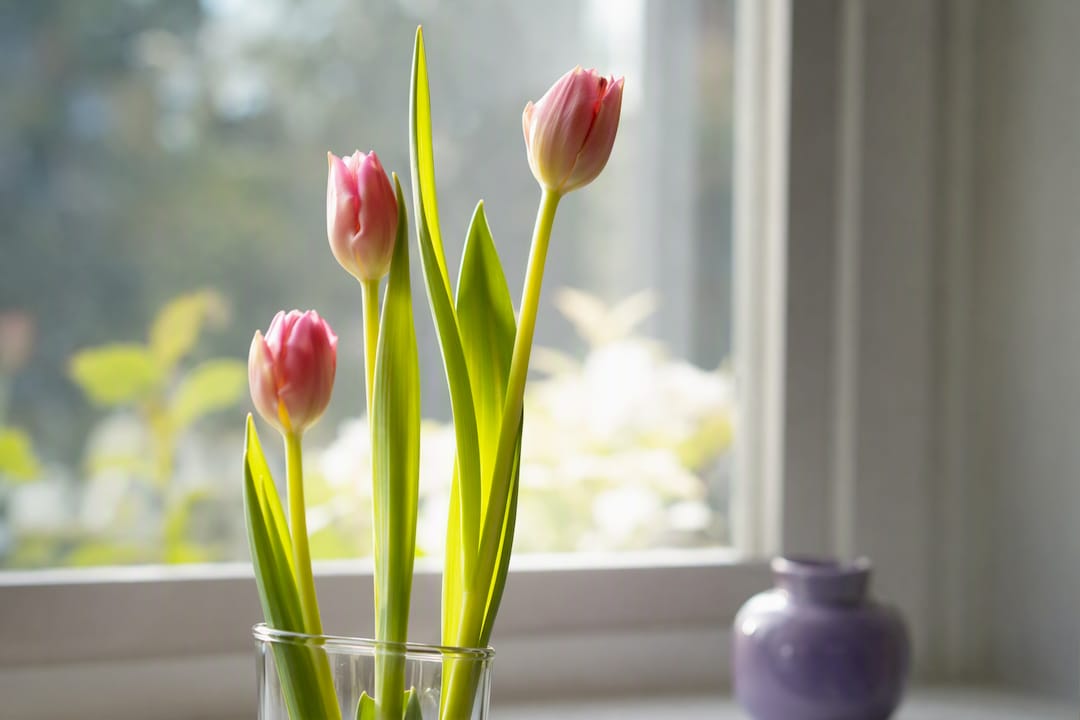
Tulips mean perfect love and have a quirk worth knowing: they keep growing after being cut, often looking better on day three than day one.
Lilies represent devotion and grace, but proceed with care. Large, formal white lilies carry funeral associations in many North American communities, so pink or colored lily varieties are the smarter celebratory pick.
Peonies stand for honor and prosperity and happen to peak in late spring, right around Mother’s Day itself.
Hydrangeas express heartfelt gratitude, and their potted form turns a bouquet into a gift that lasts for months.
Orchids signal elegance and, potted, can live for years with minimal care.
Gerbera daisies and sunflowers radiate cheerfulness and adoration, ideal for the mom whose personality is anything but subdued.
How Flower Color Changes the Message
Color does most of the talking in floral symbolism, often more than the flower type itself. Pink reads as gratitude and admiration. White reads as remembrance or purity. Peach and coral read as warmth. Yellow reads as joy and friendship, though it carries a caveat with carnations specifically. Purple reads as respect and reverence.
A few color rules deserve real attention before you order:
- Yellow or striped carnations historically signaled rejection, an association some older recipients still recognize.
- Large white lilies and white chrysanthemums carry mourning associations at funerals across parts of North America and East Asia.
- Pastel pinks and soft mixed palettes are the safest, most universally warm choice when you don’t know the recipient’s exact preference.
Pro Tip: If you’re torn between two colors, pick the softer one. A pastel arrangement almost never reads wrong, while a bold or dark palette can accidentally send a heavier message than you intended.
How to Choose the Right Mother’s Day Bouquet
Picking a bouquet gets easier once you treat it as a short checklist instead of a guessing game.
- Start with her preferences. Does she love bold color, or does she favor something understated? Is she sensitive to strong scents like lilies? Would she rather have a potted plant she can keep alive than cut flowers she’ll eventually toss?
- Match bloom and color to the sentiment you want to send. Pink carnations or roses for love and gratitude, peonies for honor, hydrangeas for thanks.
- Lean on seasonality. Peonies and tulips hit their peak in spring, which means fresher stems and longer vase life around Mother’s Day specifically. A seasonal spring collection makes this easy without guesswork.
- Decide between potted and cut. Orchids and hydrangeas in pots keep giving for months; roses and peonies as cut stems deliver a shorter but more dramatic burst.
- Ask about conditioning and vase life, and order early. Peonies and other seasonal stems sell out fast in the days before Mother’s Day, so don’t wait until the last minute.
If you’re shopping for someone whose taste you don’t know well, whether that’s a mother in law or a new relative, the same personality-matching approach used for birthday flowers applies here: when symbolism and personal taste don’t perfectly align, default to a mixed pastel arrangement rather than a single, bold color.
Why the Carnation Became the Mother’s Day Flower
Anna Jarvis handed out 500 white carnations at the first official Mother’s Day observance in 1908, choosing the flower because it had been her own mother’s favorite. That single gesture set the template for the holiday’s floral tradition.
The convention that followed was specific: white carnations for mothers who had died, colored carnations for mothers still living. That rule held through much of the early 20th century before florists and growers began pushing a wider range of spring blooms. Industry promotion during this period reshaped Mother’s Day into one of the biggest floral-selling occasions of the year, and by the 1920s, peonies, roses, and tulips were competing hard with carnations for shelf space, even as the original color symbolism stuck around.
How Mother’s Day Flower Symbolism Keeps Changing
Flower meanings aren’t frozen in Victorian etiquette books. They shift with each generation of florists and shoppers who bring their own associations to a bouquet.
Peonies and garden roses have become especially prominent in recent decades, partly because they bloom right at peak season near the holiday and partly because their lush, layered petals photograph beautifully for the social sharing that now surrounds gift-giving occasions. That’s a meaning shift driven as much by Instagram as by tradition.
Sunflowers and gerberas have also picked up new weight. Once considered casual, everyday flowers, they’ve become a deliberate choice for mothers who want to signal they’re the fun, unfussy type rather than the formal, classic-rose type. Orchids have moved in a similar direction: once reserved for special occasions, potted orchids are now a common Mother’s Day gift specifically because they outlast cut flowers by months, appealing to a generation more interested in sustainability than in disposable bouquets.
Even carnations have been reclaimed. A flower once seen as the “budget” option in some circles has come back into favor as shoppers rediscover its genuine color symbolism instead of treating it as filler.
A Florist’s View on Matching Flowers to Meaning
Malik Flowers builds Mother’s Day arrangements around this same principle: symbolism only matters if it fits the actual woman receiving the flowers. That means pairing pink and peach tones with seasonal peonies, garden roses, and tulips sourced when they’re at their best, then designing around what a specific mom, grandmother, or mother in law actually likes rather than forcing a generic template.
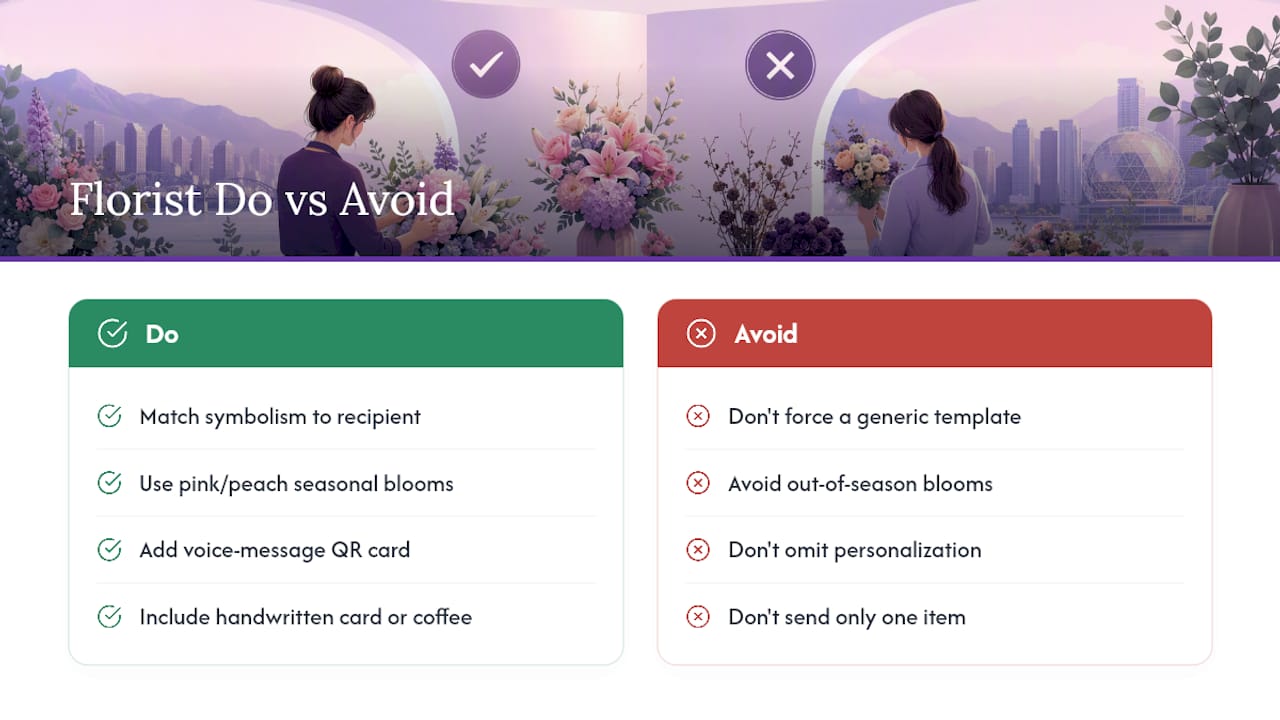
Every arrangement comes handcrafted, with same-day delivery and a satisfaction guarantee behind the design itself. For an easy add-on, a voice-message QR card turns a bouquet into something she can revisit long after the flowers fade, a detail on the Mother’s Day flower collection worth considering if you want the gift to last beyond the vase. Pairing the bouquet with something like a handwritten card or a coffee gift rounds out the gesture for moms who appreciate a small, thoughtful bundle over a single item.
If you’re ready to put this into an actual order, browse the Mother’s Day product catalog or go straight to the spring collection for peonies and tulips at their seasonal best.
— Reza
Sources
- History
- Agricultural History Society — ‘Perfect Mothers, Perfect Flowers’
- Blooming Expert — Mother’s Day flowers: what each bloom means
- The Flower Bar — Traditional Mother’s Day flowers & what they mean
FAQ
What flowers signify Mother’s Day?
Carnations are the traditional symbol, with pink carnations, roses, tulips, peonies, hydrangeas, orchids, and gerbera daisies also commonly used to express love, gratitude, and honor toward mothers.
What is the official flower for Mother’s Day?
The carnation is the official Mother’s Day flower, chosen after Anna Jarvis distributed 500 white carnations at the first official observance in 1908.
What is the most motherly flower?
The carnation carries the strongest maternal symbolism, since pink specifically represents a mother’s undying love while white honors mothers who have passed away.
Which flower is most commonly associated with Mother’s Day?
The carnation remains the flower most closely tied to Mother’s Day historically, though peonies, roses, and tulips have grown into equally popular modern choices thanks to their spring availability.
Are white lilies a good choice for Mother’s Day?
Large, formal white lilies work better for other occasions, since they carry funeral associations in many communities; pink or colored lily varieties make a safer celebratory choice.