
5–10 Days After Birth: Pet Safe Low Pollen Flowers for New Parents
5–10 Days After Birth: Pet Safe Low Pollen Flowers for New Parents
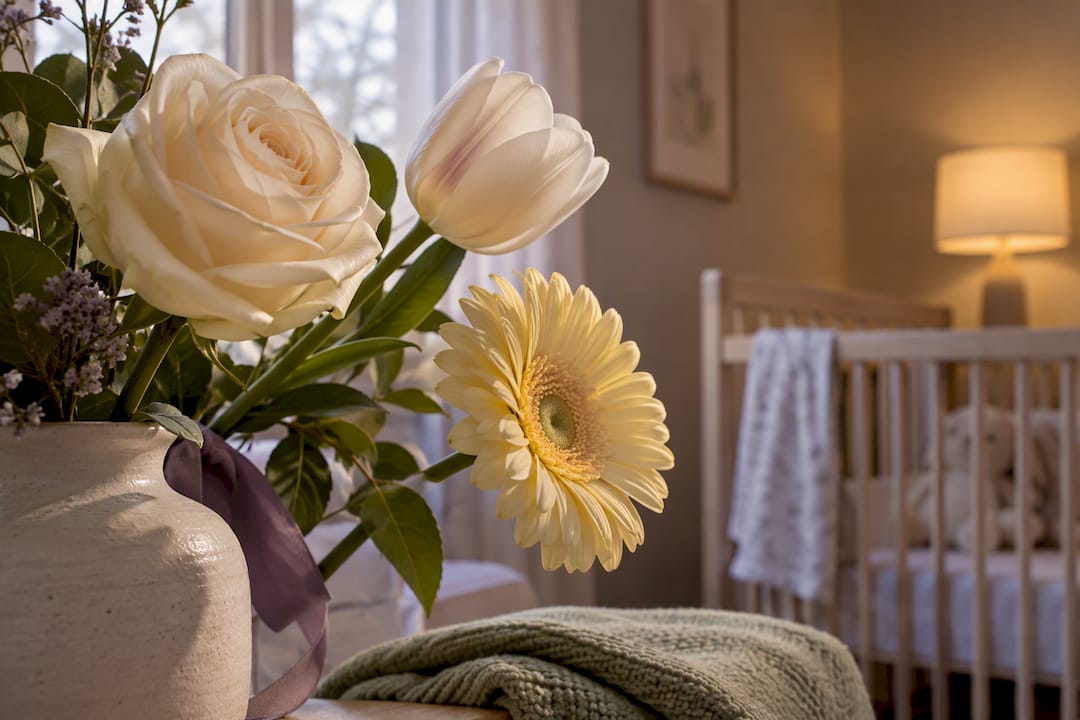
Send a small, ready-in-vase bouquet of low-fragrance, low-pollen blooms, think roses, tulips, or ranunculus, timed for a confirmed delivery window at home or the hospital. These flowers are a gift for the exhausted parents, not the baby, so the goal is minimum effort on their end. Skip anything with heavy scent, loose pollen, or a vase that still needs assembling.
TL;DR:
- Sending small, low-fragrance, low-pollen flowers like roses or tulips to hospital rooms requires confirming hospital policies beforehand.
- For home delivery, a larger arrangement with longer vase life, arriving five to ten days after birth, tends to be more meaningful.
- Avoid lilies, heavily fragrant blooms, and high-pollen flowers in environments with pets or newborns to prevent health risks or allergies.
- Request florist adjustments such as removing stamens or choosing buds that will open later to prolong the arrangement’s freshness.
- A ready-in-vase arrangement with a personalized card simplifies gifting and reduces effort during sleepless newborn days.
Table of Contents
- Who New Baby Flowers Are Really For
- Best Flowers to Send: Safe, Low-Fragrance Options
- Color Choices and Gender-Neutral Palettes
- Delivery Timing and Logistics: Hospital vs Home
- What to Avoid: Pet Safety and High-Pollen Blooms
- Presentation That Makes the Gift Effortless
- Care Tips and How Long These Blooms Actually Last
- Why Malik Flowers Fits This Occasion
- A Quick Note From the Florist’s Bench
- How to Order New Baby Flowers From Malik Flowers
- Sources
- FAQ
Who New Baby Flowers Are Really For
The baby will not notice the bouquet. The parents will, especially if it shows up without them having to hunt for a vase, trim stems, or manage petals dropping near a crib. That single fact should drive every decision you make about size and format.
If the delivery is going to a hospital room, go petite. Small footprint, sealed or self-supporting vase, nothing that needs floor space next to medical equipment. If it is heading to the family’s home a few days later, you have more room to go bigger with a medium or full arrangement.
Before you order, collect this information:
- The parent’s full name and the delivery address
- Room number, if it is a hospital delivery
- Whether there is a cat or dog in the home
- The baby’s name, if you know it, for the card
Best Flowers to Send: Safe, Low-Fragrance Options
Roses, ranunculus, tulips, carnations, hydrangeas, and gerbera daisies are the flowers florists reach for most often when the recipient is a newborn’s household. They share three traits: minimal scent, low pollen shed, and solid vase life, which matters when nobody in the house is sleeping enough to change water on schedule.
Roses top the list because modern hybrid varieties barely have pollen and hold their shape for a week or more. Tulips bring clean color without any fragrance at all. Ranunculus and carnations are workhorses, dense, layered blooms that read as thoughtful even in a small arrangement. Gerbera daisies and orchids also make the cut as low-pollen, low-fragrance options appropriate for a newborn’s nursery, according to florist safety guidance.
Statistic Callout: Florists commonly cite roses, ranunculus, and carnations as reliable choices for newborn arrangements, largely because of their extended vase life compared with softer-petaled blooms like peonies.
If your local shop is out of season on a particular stem, ask for a substitution within the same family. A florist can usually swap spring tulips for ranunculus, or trade hydrangea for a denser rose mix, without changing the tone of the arrangement. Two more requests worth making every time:
- Ask the florist to remove stamens from lilies and similar pollen-heavy blooms if any sneak into a mixed bunch
- Request closed or partially closed buds so the arrangement keeps developing after delivery instead of peaking before it arrives
Color Choices and Gender-Neutral Palettes
Cream, soft yellow, and sage green photograph well against any nursery and work whether the baby is a boy or a girl, which matters if you are ordering before anyone confirms the details. These palettes also tend to look calmer in hospital photos than saturated color.
Pastel pink and pale blue are still the classic go-tos once gender is known, and there is nothing wrong with leaning into them if that is what the family would enjoy. But if you are choosing flowers for a baby girl or flowers for a baby boy sight unseen, or you simply prefer a more sophisticated look, neutral tones read as considered rather than assumed.
A few reliable pairings:
- Cream roses with sage eucalyptus for a quiet, elegant look
- Soft yellow ranunculus with white tulips for something brighter but still gender-neutral
- Blush and ivory together when you want warmth without committing to pink
Delivery Timing and Logistics: Hospital vs Home
Hospitals vary enormously in their flower policies, and NICUs in particular often restrict them entirely because of infection control. Hospital florist guidance is consistent on one point: call the specific ward before you order anything.
- Call the maternity or NICU desk directly and ask if fresh flowers are permitted right now.
- If the hospital allows it, order a petite, sealed, or self-standing vase arrangement so nobody has to find a container.
- If flowers are restricted or the family is discharging soon, hold the order for home delivery instead.
- Confirm the delivery window and any same-day cutoff time with your florist before submitting the order.
Here is the part most people miss: sending flowers on day one is not always the most memorable move. A home delivery timed for five to ten days after birth often lands harder, once the visitors have tapered off and the parents actually have a quiet moment to notice the gesture.
What to Avoid: Pet Safety and High-Pollen Blooms
If there is a cat anywhere in that household, cross lilies off your list entirely. ASPCA guidance is unambiguous: true lilies and several related species cause severe kidney injury in cats, and exposure to pollen or even vase water can be enough to trigger it. This is not a “keep it out of reach” situation. Do not send lilies to a home with a cat, full stop.
Beyond lilies, a few other categories cause trouble for a newborn’s environment:
- Heavily fragrant blooms like oriental lilies, hyacinths, or freesia in large quantities can trigger headaches in a small hospital room
- High-pollen flowers such as unmodified sunflowers or certain daisies shed visibly onto surfaces and fabric
- Mixed bunches from an unfamiliar source, since you cannot always verify what is hiding in the filler greens
Pro Tip: When in doubt, tell your florist directly: “no lilies, and please pull any anthers from anything else in the mix.” A good shop will do this without hesitation, and it takes the guesswork off your plate entirely.
Presentation That Makes the Gift Effortless
A ready-in-vase or sealed-container arrangement beats a loose, wrapped bouquet every time for this occasion. Nobody wants to hunt for scissors and a vase while running on two hours of sleep, and hospital-friendly, ready-to-display arrangements have become the practical standard for exactly that reason.
A few add-ons genuinely help rather than clutter:
- A short card that names the baby and speaks directly to the parents, which research on card etiquette shows makes the message far more memorable
- A small, tasteful plush or a care card with flower-longevity tips
If you would rather skip cut flowers entirely, an orchid or a small succulent lasts for weeks with almost no upkeep, which fits a household where nobody has bandwidth for daily water changes.
Care Tips and How Long These Blooms Actually Last
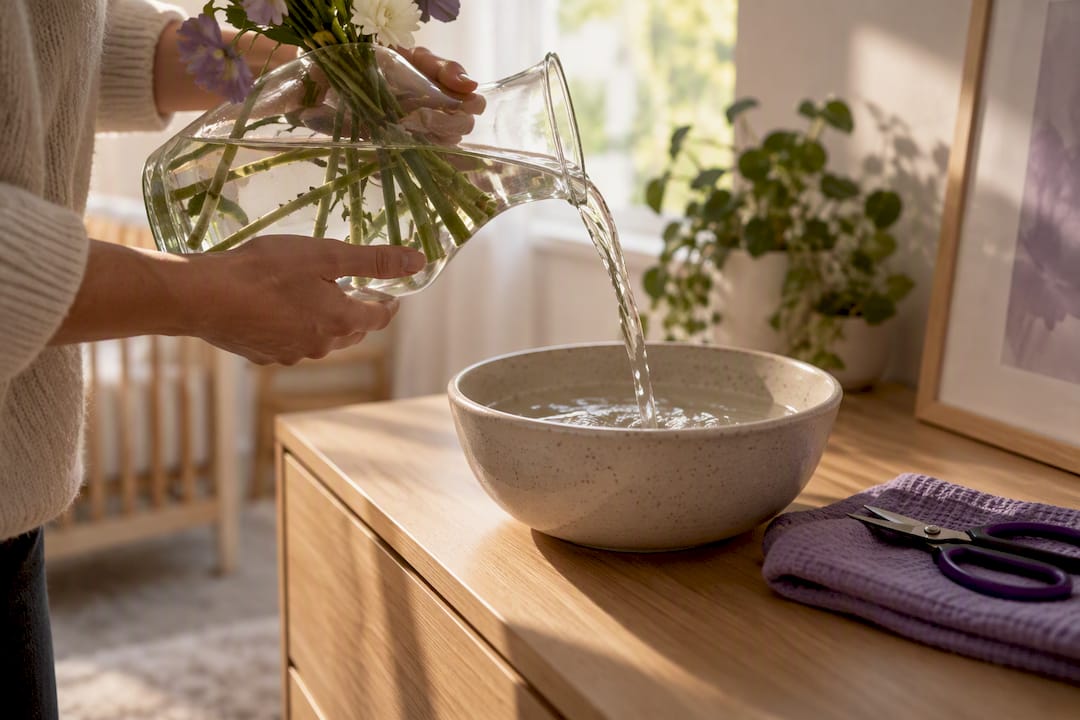
Most of the flowers on this list hold up well if the recipient does three simple things: change the water every two to three days, re-trim the stems at an angle each time, and pull out any wilted blooms before they cloud the water.
- Change the water and rinse the vase every two to three days to slow bacterial buildup.
- Trim about half an inch off each stem at an angle whenever you change the water.
- Keep the arrangement away from direct heat, sunny windowsills, and anywhere a curious toddler or crawling baby could reach.
Statistic Callout: Carnations and ranunculus commonly hold up for an extended period in a well-maintained vase, while tulips and roses typically last about a week before hydrangeas need the freshest water of the bunch to avoid wilting fast. These are florist-reported ranges, not guarantees, since heat and light exposure shift the numbers either way.
Stale water is also where mold and allergen buildup start, so the water change is not just about looks. It matters more in a room where a newborn is breathing the same air around the clock.
Why Malik Flowers Fits This Occasion
Malik Flowers builds every arrangement by hand, which matters here because a new-baby order almost always comes with specific requests: no lilies, pet in the house, keep it small for a hospital room, use the baby’s name on the card. A pet-safe flower guide on the site walks through exactly which blooms to avoid when a cat is part of the household.
A few reasons this fits the guidance above:
- Custom orders let you specify low-fragrance, low-pollen stems instead of accepting a fixed template
- Arrangements arrive ready to display, matching the hospital and home logistics covered earlier
- A satisfaction guarantee backs every order, with refunds if the design does not land the way you hoped
- Seasonal blooms get worked into designs, which helps when a requested stem is out of season
A Quick Note From the Florist’s Bench
The one thing people skip: calling the ward before ordering. It takes two minutes and saves a wasted delivery. If you are ever unsure about a pet-safe substitution, ask us directly, we will build around it.
— Reza
How to Order New Baby Flowers From Malik Flowers
Ordering a thoughtful new-baby arrangement should not take longer than the nap you are interrupting to do it. Pick a size (petite for hospital rooms, medium or full for home), flag any pets in the household so the design skips lilies and other risky stems, add the baby’s name for the card, and choose a delivery date, either right away or timed for that quieter window five to ten days out.

Malik Flowers builds each order by hand rather than pulling from a fixed template, so a request like “low-pollen, no lilies, cream and sage palette” gets built into the design instead of bolted on after. Every order carries a satisfaction guarantee: if the arrangement is not what you expected, Malik Flowers offers a refund. Browse the new baby flower delivery collection to see ready-made options, or start a guided custom order if you want to specify pet safety, color palette, or hospital timing directly with the design team. If you want to see the full range of current arrangements first, the product catalog is worth a browse, and for a small keepsake alongside the flowers, USA Jewels’ new arrivals has options worth considering. Delivery across Metro Vancouver is available; check the Vancouver delivery page for timing details and place the order once you have the necessary information.
Sources
This guide draws on a handful of specific, checkable sources rather than general florist folklore.
- ASPCA – Which lilies are toxic to pets
- Flower Icon – Flowers for a New Baby: What to send & what’s safe
- Pampers Canada – What to write in a baby shower card
- FloristCheck – Flowers safe for newborn nursery
FAQ
What Flowers Do You Give for a New Baby?
Roses, tulips, ranunculus, carnations, hydrangeas, and gerbera daisies are the most recommended choices because they are low in fragrance and pollen. Avoid true lilies entirely, especially if the household has a cat, per ASPCA guidance.
What Is the 3:5:8 Rule for Flowers?
The 3:5:8 rule is a design guideline florists sometimes use for arrangement proportions, generally a mix of three focal blooms and five secondary flowers for balance. It is a styling convention rather than a safety or care rule, so it does not apply directly to newborn safety choices.
Are There Two Flowers for Each Birth Month?
Some birth-month flower charts do list two blooms per month rather than one, since traditions vary by source and region. There is no single official standard, so treat any birth-month flower list as a nice personal touch rather than a fixed rule.
How Do You Take Care of Newly Bought Flowers?
Change the water every two to three days, trim the stems at an angle each time, and keep the arrangement away from direct heat and sunlight. Removing wilted blooms promptly also slows bacterial growth and extends vase life for the rest of the bunch.
Is It Better to Send Flowers to the Hospital or the Home?
Call the specific ward first, since NICUs and some maternity wards restrict flowers entirely. If flowers are not permitted or the stay is short, a home delivery timed for five to ten days after birth often makes more of an impression once visitors have thinned out.