
Busy Office Managers: 10 Ready to Send Reception Flower Ideas
Busy Office Managers: 10 Ready to Send Reception Flower Ideas
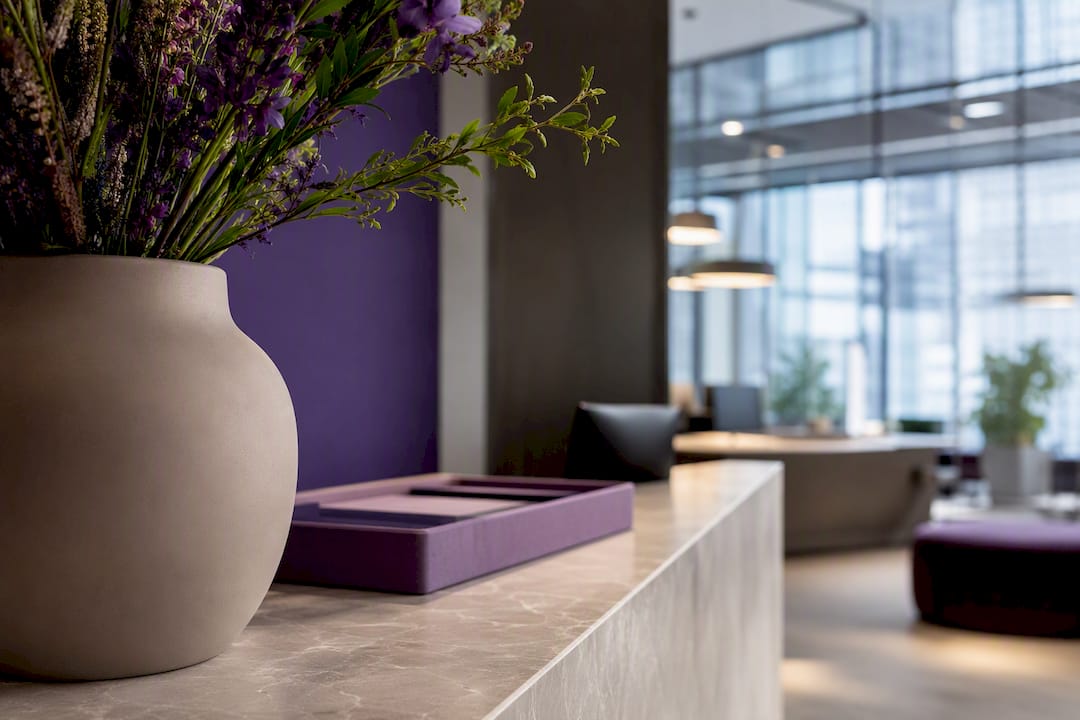
The best office reception flowers ideas center on one formula: a low, weighted vessel, a two to three color palette, and durable blooms like orchids, roses, or anthuriums that hold up between refreshes. If your team can’t commit to swapping stems weekly, a biweekly subscription with a florist covers the gap. Malik Flowers offers corporate subscriptions with a satisfaction guarantee, so the fastest next step is ordering a sample arrangement or booking a quick consult to match your lobby’s scale and color story.
TL;DR:
- Durable, low-pollen blooms like orchids, roses, or anthuriums are best for busy reception desks, with scheduling based on foot traffic, typically weekly or biweekly.
- Low, wide, weighted containers such as ceramic pots and compotes reduce the risk of tipping or damage in high-traffic areas.
- Stick to a two or three-color palette with neutral bases and subtle brand accents to maintain an elegant, cohesive look without visual chaos.
- Seasonal arrangements should incorporate slight palette shifts and accent stems to keep the space current while preserving brand consistency.
- Subscription services that provide regular, durable arrangements with a satisfaction guarantee are the most efficient way to maintain fresh flowers and a positive first impression.
Table of Contents
- 10 Practical Office Reception Flowers Ideas You Can Copy or Send to Your Florist
- Flower and Container Pairings That Survive Busy Reception Areas
- Choosing Colors That Match Your Brand Without Looking Chaotic
- Placement, Scale, and Sightline Rules for Reception Florals
- Maintenance, Refresh Cadence, and Why a Subscription Makes Sense
- Dos, Don’ts, and Quick Fixes for Reception Flower Problems
- Budget Planning for Reception Flower Arrangements
- Live Flowers vs. Artificial Flowers in Reception Areas
- Seasonal Flower Selection and Theme Ideas
- How Malik Flowers Builds Reception Programs That Actually Hold Up
- Get Started With Malik Flowers’ Corporate Reception Service
- Sources
- FAQ
10 Practical Office Reception Flowers Ideas You Can Copy or Send to Your Florist
Reception desks have three enemies: limited counter space, constant foot traffic, and staff who don’t have time to babysit petals. These ten ideas account for all three, with maintenance notes attached so you’re not guessing.
- Minimalist orchid cluster. Three to five phalaenopsis stems in a low ceramic pot. Monthly maintenance, no scent, ideal for close-up desk viewing where visitors lean in to sign forms.
- Neutral hydrangea mound. White or ivory hydrangea heads packed into a weighted compote. Weekly refresh since hydrangeas droop fast, mild scent, best viewed from a few feet back.
- Compact succulent tray. Mixed echeveria and jade in a shallow stone tray. Near zero maintenance, no scent or pollen concern, works at any viewing distance.
- Single-stem statement anthurium. One bold anthurium in a narrow ceramic cylinder. Biweekly cadence, no scent, reads well from across a lobby.
- Seasonal mixed bouquet. Rotating stems tied to the time of year in a classic vase. Weekly refresh, scent varies by season, good for desk-level viewing.
- Low geometric succulent bowl. Angular ceramic bowl with layered succulents. Monthly, no pollen, works at any distance and photographs well for social posts.
- Small calla lily cluster. Three to four white callas in a slim glass or matte vessel. Weekly, low scent, striking up close at a reception counter.
- Garden-style blush bouquet. Loose, romantic mix of roses and filler in a rounded vase. Weekly, light scent, best for lobby-scale viewing where the fullness reads from a distance.
- Green-only eucalyptus statement. All-foliage arrangement with no blooms at all. Biweekly to monthly, virtually scent-free, low-pollen, and safe for scent-sensitive offices.
- Compact mixed-texture centerpiece. Small combination of one focal bloom, one filler, and greenery. Weekly, mild scent, sized for a standard reception counter.
When any of these start looking tired midweek, don’t wait for the full refresh. Pull faded stems, top off water, and if one flower type is failing faster than the rest (hydrangeas usually go first), swap just that section rather than replacing the whole arrangement.
Flower and Container Pairings That Survive Busy Reception Areas
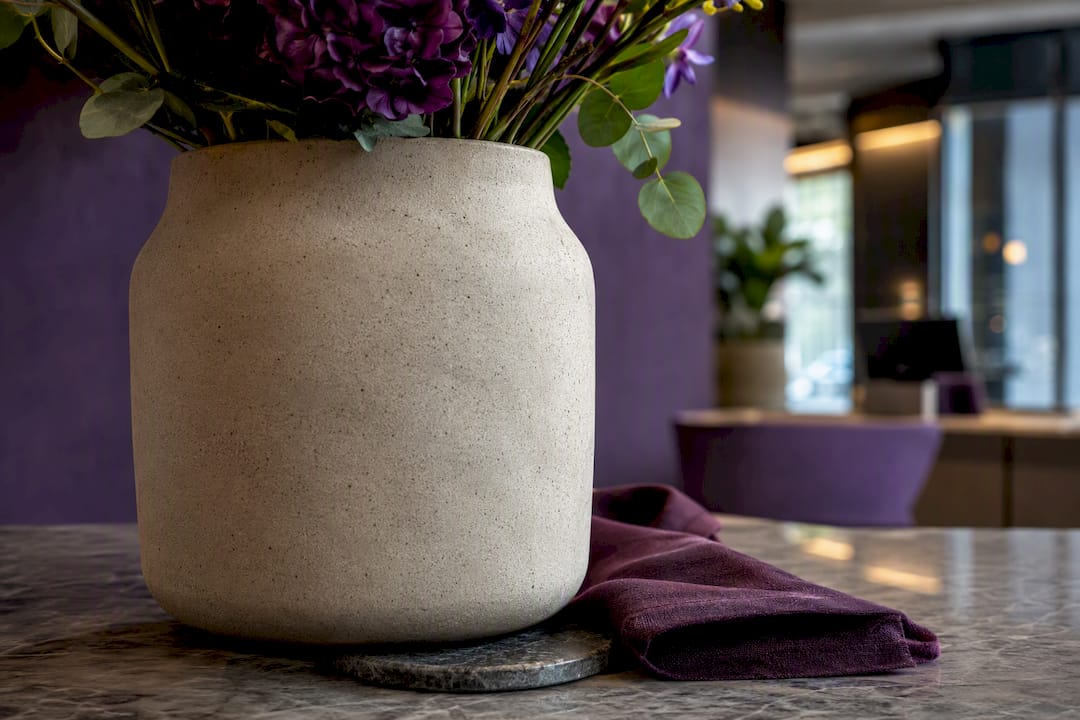
A stunning bouquet in the wrong vessel is a liability. Insiders in the floristry trade recommend low, wide, weighted vessels over tall narrow vases for exactly this reason: a tall glass cylinder near a busy check-in counter is one bumped elbow away from a puddle and a mess. Weight low, keep the profile wide, and the arrangement stays put through a full day of foot traffic.
Reliable pairings include:
- Orchids in a matte ceramic pot, low and grounded.
- Hydrangeas in a weighted compote that won’t tip when someone sets down a clipboard.
- Succulents in a shallow tray, virtually tip-proof by design.
- Anthuriums in a small black or white ceramic bowl for graphic contrast.
Container material changes your maintenance load, too. Opaque ceramic hides cloudy water, so you can go longer between full water changes. Clear glass looks elegant but shows every bit of murk within days, which means a weekly cleaning if you go that route.
Pro Tip: If your reception desk sees heavy daily contact, skip glass entirely. A stone or matte ceramic vessel absorbs bumps better and never reveals stem rot to visitors.
Choosing Colors That Match Your Brand Without Looking Chaotic
Floristry guides consistently point to the same rule for corporate spaces: stick to two or three colors, and let neutrals like white, ivory, and green carry the bulk of the arrangement. A reception desk styled in five competing colors reads as clutter, not polish.
- Anchor the palette in a neutral (white, ivory, or soft green) so the arrangement never fights with signage or décor.
- Bring in your brand color as a discreet accent, a ribbon, a single tinted bloom, or a vase finish, rather than dyeing the whole bouquet.
- Decide upfront whether you want a timeless look (roses, orchids, year round) or a seasonal one, since seasonal palettes usually mean a faster refresh cycle and a slightly higher annual cost.
Placement, Scale, and Sightline Rules for Reception Florals
Get the size wrong and an arrangement stops being decor and starts being an obstacle. The rule of thumb: keep desk-level arrangements low enough that a seated receptionist and a standing visitor can still make eye contact across the counter, generally under about 14 to 16 inches from the counter surface.
- Never place arrangements directly under HVAC vents or in a doorway’s direct sun path; both accelerate wilting and dehydration.
- Keep florals clear of doors that swing open onto the desk, they get knocked over more than people expect.
- Small desks call for one compact piece, not a cluster. Large lobbies can handle a taller design, but move that height to a side table or floor stand instead of the check-in counter itself.
Maintenance, Refresh Cadence, and Why a Subscription Makes Sense
A pristine arrangement on Monday and a wilted one by Thursday sends the wrong signal to every visitor who walks through on a Friday. Fresh flowers create a real, if subtle, mood lift for both staff and visitors, according to Psychology Today, which is exactly the kind of first impression a reception desk exists to deliver.
Build this into a simple routine:
- Top off water daily and pull any stem that’s faded or dropping petals.
- Keep arrangements away from drafts, vents, and direct sun (dry office air speeds up dehydration fast).
- Mid-week, re-cut stems and refresh water to buy the arrangement extra life through the weekend.
Cadence should match traffic. High-traffic front desks generally need a weekly swap; shared or lower-traffic offices can stretch that to biweekly, and quiet back-office spaces can go monthly. Industry examples show weekly service is the norm at hospitality desks and legal offices precisely because consistency signals care. A corporate subscription through Malik Flowers builds that consistency in automatically, rotating seasonal stems without your team having to think about it, and it comes with a satisfaction guarantee if a delivery ever misses the mark.
Dos, Don’ts, and Quick Fixes for Reception Flower Problems
A few rules keep reception florals from becoming a distraction instead of an asset. Fragrant lilies smell wonderful in an open lobby but can overwhelm a small, enclosed reception nook, so floristry experts recommend saving heavy scent for bigger, better-ventilated spaces.
- Don’t put loose-petaled blooms (think peonies or full-bloom roses) right at a high-traffic counter without daily upkeep; dropped petals look messy fast.
- Do favor low-pollen picks like orchids, roses, and anthuriums, secure heavier vessels with a discreet spill mat, and rotate stems seasonally to control cost.
- Fix a limp stem by re-cutting at an angle and giving it a deep drink; if it doesn’t perk up within a couple of hours, swap it out. For anything beyond a stem or two, call your florist for an emergency swap rather than letting a wilted arrangement sit through the week.
Pro Tip: For scent-sensitive teams or shared workspaces, eucalyptus-and-greenery arrangements deliver the polished look without any fragrance risk at all.
Budget Planning for Reception Flower Arrangements
Reception flowers don’t need to be a major line item, but they do need a realistic number attached before you commit to a cadence. The biggest cost driver isn’t the arrangement itself, it’s how often you replace it. A weekly swap for a high-traffic front desk costs meaningfully more over a year than a monthly rotation for a quiet back-office space, so match the cadence to actual foot traffic instead of defaulting to whatever looks most impressive.
A workable approach: set an annual floral budget in three tiers. Reserve the top tier for the main reception desk, since that’s the one every visitor and client sees first. A middle tier covers shared spaces like a break room or conference lobby, and the lowest tier (or none at all) applies to low-traffic corners. Within each tier, durable blooms like orchids and anthuriums stretch your budget further than delicate options like peonies, simply because they last longer between replacements.
Subscription pricing also tends to beat one-off ordering over time, since a recurring arrangement is planned and sourced in bulk rather than rushed together for a single delivery. If you’re testing the waters, start with a single sample order for your main desk before committing to a subscription for every space in the building. That gives you real cost data based on your actual space, not a guess.
Live Flowers vs. Artificial Flowers in Reception Areas
Live flowers win on impact, but they’re not automatically the right call for every space. The clearest advantage of real blooms is the psychological one: fresh flowers create a subtle, measurable mood lift for both staff and visitors, an effect artificial stems simply can’t replicate because part of it comes from scent and the visible signs of a living plant.
Live arrangements also signal effort. Anyone walking into a lobby can tell, even subconsciously, when flowers are real, and that reads as a business that invests in its space rather than one that set up decor once and forgot about it. The tradeoff is upkeep: real flowers need water, trimming, and a refresh schedule.
Artificial or preserved arrangements make sense in a few specific cases: spaces with no one available to do weekly maintenance, areas with extreme temperature swings that would kill live stems fast, or secondary spaces where a lower-priority look is fine. But for the one desk every client and job candidate sees first, live flowers are worth the small maintenance investment. The mood and impression benefit is exactly what that desk exists to deliver, and a subscription service removes most of the upkeep burden anyway.
Seasonal Flower Selection and Theme Ideas
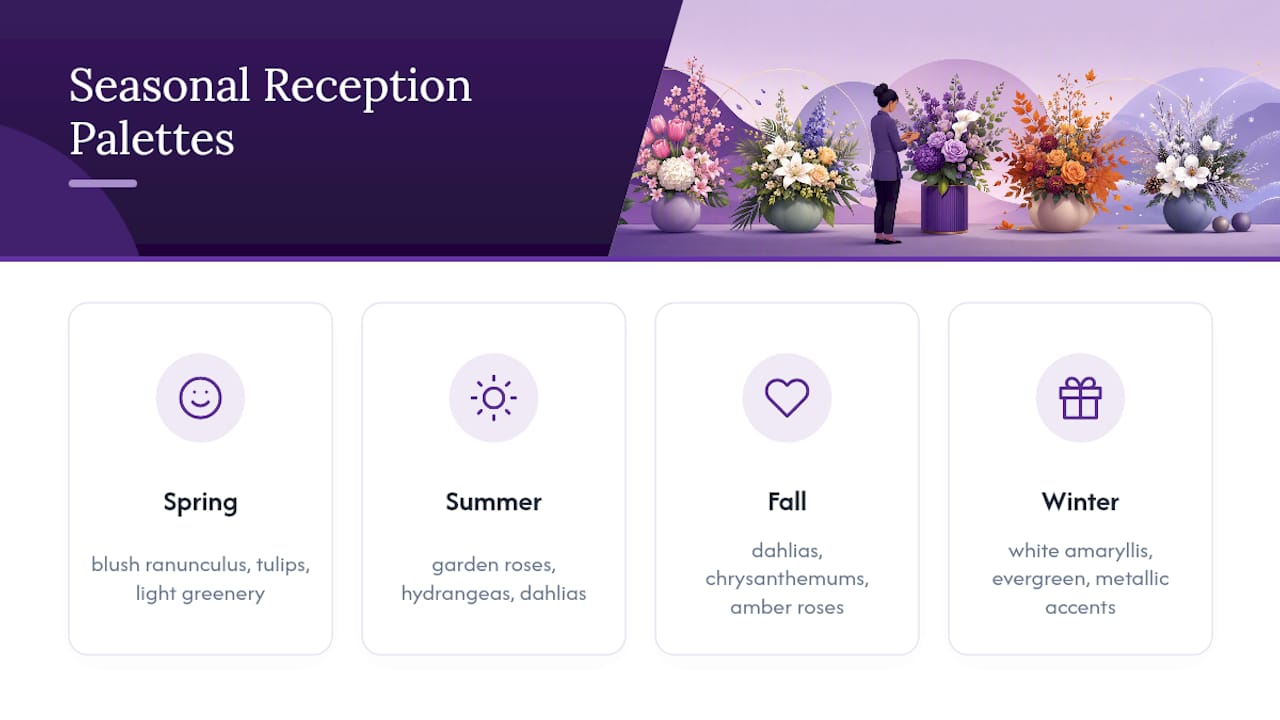
Rotating your reception palette by season keeps the space feeling current without requiring a full redesign every few months. Spring calls for soft palettes, think blush ranunculus, tulips, and light greenery, paired with pastel or ivory vessels that feel fresh after a long winter. A spring collection arrangement works well here because it’s built around exactly that seasonal palette shift.
Summer tends to favor brighter, fuller arrangements: garden roses, hydrangeas, and dahlias in warm tones hold up well in longer daylight and match the more casual energy of the season. Fall shifts toward richer, warmer stems, think dahlias, chrysanthemums, and amber-toned roses, often paired with deeper ceramic vessels that echo the season’s palette. Winter works best with structured, elegant arrangements: white amaryllis, evergreen sprigs, and subtle metallic accents that feel celebratory without tipping into full holiday decor.
The key is restraint. Seasonal doesn’t mean overhauling your entire color strategy four times a year, it means adjusting the accent stems and keeping your neutral base consistent, so the reception desk still feels like the same brand, just dressed for the time of year.
How Malik Flowers Builds Reception Programs That Actually Hold Up
Every reception program we build starts with the same question: what does this desk actually need to survive a full week of traffic, not just look good on delivery day? That’s why we lean on durable blooms and weighted vessels first, then layer in seasonal color as an accent rather than the whole design. A recurring corporate arrangement does more for consistency than any one-off order ever will, and it’s backed by our satisfaction guarantee if a delivery doesn’t land right. If your lobby needs a second opinion on scale or palette, a quick consult beats guessing.
— Reza
Get Started With Malik Flowers’ Corporate Reception Service
If you’d rather skip the trial and error, Malik Flowers builds reception programs designed specifically for busy front desks, not just standalone gift bouquets. That means arrangements chosen for durability first, styled to match your brand’s two or three core colors, and delivered on a schedule that fits your actual foot traffic instead of a generic weekly default.
Corporate clients can choose a single sample arrangement to test how a design holds up on their desk, or move straight into a recurring subscription with weekly, biweekly, or monthly delivery windows. Every order carries our satisfaction guarantee: if the design isn’t right, we make it right. The next step is simple: request a quick consult or place a sample order this week and see how your reception desk looks with a design actually built for it.
Sources
- Office Flowers That Transform Your Workplace | Fiore Designs
- Why offices should have fresh flowers every week | Pink Clover
FAQ
What is the 3:5:8 rule for flowers?
It’s a floral design ratio using three focal flowers, five secondary blooms, and eight filler stems (or greenery) to create a naturally balanced arrangement without needing an exact flower count.
Which flower is best for the office?
Orchids, roses, and anthuriums top the list because they’re durable, low-pollen, and hold up well between refreshes, which matters most on a desk that sees daily traffic.
What flowers do I need for a reception desk?
A durable, low-pollen bloom like orchids or anthuriums in a low, weighted vessel covers most reception needs, paired with a two to three color palette that matches your brand.
What are the trending flower arrangements for 2026?
Compact, texture-driven centerpieces and single-statement blooms (like a bold anthurium) are trending over large, fussy bouquets, since they photograph well and require less upkeep on a busy desk.
How often should office reception flowers be replaced?
High-traffic front desks generally need a weekly swap, shared spaces can stretch to biweekly, and low-traffic areas hold up fine on a monthly cadence.