
Skip the Flower Food, Try Every Other Day Peony Care That Works
Skip the Flower Food, Try Every Other Day Peony Care That Works
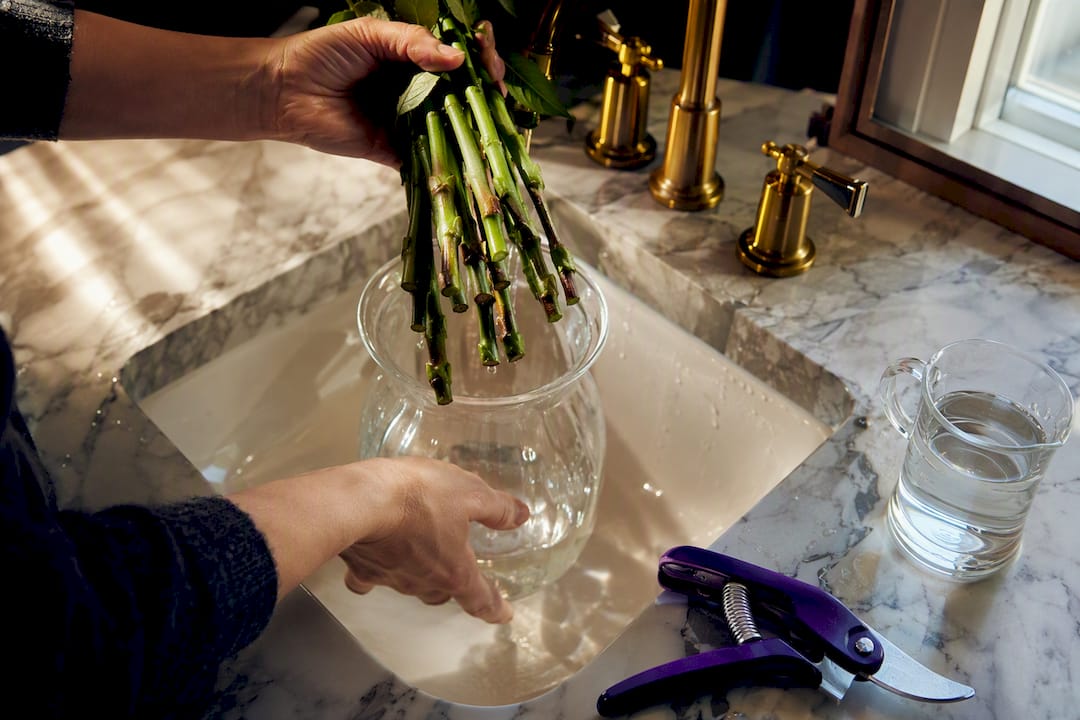
Unwrap your peonies the moment they arrive, recut every stem underwater at a 45-degree angle, and set them in cold water for the first 24 hours. That single sequence, backed by floral research on re-cut frequency, does more for vase life than any packet of flower food. Malik Flowers conditions every stem before delivery, but the first hour at home still decides how long your blooms last.
TL;DR:
- Regular underwater recutting every 48 to 72 hours significantly extends peony vase life by improving water uptake and reducing bacterial buildup.
- The first hour after unwrapping and recutting in cold water is critical to ensure blooms open fully and last longer, especially if buds are at the marshmallow stage.
- Avoid using home remedies like aspirin or vodka, as they lack evidence of benefit, whereas changing water and trimming routinely are proven to improve longevity.
- Keeping peonies in a cool, shaded spot away from direct sunlight, fruit, and heat is essential to prevent early petal browning and premature drooping.
- Pre-conditioned arrangements from florists can skip initial delays, offering longer-lasting blooms compared to unprepared store-bought stems.
Table of Contents
- Your First-Hour Peony Care Guide
- The Every-Other-Day Routine That Actually Extends Vase Life
- Why Won’t My Peonies Open (and Other Fixes)
- Do Peony Preservatives Actually Work?
- What Malik Flowers Does Before Your Peonies Ever Arrive
- What Most Peony Advice Gets Backward
- Skip the Guesswork: Order Peonies Already Conditioned
- Sources
- FAQ
Your First-Hour Peony Care Guide
The first sixty minutes matter more than anything you do afterward. Peonies travel dry, wrapped tight, and often thirsty. What you do in that first hour sets the trajectory for the next week or two of bloom.
Start by checking the bud stage. Florists call the ideal stage “marshmallow”: soft, springy buds that give slightly under light pressure. Buds that feel hard as marbles may never fully open, no matter how well you care for them afterward. If you received a mix, separate the marshmallow-stage stems from the marble-stage ones so you can treat them differently.
Here’s the sequence to follow, in order:
- Unwrap immediately. Sealed paper or cellophane traps humidity around the buds and stems, which actually slows hydration instead of helping it. If your vase isn’t ready, lay the stems on a clean, damp towel rather than leaving them bundled.
- Recut underwater. Hold each stem under running water or in a bowl and cut 1 to 2 centimeters off the base at a 45-degree angle. Cutting underwater keeps air from entering the stem’s vascular tissue, which is what causes wilting known as an air embolism.
- Strip foliage below the waterline. Leaves sitting in water break down fast and feed bacteria that clog the stem.
- Clean the vase before you fill it, following simple tips for houseplant care that also help keep flower water fresh and free from bacteria. A quick scrub with dish soap and warm water removes residue from previous flowers.
- Fill with cold water, about 10 to 16°C, for the first 24 hours. This slows the bloom’s metabolism just enough to extend the whole opening process.
For tight, marshmallow-stage buds only, you can chill them in the refrigerator for a few hours before arranging. This florist trick delays opening so you can time peak bloom for a weekend or event. Skip this step entirely for anything already loosening or open. Chilling a bloom that’s past the bud stage often causes shock and rapid petal drop once it warms back up. Keep any chilled buds away from fruit in the fridge. Apples, bananas, and other ripening produce release ethylene gas, which ages cut flowers fast.
Pro Tip: If a stem feels slimy near the cut when you unwrap it, trim an extra inch above the slimy section. That’s bacterial buildup from transport, and it will keep spreading up the stem if you don’t remove it.
The Every-Other-Day Routine That Actually Extends Vase Life
Most peony disappointment traces back to one habit: setting the vase down after day one and never touching it again. Mechanical maintenance, not additives, is what keeps peonies going for a week or two instead of three or four days.
Recut the stems every 48 to 72 hours, same 45-degree angle, same underwater technique. Research on postharvest peony care confirms that trimming this often meaningfully improves water uptake by opening fresh vascular tissue and removing the bacterial film that forms over a cut stem within a day or two. Skipping this step is the single biggest reason peonies droop early.
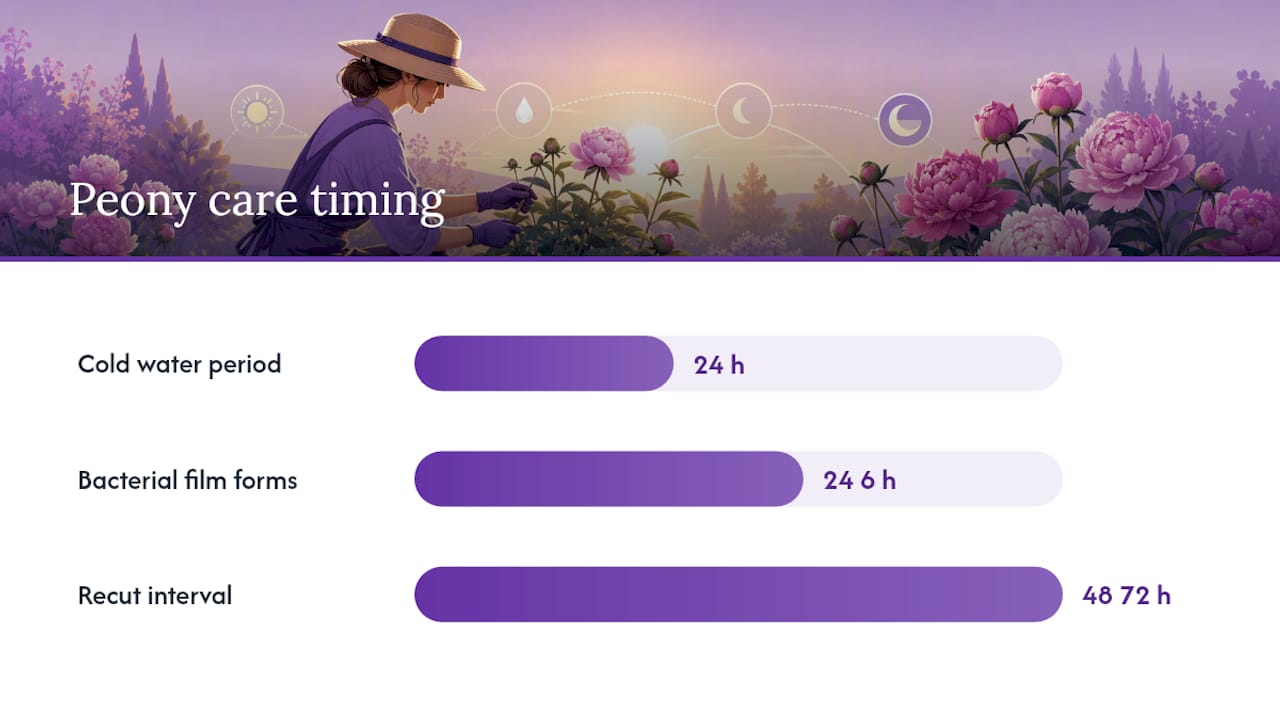
Every time you recut, dump the water completely and rinse the vase rather than just topping it off. Cloudy or slightly slimy water signals bacterial growth, and refilling on top of that water undoes any benefit from the fresh cut.
A few placement rules matter just as much as the water itself:
- Keep the arrangement in a cool, shaded spot, away from direct sun and heating vents.
- Store fruit in a separate room if the vase sits in the kitchen, since ethylene shortens bloom life fast.
- For heavy, double-form blooms in a mixed bouquet, cut a few stems shorter and keep water levels lower so top-heavy heads don’t tip the vase or snap at the neck.
- If stems still lean, a simple grid of clear tape across the vase opening gives each stem a slot to rest in.
Switch from cold to room-temperature water after the first 24 hours. Cold water’s job is to slow that initial rush of opening. Once the buds have started to soften, room temperature keeps them progressing at a normal pace instead of stalling.
Pro Tip: Set a recurring phone reminder for every other day. Peony vase care fails less often from bad technique and more often from simply forgetting the water needs changing.
Why Won’t My Peonies Open (and Other Fixes)
Something going wrong mid vase life almost always traces back to one of three issues: harvest stage, water contact, or heat exposure.
- Buds refuse to open. If they were cut at marble stage, patience won’t fix it. For marshmallow-stage buds stalling in a cool room, try warming the room slightly or dipping just the bud tip in warm water for a few seconds. Wipe away any sticky sap on the outside of the bud, since a heavy sap coating can physically prevent petals from unfurling.
- Stems go limp or stop drinking. Recut underwater right away, dump and scrub the vase, and refill with fresh water. A slimy stem base or foul-smelling water points to bacterial buildup, which blocks water uptake even if the stem itself looks fine.
- Petals brown or drop early. Move the arrangement away from direct light, heat, and any nearby fruit. Remove the affected bloom entirely. One decaying flower releases ethylene that speeds up aging in every other stem sharing its water.
Not every bloom makes it to the finish line. Once a flower is fully spent, snip it out. Pulling a dying bloom protects the rest of the bouquet instead of dragging the whole arrangement down with it.
Do Peony Preservatives Actually Work?
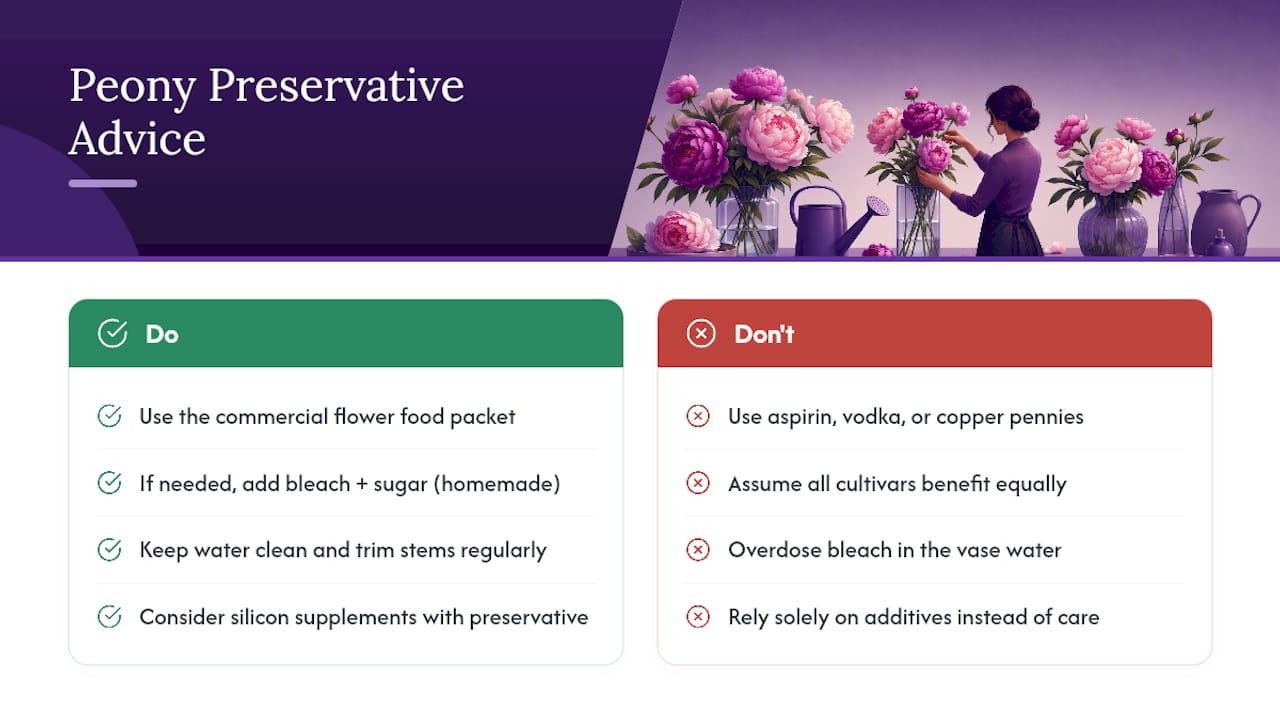
The flower food packet that comes with most bouquets does something real: it combines sugar for energy, an acidifier to balance pH, and a mild germicide to slow bacterial growth. A homemade version, a few drops of bleach with a spoonful of sugar in the vase water, approximates the same effect if you’ve run out of the packet.
The more interesting research is on silicon. Controlled studies on cut peonies found that silicon supplementation in vase solutions extends vase life and improves water status, and pairing silicon with a standard commercial preservative produced the best results in trials, including larger bloom size. It’s a promising area, but it’s not something you’ll find on a drugstore shelf yet.
Here’s the caveat worth knowing before you chase any additive: peony response to preservatives varies by cultivar. One comparative study found some varieties respond well to additives while others show almost no benefit at all, which means clean water and regular trimming remain the more dependable strategy for most home vases.
Skip anything involving aspirin, vodka, or copper pennies. These home remedies persist online, but none carry real evidence, and some, particularly anything containing bleach in the wrong ratio, can damage stems if overdosed.
What Malik Flowers Does Before Your Peonies Ever Arrive
Handcrafted arrangements often include seasonal blooms like peonies, and conditioning can start well before delivery, not after. Every stem is trimmed and hydrated ahead of time, which is part of why the satisfaction guarantee exists: if a design doesn’t meet expectations, Malik Flowers stands behind it with a refund.
When your bouquet arrives, a short checklist keeps that head start working in your favor:
- Unwrap the arrangement right away, even if you’re setting it down for a photo first.
- Recut each stem underwater before placing it in your own vase.
- Use cold water for the first day, then switch to room temperature.
- Keep the arrangement away from a sunny windowsill or the fruit bowl.
Readers who’d rather skip the conditioning step altogether can browse the full product lineup for arrangements delivered ready to display.
What Most Peony Advice Gets Backward
Most guides bury the water temperature and re-cut frequency under a pile of additive recipes, as if the trick to peony longevity is some secret ingredient. It isn’t. The research keeps pointing the same direction: mechanical care, meaning clean water, sharp cuts, and consistent timing, outperforms almost every additive tested outside a lab.
The cultivar-dependent research on preservatives is the detail that should change how people shop for peonies more than how they care for them. If a store-bought packet works brilliantly on one bouquet and does nothing on the next, that’s not user error. That’s biology. Betting on any single additive is a weaker strategy than betting on a routine you control every 48 hours.
If there’s one habit worth adopting over any other, it’s the underwater recut. It’s the step people skip because it feels excessive, and it’s the one the data keeps backing.
— Reza
Skip the Guesswork: Order Peonies Already Conditioned
Some florists handle the conditioning before bouquets leave the shop, which can mean less recutting and water-testing on your end. Arrangements are often handcrafted with seasonal blooms and delivered fresh locally, sometimes backed by satisfaction guarantees.

DIY vase care works well when you’re starting with a bouquet from anywhere. But if you’d rather start further ahead, a florist-prepared arrangement skips the marble-stage buds and shaky stems entirely. Same-day delivery covers most of the region, so a fresh, already-conditioned bouquet can be at someone’s door today. Browse the Spring Collection for seasonal peony-forward designs, or check the full product catalog to pick an arrangement and get it moving toward delivery now.
Sources
This guide draws on postharvest research from PMC and MDPI, plus practical guidance from Woman & Home and Better Homes & Gardens.
- How to make supermarket peonies last longer in your home | Woman & Home
- PMC: Effects of Si and preservatives on cut peony vase life (2022)
- MDPI study on preservative effects (summary)
FAQ
How long do peonies last in a vase?
With regular recutting and clean water, peonies typically last 5 to 10 days, and sometimes up to two weeks if cut at the marshmallow bud stage and kept cool.
How do I help peonies open faster?
Move stalled marshmallow-stage buds to a slightly warmer room, or dip just the bud tip in warm water for a few seconds; marble-stage buds cut too early often won’t open at all.
Should peony water be cold or room temperature?
Use cold water for the first 24 hours to slow initial opening, then switch to room temperature once the buds begin to soften.
How often should I recut peony stems?
Recut every 48 to 72 hours at a 45-degree angle underwater, which reopens the stem’s water-carrying tissue and removes bacterial buildup from the previous cut.
Do flower preservative packets really work for peonies?
They help with some cultivars by supplying sugar, acidifiers, and germicides, but research shows the response varies by variety, so consistent water changes and trimming matter more than any single packet.
Can I get peonies that are already conditioned for a longer vase life?
Yes. Experienced florists condition stems before delivery, so bouquets can arrive closer to peak freshness than typical store-bought stems.