
Within the First Hour: Rose Care After Delivery for Vancouver
Within the First Hour: Rose Care After Delivery for Vancouver
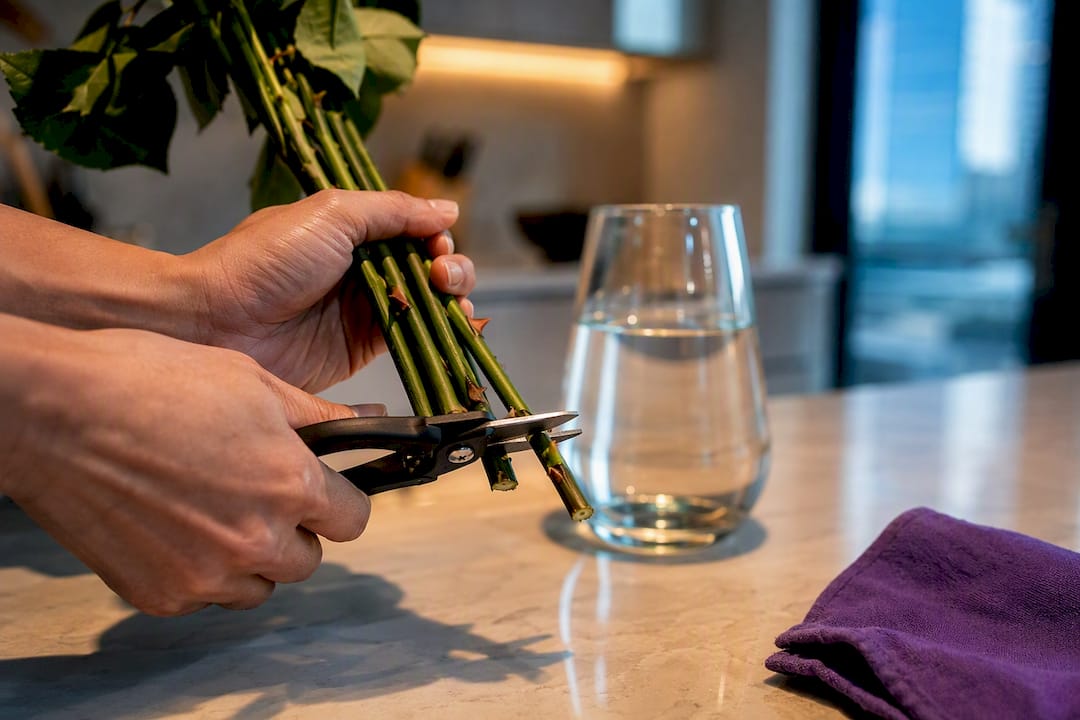
Get your roses out of the box and into water within the hour, cut each stem at a 45-degree angle removing about an inch, and set them in a cool, shaded spot with the flower food that came in the box mixed into the water. Those three moves, done right after delivery, do more for your bouquet than anything you’ll do for the rest of the week.
TL;DR:
- Changing the water completely every two to three days and using fresh flower food is crucial for extending roses’ vase life beyond five days.
- Re-trimming stems every time you change the water and avoiding placement near heat, drafts, or fruit helps keep roses fresh for up to 12 days.
- Recutting stems underwater and soaking drooping blooms in cool water can often revive roses, but brown or slimy petals must be removed immediately.
- Proper initial conditioning within the first hour, including cutting stems at a 45-degree angle and conditioning in a dark, cool spot, greatly impacts how long roses last.
- Most roses last seven to ten days with diligent care, but neglecting maintenance can cause early decline, mostly due to bacteria growth and improper placement.
Table of Contents
- Rose Care After Delivery: Your First-Hour Checklist
- How to Keep Roses Fresh Day to Day
- How Do You Revive a Drooping Rose?
- How Long Should Delivered Roses Last?
- What Malikflowers Does Before Your Bouquet Ships
- A Florist’s Take on What Actually Extends Vase Life
- Get Fresh Roses Delivered Without the Guesswork
- Sources
- FAQ
Rose Care After Delivery: Your First-Hour Checklist
That first hour sets the tone for the whole week your roses have left behind. The first 24 hours after a bouquet arrives matter more than any other stretch of its vase life, so don’t let the box sit on the counter while you finish something else.
Work through these steps in order:
- Unbox right away. Roses have been out of water during transit, so every extra minute in a sealed box works against them. If a protective sleeve is holding stems together and the care card says to keep it on during hydration, leave it in place for now.
- Wash the vase first. Warm, soapy water and a good rinse matter more than people assume. Bacteria left behind from a previous bouquet contaminates fresh water in a matter of hours.
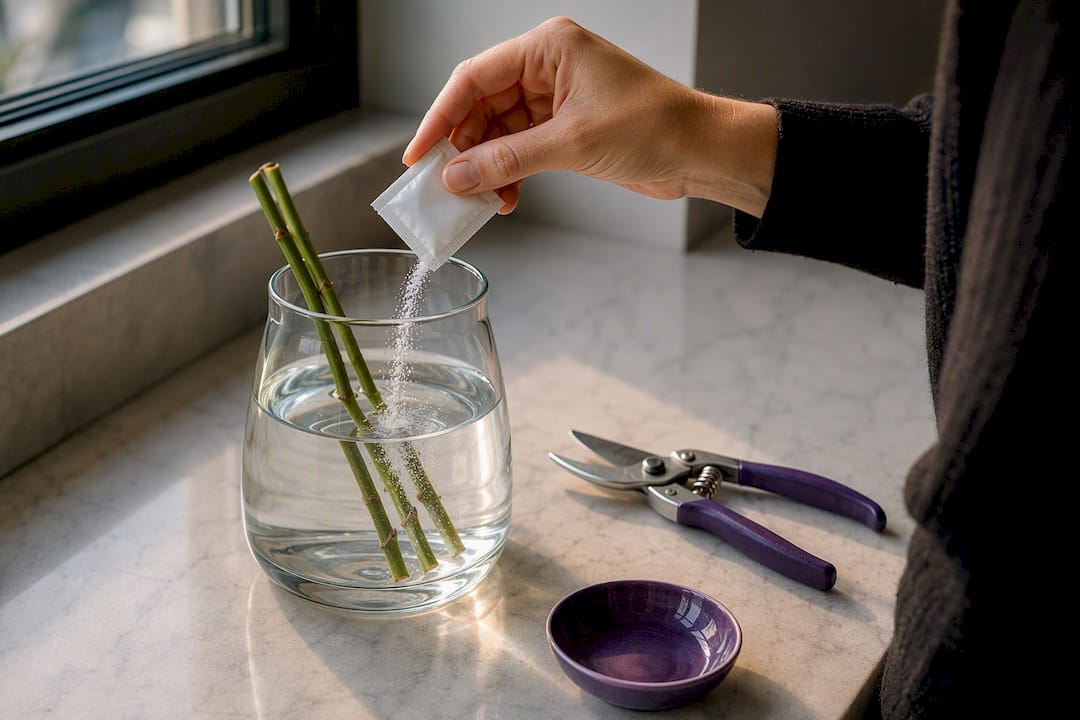
- Fill with lukewarm water and add the flower food. Use the exact packet included in your delivery and follow the ratio printed on it. Flower food isn’t just sugar. It’s a mix of sugar for energy, an acidifier to help stems absorb water, and a biocide to slow bacteria, and guessing at the ratio throws that balance off.
- Cut the stems at a 45 degree angle, removing roughly 1 inch (2 to 3 centimeters) from the base. Use sharp shears, not scissors that crush the stem. If you can manage it, make the cut while the stem is submerged so no air pocket sneaks into the stem as it dries.
- Strip any leaves that would sit below the waterline. Submerged foliage rots fast and turns the water cloudy within a day.
- Let the bouquet condition for 1 to 3 hours in a cool, dark spot before you arrange it in its final vase. This gives the stems time to rehydrate and the blooms time to relax before display.
Pro Tip: If your roses look a little tired or tightly closed on arrival, that’s normal. Don’t panic and don’t skip the conditioning step to “get them into a pretty vase faster.” The extra hour or two in a dark, cool room does more for the bloom than immediate display ever will.
How to Keep Roses Fresh Day to Day
Once your roses are arranged, the routine that keeps them alive is simple, but it only works if you actually stick to it.
- Change the water completely every 2 to 3 days. Don’t just top it off. Dump it, rinse the vase, and start fresh with a new dose of flower food each time.
- Re-trim the stems about ½ inch (1 to 2 centimeters) at each water change. The stem end seals over within hours of cutting, so a fresh cut reopens it to water uptake.
- Top up water daily between full changes, and if it turns cloudy before your scheduled change, don’t wait. Swap it immediately.
- Keep roses away from heat and ethylene. That means no direct sunlight, no spot near a heating vent or radiator, no drafty windowsill, and definitely no bowl of ripening fruit nearby. Fruit releases ethylene gas, which speeds up wilting in cut flowers.
- Never skip the flower food refill. Plain water alone starves the stems of the sugar they need and does nothing to slow bacteria.
Cloudy water isn’t a cosmetic issue you can ignore until the next scheduled change. Bacteria multiplies in vase water well before it looks visibly dirty, and by the time you can see the cloudiness, the water is already working against your roses. Extension and florist guidance both point to the same number: complete water changes every 48 to 72 hours, with a full vase rinse each time. That single habit is the difference between roses that fade at day five and roses still going strong at day nine.
It’s tempting to reach for a penny, an aspirin, or a splash of soda instead of the packet that came with your delivery. Some of those tricks give a partial boost, but none of them match a properly formulated commercial preservative. The packet Malikflowers includes is already balanced for the job. Use it.
How Do You Revive a Drooping Rose?
A rose with a bent, limp neck isn’t necessarily dying. Most of the time it’s an air bubble or clog blocking water from reaching the bloom, not dehydration you can’t fix.
- Diagnose before you act. A sharp bend right below the bloom usually means a bent neck (an air block). A generally droopy, soft-petaled bouquet across the board points to overall dehydration.
- For bent neck, re-cut underwater and submerge. Snip the stem while it’s under water, then lay the whole stem or bouquet sideways in a sink or basin of cool water for 30 to 60 minutes. Florists rely on this submersion trick as a standard fix for exactly this problem.
- For general dehydration, use warm water. Re-cut under still water to clear any trapped air, then stand the stems in warm, not hot, water for a few hours before returning them to the vase.
- Cut your losses on the worst blooms. If a petal has turned brown, gone slimy, or started to smell off, pull that stem. One rotting bloom speeds up decline in everything around it.
How Long Should Delivered Roses Last?
With basic care, most delivered roses hold up for 7 to 10 days. Stay diligent about water changes and trimming, and that stretches to 7 to 12 days, with some premium stems occasionally going even longer. Those numbers come from florist guidance on realistic vase life, and they assume you’re actually doing the maintenance, not just admiring the bouquet from across the room.
Roses that fail early almost always share the same three causes:
- Skipping the arrival cut and going straight into a vase with the shipping-cut stem
- Letting water sit past the point of cloudiness
- Placing the vase somewhere hot or sunny
Know when a stem has passed the point of saving. Pull any rose showing:
- A slimy stem below the waterline
- Water that clouds again within a day of cleaning, even after a full change
- Petals that have gone brown and mushy at the edges
- A noticeable bad smell coming from the vase
What Malikflowers Does Before Your Bouquet Ships
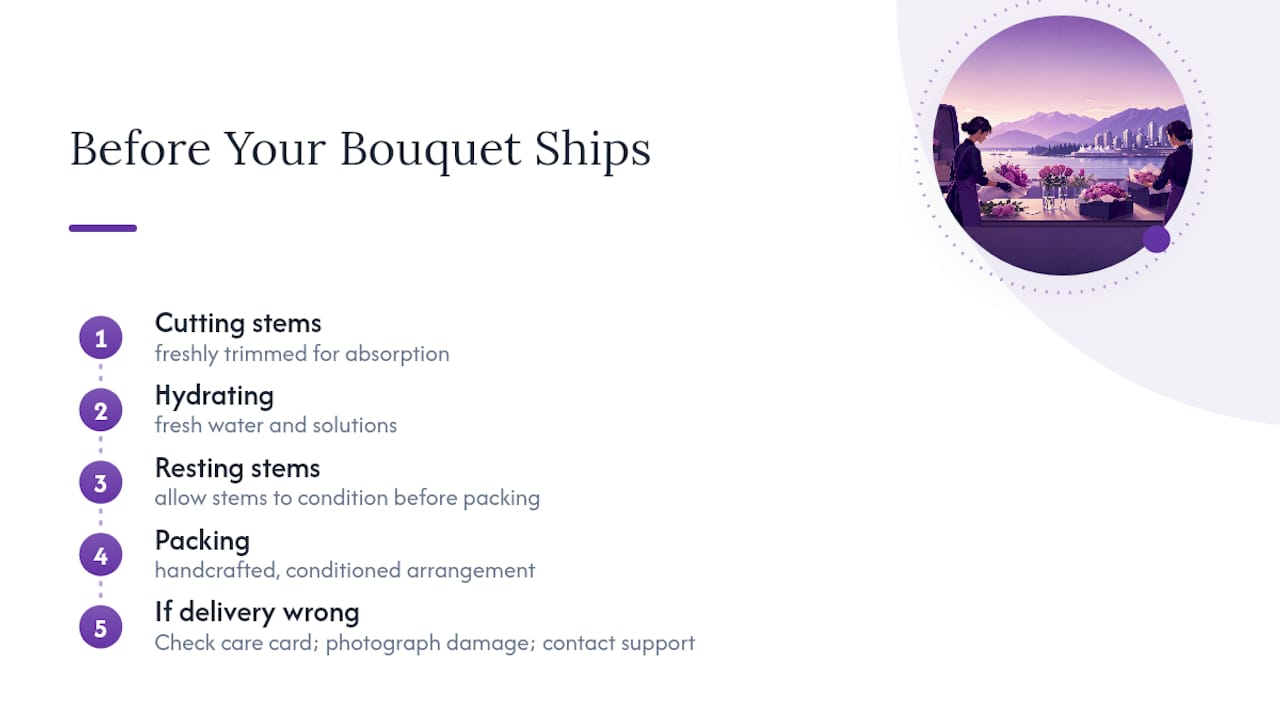
Every arrangement leaving Malikflowers is handcrafted and conditioned before it ever gets loaded for delivery across Metro Vancouver. That prep work, cutting, hydrating, and letting stems rest before packing, is a big part of why a bouquet holds up once it reaches your door. It’s also why the arrival steps in this guide matter so much: you’re picking up where that conditioning left off, not starting from scratch.
If something about your delivery isn’t right, don’t just work around it. Malikflowers backs every order with a satisfaction guarantee, so a design issue or a damaged bloom is something the team wants to hear about, not something you should quietly tolerate. Check the included care card first, and if a bouquet arrives visibly damaged, take a photo right away and reach out to support before you do anything else with the flowers.
A Florist’s Take on What Actually Extends Vase Life
Ask ten people how to care for roses and you’ll get ten different tricks. Most of them are noise. The two things that actually move the needle are the arrival cut and clean water. Everything else, the pennies, the hairspray, the ice cubes, is a rounding error next to those two habits.
Pro Tip: If you can’t arrange your roses the moment they arrive, don’t leave them dry on the counter. Stand the stems upright in a bucket of water in the coolest room in your home until you have time to do it properly.
Conditioning matters more than people give it credit for. A few hours in a cool, dark spot before final arranging, straight after that first cut, can be the difference between roses that fade by day six and ones still holding shape past day ten.
— Reza
Get Fresh Roses Delivered Without the Guesswork
Some florists provide roses that arrive already conditioned and cut right, rather than bouquets that have been sitting in a warehouse for days before shipping. Handcrafted, made-to-order arrangements with same-day delivery reduce the time flowers spend before reaching your vase.

If you’re reordering for someone, the Ruby Romance Bouquet and other rose arrangements in the product catalog both ship with flower food and care instructions included. Prefer flowers on a regular schedule instead of a one-off order? The subscription page sets up recurring deliveries so fresh stems show up before the last bunch fades. And if anything about a delivery falls short, the satisfaction guarantee means a quick message to support gets it fixed, not ignored. Browse the spring collection to see what’s currently in season, and place your next order whenever you’re ready.
Sources
- Bright blooms: How to care for flower bouquets | Illinois Extension (2026)
- How to keep cut flowers fresh (2026 florist guide) | LocalFlower Blog
- Rose Care: How to Make Cut Roses Last Longer in a Vase | Cindy’s Flowers
FAQ
How often should I change the water for roses?
Change the water completely, and rinse the vase, every 2 to 3 days. Top it up daily in between and swap it right away if it turns cloudy sooner.
Are DIY flower food substitutes like pennies or aspirin okay to use?
They can give a partial boost, but they’re not a real substitute for the commercial packet included with your bouquet, which balances sugar, an acidifier, and a biocide in one dose.
How do I revive a rose with a drooping neck?
Re-cut the stem underwater, then lay the bouquet sideways in a basin of cool water for 30 to 60 minutes to let it rehydrate before returning it to the vase.
How long do delivered roses usually last?
Most last 7 to 10 days with basic care, and up to 7 to 12 days with diligent trimming and water changes. Premium stems occasionally go even longer.
What should I do if my Malikflowers bouquet arrives damaged?
Photograph the bouquet right away and contact Malikflowers support. Every order is backed by a satisfaction guarantee that covers design issues and delivery problems.