
30, 60, 90 Day Playbook for Sustainable Floristry in Canadian Shops
30, 60, 90 Day Playbook for Sustainable Floristry in Canadian Shops

Sustainable floristry means designing and running a flower business so it reduces environmental harm, treats workers and suppliers fairly, and still turns a profit, starting with foam-free arrangements, local sourcing, and better waste systems. Shops that adopt it cut disposal costs and gain a stronger story to tell customers. Statistics Canada reports that greenhouse, nursery and cut flower sales reached $6.0 billion in 2024, and florists like Malik Flowers already build their sourcing and packaging decisions around this shift.
TL;DR:
- Floret shops should prioritize reducing floral foam use, as it sheds microplastics and cannot fully decompose, by transitioning to reusable alternatives like chicken wire and water tubes.
- Building predictable, collaboration-based local sourcing relationships with regional growers minimizes supply chain impacts and enhances seasonal availability planning.
- Verify that packaging materials labeled as compostable meet local waste system standards, especially the acceptance of plant-based packaging at commercial compost facilities.
- Employ simple metrics such as waste volume, compost use, and local sourcing percentages to track sustainability progress without costly software.
- Adopting small, incremental changes over time, such as foam removal and local sourcing, improves environmental impact and maintains shop profitability while aligning with customer expectations.
Table of Contents
- Core principles behind environmental, social and economic sustainability
- Foam-free design and what to do with floral waste
- Building reliable local sourcing partnerships with growers
- Choosing packaging that your local waste system can actually handle
- Setting up inventory, biosecurity and low-cost pest controls
- Tracking progress with simple metrics and a supplier scorecard
- A 30-60-90 day plan to put these practices into action
- Certification and eco-labels worth understanding
- The economic case for sustainable practices in a flower shop
- What sustainable floristry looks like in practice
- Where florists can learn more about sustainability principles
- A practitioner’s view on tradeoffs that actually matter
- A practical example for shops exploring these changes
- FAQ
- Sources
Core principles behind environmental, social and economic sustainability
Sustainable floristry rests on three pillars that show up in daily shop decisions, not just mission statements. The environmental pillar covers waste, water, chemicals and transport emissions. The social pillar covers fair pay to growers and safe working conditions in supply chains. The economic pillar asks whether a practice still makes financial sense for a small shop, because a method that bankrupts the business will not survive long enough to help anyone.
The 3Rs hierarchy, reduce, reuse, recycle, guides most of the hard choices, and the order matters: reducing what you buy and waste beats finding a clever way to reuse it, which in turn beats recycling it after the fact.
- Reduce: order closer to actual demand and cut floral foam use first.
- Reuse: repurpose buckets, ribbon, and containers across multiple orders.
- Recycle or compost: route stems and greenery scraps to compost instead of landfill.
Greenhouse cut flowers alone were valued at $230.5 million in 2024, a market large enough that domestic sourcing decisions carry real weight for shops trying to shorten supply chains.
Foam-free design and what to do with floral waste
Floral foam sheds microplastics and never fully breaks down, so most sustainability-minded shops phase it out first. Chicken wire, reusable pin frogs, and water tubes handle most arrangement types that once relied on foam, while moss and natural binding work for larger installations.
- Switch standing arrangements and vases to chicken wire or pin frogs before tackling foam-dependent event work.
- Set ordering rules that match stem counts to recent sales data instead of rounding up “just in case.”
- Reuse leftover greenery and short stems in smaller arrangements or bouquet add-ons rather than discarding them.
- Start a compost bucket for floral scraps and confirm whether your municipality accepts plant waste curbside or requires a separate commercial composter.
Commercial compost facilities often have different acceptance rules than curbside residential pickup, so check both before committing to a system. Some municipalities exclude floral foam residue and treated stems even from green bins, which makes foam removal doubly useful.
Pro Tip: Keep a small log of weekly foam and floral waste volume for a month before you change anything. It gives you a baseline to measure every later improvement against.
Building reliable local sourcing partnerships with growers
Local sourcing works best as a relationship, not a transaction. Predictable ordering windows, weekly or biweekly, give flower farms the lead time they need to plan harvests around your shop instead of treating you as overflow business. Flexible design briefs built around color palettes rather than specific varieties let growers substitute what is actually ready.
- Ask growers directly what pest management methods they use and whether they practice integrated pest management or biological control.
- Request seasonal availability calendars so you can plan designs around bloom windows instead of fighting them.
- Offer to take overflow product during peak harvest in exchange for priority access during shoulder seasons.
- Build in buffer time for weather delays rather than penalizing a farm for a late shipment.
Agriculture and Agri-Food Canada’s pesticide risk reduction strategy notes that greenhouse floriculture growers increasingly use biopesticides and biological control, so a grower’s honest answer to a pest management question tells you a lot about how the flowers in your cooler were actually grown. Seasonal limits are also a selling point: telling a client their bouquet features peonies because it is peony season, rather than apologizing for unavailable roses, turns a constraint into a design story.
Choosing packaging that your local waste system can actually handle
Packaging claims are easy to print and hard to verify, so check the standard behind any “compostable” label before you trust it. ASTM D6400 is the commonly cited benchmark for compostability, and some plant-based packaging makers claim their material breaks down in commercial compost facilities within 180 days, which only matters if a commercial facility actually serves your area.
- Confirm whether your waste hauler or a nearby facility accepts the specific material, not just “compostable” plastics in general.
- Weigh reusable packaging (jars, wraps clients bring back) against single-use compostable options for cost and convenience.
- Pilot a new packaging line with a small group of regular clients before switching shop-wide.
- Print simple care instructions on the packaging itself so customers know how to dispose of it correctly.
One plant-based packaging maker, good natured®, states its products are designed to break down in commercial compost within 180 days. That timeline only holds where commercial composting is available, which makes local verification the real first step before any packaging pilot.
Setting up inventory, biosecurity and low-cost pest controls
Inventory discipline and basic biosecurity prevent two expensive problems at once: overordering and pest introductions. Some shops use a 3-5-8 style ordering concept, roughly three staple varieties, five accent varieties, and eight stems per bunch as a planning reference, adjusted to actual order volume rather than guesswork.
- Inspect every incoming shipment visually before it enters your cooler, checking for pests, mold, or damage.
- Hold suspect shipments in a separate, cool area rather than mixing them with existing stock immediately.
- Monitor for pests with sticky traps or regular visual checks rather than waiting for visible damage.
- Escalate to a grower conversation or a targeted biological control only after monitoring confirms a real problem, not a precaution.
The Canadian Food Inspection Agency’s floriculture biosecurity guide notes that managing incoming material early is more cost-effective than treating an established infestation later.
Tracking progress with simple metrics and a supplier scorecard
Small shops do not need enterprise software to measure sustainability progress. A short monthly checklist covering waste volume, compost volume, and the share of stems sourced locally gives you enough data to see trends without adding administrative burden.
- Track pounds of waste sent to landfill versus composted each month.
- Calculate the percentage of stems sourced from local or regional growers.
- Score each supplier on reliability, pest management practices, and packaging options.
- Note any packaging or sourcing complaints from customers for pattern spotting.
This kind of simple scorecard mirrors the logic behind the Policy on Green Procurement)/doc-eng.aspx?id=32573), which asks larger institutional buyers to weigh lifecycle impact and favor reusable or recyclable packaging. A flower shop can apply the same thinking at a fraction of the scale, using supplier conversations instead of formal audits.
A 30-60-90 day plan to put these practices into action
Spreading changes over three months keeps the workload manageable and gives each phase time to show results before you add the next one.
- Days 1-30: Remove floral foam from standard arrangements, audit current packaging against local recycling and compost rules, and start a small compost bucket for scraps.
- Days 31-60: Set ordering agreements with one or two local growers, adjust your ordering cadence to match real demand, and train staff on the new waste-sorting routine.
- Days 61-90: Review your first metrics (waste volume, local sourcing percentage), launch a “grown not flown” message in your marketing, and adjust whatever is not working.
Pro Tip: Treat day 90 as a checkpoint, not a finish line. Rerun the same 30-day quick wins for any new product line or season you add later.
Certification and eco-labels worth understanding
No single certification covers every part of a flower shop’s environmental footprint, so most florists end up piecing together signals rather than chasing one badge. Packaging materials can carry ASTM D6400 compostability backing or forest-stewardship certification for paper products, both of which are verifiable claims rather than marketing language. Some growers carry third-party sustainable-agriculture certifications, though coverage varies widely by region and crop, so asking a grower directly what they hold is more reliable than assuming a label applies.
For packaging specifically, Malik Flowers has detailed how it approaches eco-friendly flower packaging and the certifications behind it, which is a useful reference point for shops trying to understand what a packaging certification actually guarantees versus what it implies. The honest answer for most small shops is that certification matters less than consistency: a shop that reliably sources local stems, uses verified compostable packaging, and reduces foam use builds more customer trust than one chasing a label without changing daily practice. Eco-labels work best as a supporting detail in a larger sustainability story, not the whole story.
The economic case for sustainable practices in a flower shop
The upfront cost question is fair: foam-free supplies, local sourcing conversations, and packaging pilots all take time before they pay off. But several of the most effective changes cost less than what they replace. Floral foam has a direct purchase price that chicken wire and reusable pin frogs eliminate entirely after the first purchase. Reducing overordering through tighter inventory rules cuts the cost of stems that would otherwise wilt unsold.
Local sourcing can reduce shipping and cold-chain costs tied to imported stems, though pricing varies by season and availability. Packaging is the area where cost tradeoffs are most visible: compostable materials sometimes carry a higher per-unit price than conventional plastic wrap, which is why piloting with a smaller client group before a full switch protects margin while the shop confirms customer response.
The harder-to-quantify benefit is customer retention. A shop that can explain where its flowers came from and how its packaging breaks down gives repeat customers, especially corporate and subscription clients, a reason to choose it over a generic order. That story costs nothing extra to tell once the practices are in place, which is part of why sustainability and marketing end up so closely linked in this industry.

What sustainable floristry looks like in practice
The clearest examples of sustainable floristry come from shops that picked a small number of changes and executed them consistently rather than attempting everything at once. A shop that commits to foam-free design across its full catalog, for instance, builds supplier relationships and staff habits around that one change before adding packaging or sourcing updates.

Subscription and recurring-delivery models offer another practical example. A shop running a repeat-delivery program can standardize its packaging and sourcing decisions across every order in that program, which simplifies supplier conversations and makes waste tracking easier because the volume is predictable. Malik Flowers’ recurring flower delivery option follows this logic, applying consistent packaging and seasonal sourcing choices across repeat orders rather than reinventing the approach for every one-off sale.
Corporate and office-flower programs follow a similar pattern: a business client ordering weekly arrangements for a reception desk benefits from a shop that has already solved its packaging and sourcing questions for recurring orders, rather than one treating every delivery as a fresh decision.
Where florists can learn more about sustainability principles
Most florists pick up sustainable practices through industry publications, grower relationships, and trade events rather than formal coursework, since dedicated sustainability credentials for floristry are limited. Florists’ Review regularly covers grower relationship building and sourcing practices, offering a practical starting point for shops new to local sourcing. Industry groups such as Canadian Flowers Week promote seasonal, domestic-grown storytelling and connect florists with growers directly, which doubles as both an education resource and a networking opportunity.
Government resources also fill gaps that trade press does not cover. Agriculture and Agri-Food Canada’s pest management guidance and the Canadian Food Inspection Agency’s biosecurity guide are written for growers but give florists the vocabulary to ask informed sourcing questions. For packaging specifically, small business guides like Spaceman’s eco-friendly packaging suggestions offer concrete first moves rather than abstract principles, which suits a shop looking for this week’s action rather than a long-term framework.
A practitioner’s view on tradeoffs that actually matter
Every sustainability decision in a flower shop runs into the same tension: cost, client expectation, and what is actually in season. Packaging that compost facilities accept sometimes costs more per order, and a client expecting peonies in December needs a different conversation than a design brief. The shops that stick with these practices are the ones that pick a few changes, test them with real orders, and adjust before expanding.
— Reza
A practical example for shops exploring these changes
Some flower shops build arrangements around the seasonal blooms a given week actually offers, paired with packaging choices designed to reduce waste rather than add to it. This is one way to apply these practices, not the only one.
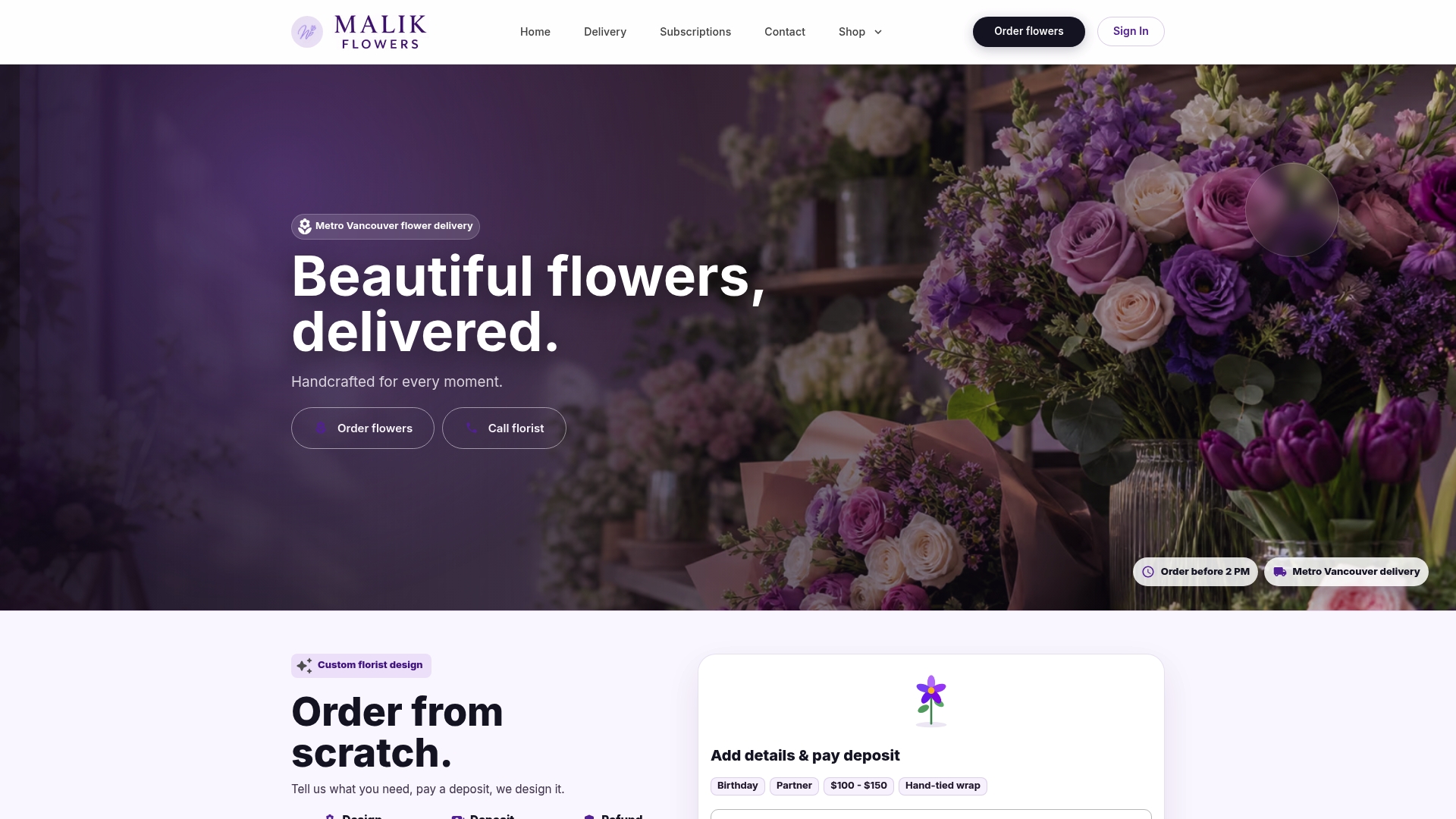
Readers who want to see how foam-free, seasonally driven design comes together in a finished order can look at the custom floral design options available for Metro Vancouver delivery, including recurring plans for shops and individuals who want consistent sourcing without reordering from scratch each time.
FAQ
What is the 3-5-8 rule for florists?
The 3-5-8 rule is an informal planning guide some florists use for arrangement design and ordering: roughly three focal flower types, five supporting varieties, and eight total stems in a simple arrangement. Definitions vary by shop, and it works best as a loose reference for keeping orders and designs consistent rather than a fixed formula.
What are three ways florists can be environmentally conscious?
Removing floral foam, sourcing stems from local growers, and composting floral scraps instead of sending them to landfill are three practical starting points. Each address a different part of the waste stream, from design materials to supply chain to disposal.
What are the latest trends in floristry?
Foam-free design, local and seasonal sourcing with “grown not flown” storytelling, and compostable or reusable packaging are current priorities among sustainability-focused florists. Subscription and recurring-delivery models are also growing as shops look for predictable order volume that simplifies sourcing and packaging decisions.
What is a sustainable florist?
A sustainable florist is one that designs and runs its business to reduce environmental harm, support fair treatment of growers and workers, and remain financially viable, often starting with foam-free design, local sourcing, and verified compostable or reusable packaging. It is a set of ongoing operational choices rather than a single certification or label.
Sources
- Statistics Canada: Daily — Ornamental horticulture statistics (2024)
- Pesticide risk reduction strategy for greenhouse floriculture — Agriculture and Agri-Food Canada