
Sympathy Flowers Etiquette: What to Send and When
Sympathy Flowers Etiquette: What to Send and When
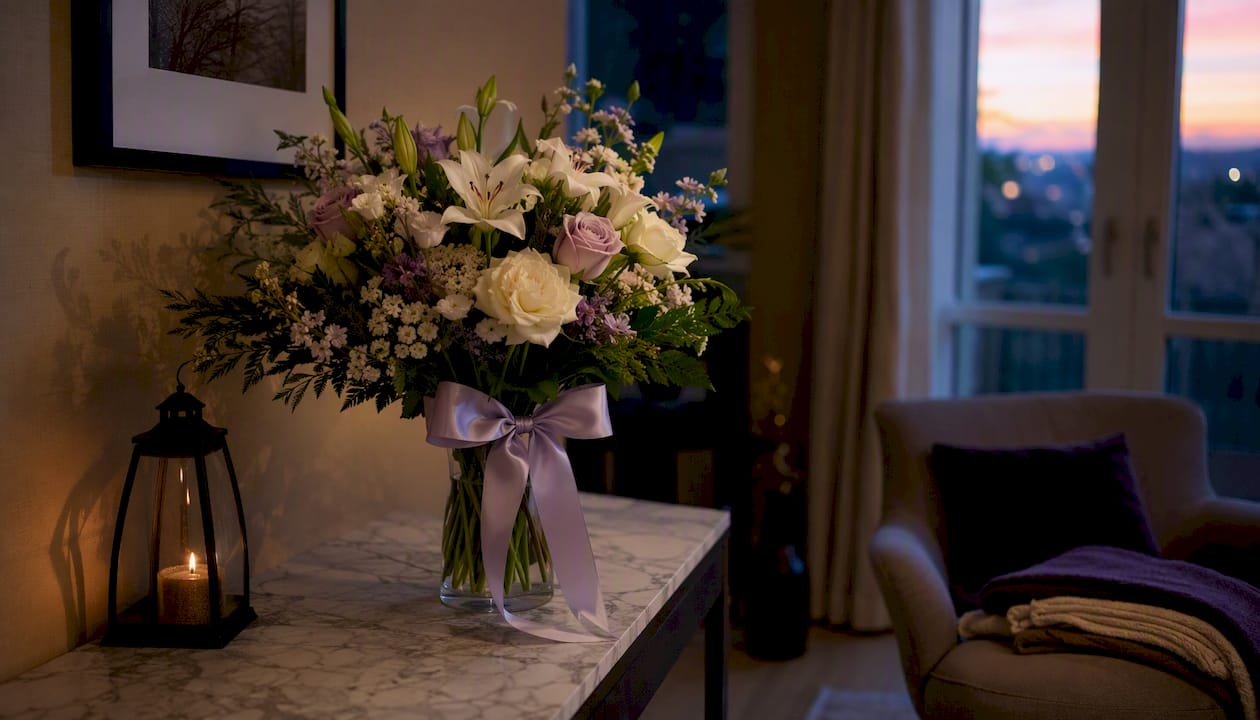
When someone dies, the single rule that overrides everything else is this: read the obituary first. If it says “in lieu of flowers” or “no flowers,” honor that request without exception. If nothing is specified, a modest bouquet or potted plant sent to the family home or the funeral venue is almost always appropriate, according to funeral flower etiquette guidance. The gesture matters far more than the arrangement’s size.
Here is a quick verdict based on your relationship to the family:
- Acquaintance, neighbor, or colleague: A small sympathy bouquet or potted plant (peace lily, orchid) sent to the home.
- Friend or extended family: A mid-size bouquet, basket, or wreath to the funeral home or family home.
- Close friend or close family: A standing spray or larger arrangement to the service venue.
- Immediate family: Casket sprays and large tributes — these are typically reserved for parents, siblings, and spouses of the deceased.
If you are unsure of anything, call the funeral home, check the obituary, and send a modest arrangement.
Pro Tip: If you learn about a death after the service has already passed, skip the funeral home entirely. Send a modest bouquet or plant to the family home instead — it will be more welcome there than a late delivery to a venue that has already cleared its flowers.
Key Takeaways
Sympathy flowers etiquette comes down to one rule above all: follow the family’s stated wishes, then match your arrangement’s scale and palette to your relationship and the delivery destination.
| Point | Details |
|---|---|
| Follow the obituary first | If it says “no flowers” or “in lieu of flowers,” send a donation or note instead. |
| Match scale to relationship | Immediate family sends casket pieces; friends and colleagues send bouquets or plants. |
| Prefer white and soft pastels | Bright colors can read as celebratory; white and muted tones are safe across most traditions. |
| Confirm delivery timing | Service-venue flowers should arrive the day before or morning of; home deliveries are flexible. |
| Check cultural context | Jewish, Muslim, and some Asian traditions may not welcome flowers — ask or default to a donation. |
| Malikflowers for Metro Vancouver | Handcrafted sympathy arrangements with same-day delivery and a satisfaction guarantee. |
Table of Contents
- Sympathy flowers etiquette: matching your arrangement to your relationship
- Common arrangement types and when each fits
- Which flowers and colors are customary — and which to avoid
- Where to deliver: funeral home, place of worship, graveside, or family home
- When to send sympathy flowers
- How much to spend and what size is appropriate
- What to write on the sympathy card
- Religious and cultural sensitivities to check before sending
- Common etiquette mistakes and how to avoid them
- Practical ordering checklist and florist instructions
- Sending sympathy flowers during a health crisis or pandemic
- Why imperfect intentions matter more than perfection
- Malikflowers sympathy arrangements for Metro Vancouver
- Sources
- FAQ
Sympathy flowers etiquette: matching your arrangement to your relationship
The scale of what you send should reflect how close you were to the deceased or the immediate family. Sending a casket-sized spray when you were a coworker feels out of place; sending a tiny grocery-store bunch when you were a lifelong friend can feel dismissive. Neither is the intent, but both happen.
Here is how the hierarchy typically works:
- Immediate family (spouse, parents, adult children): Casket sprays, large standing tributes, and family wreaths. These are the largest pieces and are usually ordered directly by the family or funeral home.
- Close family and close friends: Standing sprays, larger wreaths, or substantial basket arrangements sent to the service venue.
- Friends, colleagues, and neighbors: Sympathy bouquets, smaller baskets, or potted plants. These work well at either the service or the family home.
- Acquaintances and professional contacts: A single potted plant or a small bouquet to the home is entirely appropriate and never burdensome.
Pro Tip: When you are part of a group — an office, a sports team, a neighborhood association — pool contributions for one meaningful standing spray rather than sending several small bouquets. Sign the card with everyone’s names or “Your friends at [Organization].” One well-chosen piece reads as more thoughtful than a cluster of small ones.
Common arrangement types and when each fits
Knowing what each format is called helps when you are placing an order under time pressure.
| Arrangement | Best destination | Who typically sends | When to choose it |
|---|---|---|---|
| Sympathy bouquet (vase) | Family home or funeral home | Friends, colleagues | Versatile; works for most relationships |
| Basket arrangement | Family home | Friends, extended family | Easy to display; no vase needed |
| Potted plant (peace lily, orchid) | Family home | Any relationship | Lasts weeks; low-maintenance comfort |
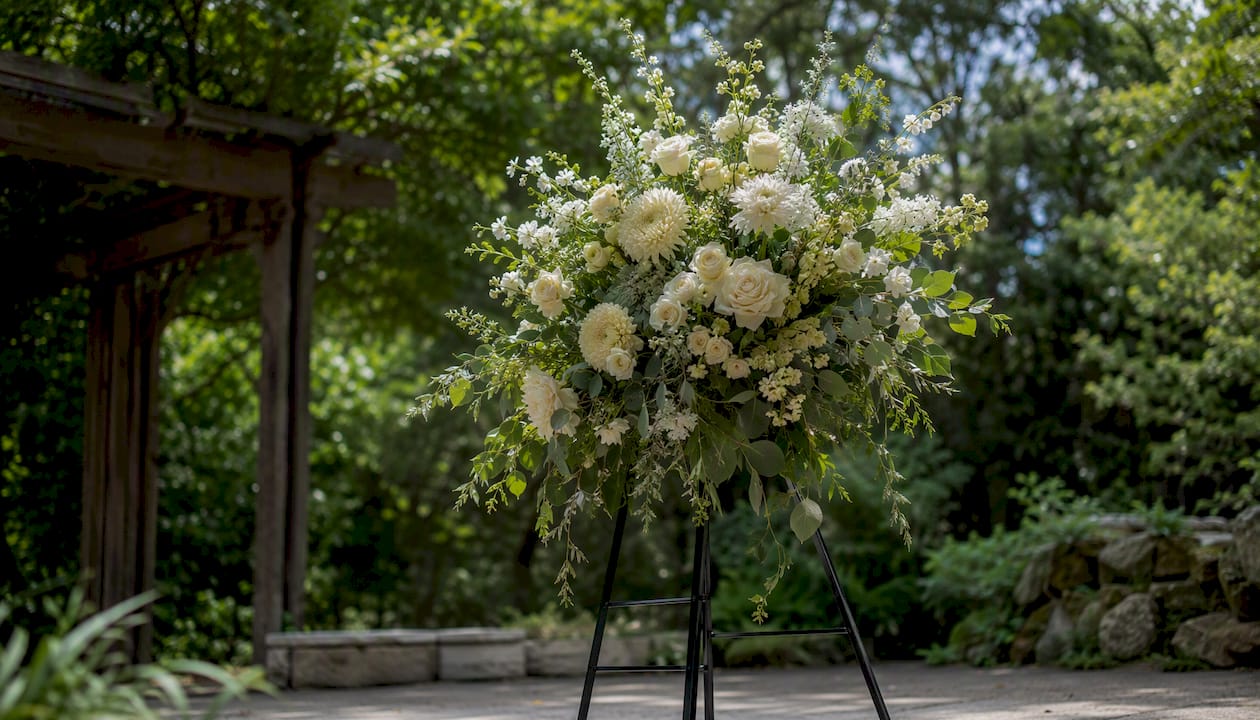
| Standing spray | Funeral home or church | Close friends, groups, organizations | Displayed upright at the service |
| Wreath | Funeral home or graveside | Groups, organizations, close family | Circular; traditional funeral display |
| Casket spray | Funeral home (on casket) | Immediate family only | Largest tribute; ordered through funeral home |
| Memorial/tribute spray | Graveside or memorial service | Close family, close friends | For graveside or delayed memorial services |
A few practical notes worth keeping in mind. Potted plants travel well and last far longer than cut flowers, which makes them especially considerate for home deliveries. Standing sprays need a stand and open floor space, so they belong at a service venue rather than a small apartment. Casket sprays are almost always coordinated through the funeral home directly; do not order one independently unless you have confirmed with the family.
Which flowers and colors are customary — and which to avoid
White and soft pastels are the safest palette for sympathy arrangements across most North American traditions. Bold reds, hot pinks, and bright oranges can read as celebratory rather than consoling unless the family has specifically requested a “celebration of life” tone.
Commonly used sympathy flowers and their associations:
- White lilies: Peace and purity; among the most traditional funeral flowers in Canada.
- White roses: Reverence and remembrance.
- Carnations: Enduring love; available in white, pink, and soft red.
- Chrysanthemums: Common in funeral arrangements across North America and Europe, though they carry specific mourning associations in some Asian cultures (see the cultural section below).
- Gladioli: Strength and sincerity; tall stems work well in standing sprays.
- Orchids: Quiet elegance; excellent as potted plants for the home.
- Hydrangea: Soft, full blooms in white or pale blue that add volume without loudness.
| Flower | Typical meaning | Best use |
|---|---|---|
| White lily | Peace | Service arrangements, casket pieces |
| White rose | Reverence | Bouquets, wreaths, mixed arrangements |
| Carnation | Enduring love | Mixed bouquets, standing sprays |
| Chrysanthemum | Mourning (North America/Europe) | Most arrangements; check cultural context |
| Orchid | Elegance, comfort | Potted plant for the home |
| Peace lily | Sympathy, calm | Potted plant; long-lasting |
| Gladiolus | Strength | Standing sprays, large tributes |
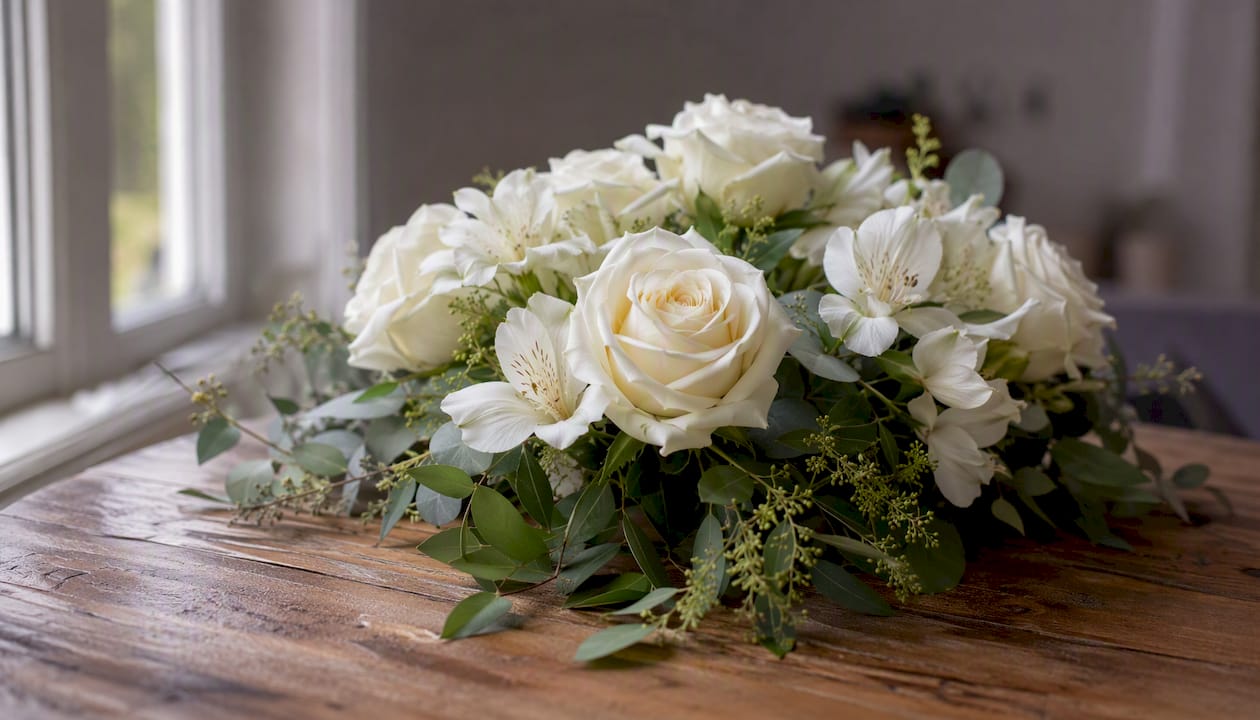
One practical note on scent: heavily fragrant lilies in a small room or closed chapel can be overwhelming, particularly for guests with allergies or sensitivities. If the service is in a small space, ask your florist for lower-scent varieties or substitute white roses and hydrangea. Also worth knowing: true lilies are toxic to cats, so if you are sending to a home with pets, ask for a pet-safe arrangement using white roses or alstroemeria instead.
Where to deliver: funeral home, place of worship, graveside, or family home
The destination shapes everything: arrangement size, delivery timing, and how much logistical burden you place on the family.
Funeral home or place of worship (service venue)
- Best for standing sprays, wreaths, and larger arrangements.
- Flowers are displayed during the visitation and service, then often given to family members or donated.
- Requires precise delivery timing (see the timing section below).
- Call ahead to confirm the funeral home’s delivery window and the correct spelling of the deceased’s name.
Family home
- Best for bouquets, baskets, and potted plants.
- More flexible timing — before or after the service.
- Easier on the family; they do not need to transport flowers home from the venue.
- Address the card to the surviving family member, not the deceased.
Graveside
- Some cemeteries prohibit fresh flower deliveries to grave sites or have strict placement rules. Confirm cemetery policy before ordering any arrangement intended for graveside placement.
- Memorial sprays and wreaths are most common here.
- Fresh arrangements at graveside may not last long outdoors; silk or dried options are sometimes preferred.
Delivery logistics checklist:
- Confirm the funeral home’s name, address, and accepted delivery window.
- Include the deceased’s full name and the family’s name on the card and delivery label.
- State the date and time of the service in your florist’s order notes.
- Request contactless delivery if the family is not expected to be home.
- Ask the florist to call ahead if delivering to a venue with limited staff.
When to send sympathy flowers
Get flowers to the bereaved as soon as reasonably possible, but the right timing depends on where you are sending them.
For a service or visitation:
- Aim for delivery the day before the visitation or the morning of the service. This gives funeral home staff time to arrange and display everything properly.
- Avoid same-day delivery to a service venue unless you have confirmed the window with staff.
For the family home:
- Sending within the first week is common and appreciated.
- Sending 1–2 weeks after the funeral can be even more meaningful. The initial wave of support fades quickly, and a delivery that arrives when the house has gone quiet is often remembered most warmly. Many florists and grief counselors note that home deliveries in the days following the service carry particular emotional weight for exactly this reason.
When the obituary says “in lieu of flowers” or “no flowers”:
Follow it. Families make this request to reduce logistics or to redirect support toward a cause they care about. A donation to the named charity, a meal dropped off, or a handwritten note is the right response.
Pro Tip: If you learn about the death late — days or even a week after the service — do not try to send something to the venue. Send a modest bouquet or plant to the family home with a note acknowledging the delay. The thought lands just as well.
How much to spend and what size is appropriate
The amount you spend should reflect your relationship, not your guilt. A heartfelt small arrangement from a neighbor means as much as a large spray from a close friend, provided the scale fits the relationship.
Sympathy bouquets and potted plants commonly start at modest prices online(https://canadianfunerals.com/ordering-funeral-flowers-in-canada/), with standing sprays and larger tributes running higher depending on the florist and the flowers chosen.
Practical size and budget guidance:
- Acquaintance or colleague: A potted peace lily or small bouquet in the CAD $70–$100 range is entirely appropriate.
- Friend or extended family: A mid-size basket or bouquet, a moderate price range, works well for either the home or the service.
- Close friend or close family: A standing spray or substantial arrangement, a higher price range, is fitting for the service venue.
- Group or office contribution: Pool funds for one well-chosen standing spray rather than splitting into several small pieces. A group contribution of a group contribution price range produces a meaningful tribute.
Size also depends on destination. A large standing spray in a small apartment is awkward for the family to manage. When sending to a home, lean toward a compact bouquet, basket, or potted plant regardless of your relationship. Save the larger pieces for the service venue.
What to write on the sympathy card
Keep it short, sincere, and focused on the family — not on your own feelings of loss. The card accompanies the flowers; it does not need to carry the full weight of your condolences.
Sample messages by relationship:
- Colleague: “Thinking of you and your family during this difficult time. With sincere sympathy, [Your Name].”
- Friend: “[Name] was such a wonderful person. I am so sorry for your loss. I am here if you need anything.”
- Close family friend: “There are no words that feel adequate right now. Please know you are in my thoughts every day. With love, [Your Name].”
- General (safe for any relationship): “Sending you warmth and comfort during this time. With heartfelt sympathy, [Your Name].”
Phrases to avoid:
- “They are in a better place” (assumes shared beliefs).
- “I know how you feel” (you do not, and it shifts focus to you).
- “Everything happens for a reason” (rarely comforting, often hurtful).
- “At least they lived a long life” (minimizes the loss).
- “Let me know if you need anything” without a specific offer (puts the burden on the grieving person).
If you want to offer help, name it: “I will drop off dinner on Thursday” or “I am available to drive to appointments this week.”
Religious and cultural sensitivities to check before sending
Flowers are not a universal condolence gesture. Before you order, take 60 seconds to check the obituary for religious or cultural cues.
- Jewish mourning (shiva): Flowers are generally not customary. Food for shiva, a donation to a named charity, or a written note is far more appropriate. When in doubt, default to a non-floral gesture.
- Muslim traditions: Flowers at the funeral are not typically part of Islamic mourning practice. A donation or food is usually more welcome.
- Chinese and East Asian traditions: Chrysanthemums are strongly associated with funerals and mourning in Chinese culture, so they are appropriate here — but white is the color of mourning, not red or gold, which are celebratory. Avoid bright colors entirely.
- Hindu and Buddhist traditions: White flowers are generally appropriate, though practices vary significantly by region and family. Confirm with a close contact if possible.
- Catholic and Protestant Christian traditions: Flowers are widely accepted and expected at the service.
If you are unsure, call the funeral home and ask whether flowers are welcome. They field this question regularly and will give you a straight answer. When flowers are not appropriate, a donation to the family’s named cause, a meal, or a handwritten note is always a respectful alternative.
Common etiquette mistakes and how to avoid them
Most missteps in condolence flower etiquette come from good intentions paired with incomplete information. Here are the ones that come up most often:
- Ignoring the obituary’s “no flowers” request. Fix: Read the full notice before ordering anything.
- Sending an oversized piece to a small service or home. Fix: Match size to destination — compact for homes, larger for venues.
- Choosing bright, celebratory colors. Fix: Default to white and soft pastels unless the family requested a celebration-of-life palette.
- Sending heavily scented lilies to a small chapel or apartment. Fix: Ask your florist for low-scent alternatives like roses or hydrangea.
- Addressing the card to the deceased. Fix: Address it to the surviving family member or “The [Family Name] Family.”
- Not confirming cemetery rules before a graveside delivery. Fix: Call the cemetery office first; many have strict placement policies.
- Sending flowers to a service where flowers are not culturally customary. Fix: Check the obituary for religious cues and default to a donation or note when unsure.
- Delivering a large arrangement late to the service venue. Fix: If you missed the window, send to the home instead.
- Forgetting to include the deceased’s name on the delivery label. Fix: Always include both the family name and the deceased’s name so funeral home staff can route it correctly.
Practical ordering checklist and florist instructions
Follow these steps in order before placing any sympathy flower order.
- Check the obituary for “in lieu of flowers,” “no flowers,” or a named charity.
- Choose your destination — service venue or family home — and confirm the address.
- Select the arrangement size based on your relationship and the destination.
- Write your card message before you start the order so it is ready to paste in.
- Confirm the delivery window with the funeral home if sending to a service venue.
- Request contactless delivery if the family may not be home.
- Include all required details in the order notes (see template below).
Sample florist order notes (copy and adapt):
For sympathy and funeral arrangements in Metro Vancouver, Malikflowers offers handcrafted options with same-day delivery and a satisfaction guarantee. Confirm availability when placing your order.
Sending sympathy flowers during a health crisis or pandemic
When a health crisis limits in-person services, the logistics of condolence flowers shift but the etiquette principles stay the same.
During periods of restricted gatherings, many families hold private or graveside-only services, which means the funeral home may not be accepting outside deliveries at all. The family home becomes the primary destination. Check the obituary carefully — many families during restricted periods will state explicitly whether flowers are welcome and where to send them.
Contactless delivery is the right default during any health concern. When placing your order, note in the order instructions that the arrangement should be left at the door with no signature required, and ask the florist to send a delivery confirmation photo if possible. A brief text or message to the family letting them know flowers are on the way is a kind heads-up, especially when they are managing a lot of logistics remotely.
Delayed memorials became common during the pandemic years and remain a feature of modern funeral practice as cremation rates rise. If a family plans a celebration of life weeks or months later, a home delivery now and a second small arrangement for the memorial is entirely appropriate. A potted orchid or peace lily sent now, followed by a fresh bouquet for the memorial, shows sustained care rather than a single obligatory gesture.
Why imperfect intentions matter more than perfection
People tie themselves in knots over sympathy flower etiquette, and the anxiety is understandable. Nobody wants to get it wrong when someone is grieving. But here is what most etiquette guides do not say plainly enough: families almost never remember the exact flowers. They remember that you showed up.
The rules in this article exist to help you avoid the handful of missteps that genuinely create burden for a grieving family — the oversized arrangement in a small apartment, the flowers sent to a Jewish shiva, the delivery that arrives after the venue has cleared. Those are worth avoiding. But if you send white roses when lilies were “more traditional,” or if your card message is a little clumsy, nobody is keeping score.
Follow the obituary. Match the scale to your relationship. Send something, even if it is modest. The family will remember the thought long after the flowers have faded.
Malikflowers sympathy arrangements for Metro Vancouver
When you need a handcrafted sympathy arrangement delivered the same day across Metro Vancouver, Malikflowers is a direct, personal alternative to ordering from a generic online catalog. Every arrangement is made by hand, tailored to the occasion, and backed by a satisfaction guarantee — if the design does not meet your expectations, you get a refund.

Browse the sympathy and funeral collection to find arrangements suited to the service or the family home, or view the full product catalog for sizing and pricing options. Same-day flower delivery in Vancouver is available when you order early in the day. Use the florist instructions template from the ordering checklist above and paste it into the order notes field — Malikflowers’s team will follow it.
Sources
- Funeral
- Sympathy flowers — Emily Post
- Sympathy Flowers: What to Send and What Each Bloom Means Across Different Cultures - Blooming Expert
The most reliable rule of all: read the obituary and follow the funeral home’s instructions. Every other guideline in this article is secondary to those two sources.
FAQ
What is the etiquette for sending sympathy flowers?
Read the obituary first and follow any stated request. If nothing is specified, send a modest bouquet or potted plant to the family home or service venue, matched to your relationship with the family.
What flowers should you avoid when someone dies?
Avoid very bright or bold colors like hot pink, red, and orange unless the family requested a celebration-of-life palette. In some cultural contexts, chrysanthemums carry specific mourning associations, so confirm before including them.
Is it appropriate to send flowers to someone who lost a loved one?
Yes, in most North American and Christian traditions. Flowers are a widely accepted condolence gesture. The main exceptions are Jewish and Muslim mourning traditions, where food, donations, or a written note are more appropriate.
What is the 3:5:8 rule for flowers?
The 3:5:8 rule is a floral design principle based on the Fibonacci sequence, used by florists to create visually balanced arrangements by grouping stems in those ratios. It is a design tool, not an etiquette rule, and does not affect which sympathy flowers you choose or send.
When is the best time to send sympathy flowers to the home?
Within the first week is common, but 1–2 weeks after the funeral can be especially meaningful. Support from others tends to taper off quickly after the service, and a delivery that arrives during that quieter period is often remembered most warmly.