
48 Hours to One Week: Thank You Flower Ideas That Fit the Relationship
48 Hours to One Week: Thank You Flower Ideas That Fit the Relationship
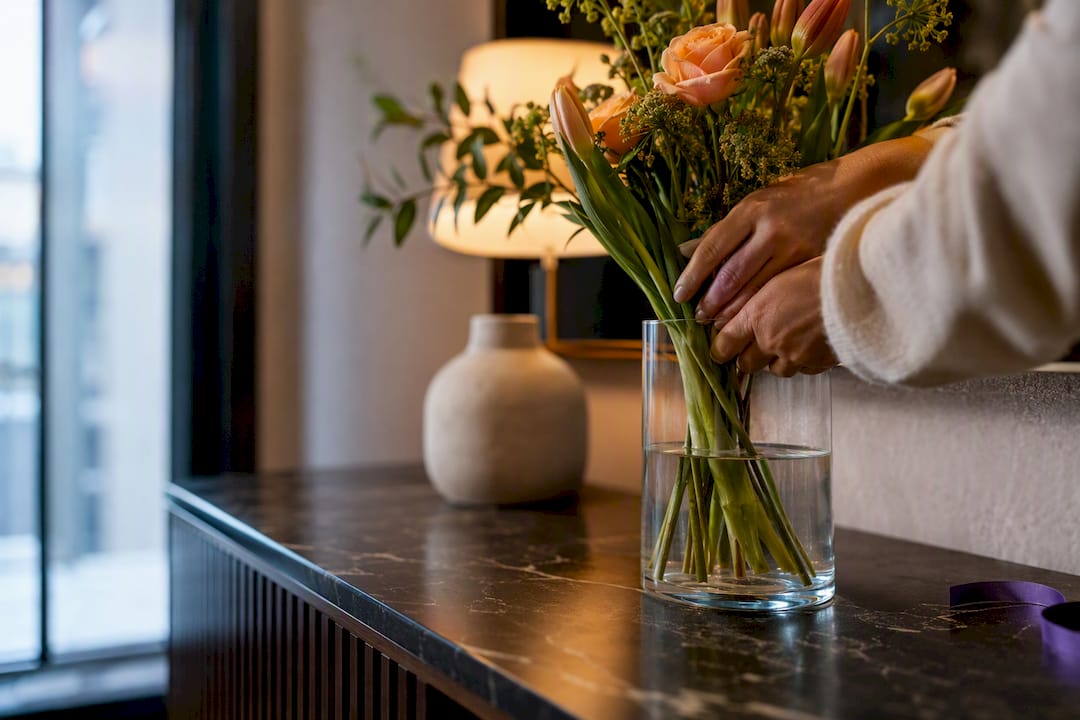
Send pink or peach roses, sweet peas, hydrangeas, tulips, or a mixed seasonal bouquet. All five read as gratitude without romantic or somber undertones. Skip the debate over stem count and go with a small arranged bouquet or vase delivery, paired with a two-line handwritten card. Get it there within 48 hours to one week of whatever you’re thanking someone for.
TL;DR:
- Pink or peach roses and sweet peas are the safest flowers to express gratitude, as they carry universal thank-you messages and avoid romantic connotations.
- Choose small, neutral arrangements or potted plants for professional settings, or compact bouquets for coworkers and caregivers, to match the formality and size of the relationship.
- Send flowers within 48 hours to one week after the event, with same-day delivery for urgent occasions or scheduled delivery for when the recipient is available.
- Include a brief, specific note mentioning exactly what you are grateful for, which leaves a more lasting impression than a generic message.
- Opt for seasonal, locally sourced bouquets, and skip heavily scented flowers like lilies when sending to hospitals or scent-sensitive spaces.
Table of Contents
- Thank-You Flower Ideas and What Each One Says
- Choosing Flowers Based on Your Relationship to the Recipient
- Timing and Delivery: Making the Gesture Effortless
- What to Write and How to Present the Bouquet
- Malik Flowers’ Approach to Thank-You Bouquets
- Considering Allergies and Sensitivities Before You Send
- Cultural Norms Around Giving Thank-You Flowers
- Creative Thank-You Flower Ideas Worth Trying
- Thank-You Flowers That Don’t Break the Budget
- Why the Simple Choices Usually Win
- Send a Thank-You Bouquet That Actually Fits the Moment
- Sources
- FAQ
Thank-You Flower Ideas and What Each One Says
The list below runs from safest to most expressive, so you can match tone to occasion instead of guessing.
Pink or peach roses carry the most consistent gratitude meaning across floriography sources, largely because they sidestep the romantic weight of red. They typically last several days to around a week in water and work for bosses, teachers, or in-laws alike. Skip deep red entirely unless the relationship is romantic.
Sweet peas are the other flower with a near-universal “thank you” reading. They’re fragrant, delicate, and slightly old-fashioned in a good way. The catch: they’re fussy and short-lived, usually several days, so they’re better for an immediate, in-person thank-you than a delivery that sits in a hallway overnight.
Hydrangeas give you volume and a lush, generous look for the price. One stem fills a vase the way six roses can’t. The tradeoff is symbolic ambiguity. Meanings shift by region and by the color of the bloom, so treat hydrangeas as a “safe and pretty” choice rather than a message-carrying one.
Tulips read as honest, fresh, and unfussy, which makes them ideal for casual thank-yous to a friend or a favor from a neighbor. They’re inexpensive, widely available most of the year, and typically last several days to around a week.
Sunflowers bring an upbeat, high-energy tone. Great for a coach, a coworker who covered your shift, or anyone you’d describe as sunny themselves. They’re a poor fit for quiet, formal gratitude like thanking a grieving friend for their support.
Carnations are underrated. They’re the longest-lasting cut flower on this list, often two weeks or more, and they cost a fraction of roses. The tradeoff is a slightly dated look, so they pair best with a modern vase or mixed into a fuller arrangement rather than sent alone.
Gerbera daisies are cheerful, bold, and photogenic, which makes them a strong pick for a teacher’s desk or a hospital room that could use color. They’re not fragrant, which is actually a plus in scent-sensitive spaces.
Lilies are fragrant, dramatic, and long-lasting, but that fragrance is a liability. Some lily varieties produce a scent strong enough to trigger headaches in enclosed rooms, so they’re a better fit for a spacious home than an office desk or a hospital.
Orchids, whether cut or potted, read as refined and formal. A potted orchid also solves the “vase problem” since it needs no water changes and can live on a desk for months, making it one of the better choices for a professional thank-you gift with staying power.
A mixed seasonal bouquet is the flexible default when you’re not sure what the recipient likes. Choosing seasonal stems instead of forced off-season imports typically means fresher flowers that open properly and hold their color longer, often adding several extra days of vase life compared with flowers shipped out of season.
Pro Tip: If you’re torn between two flowers, pick the one that lasts longer over the one that looks bigger on delivery day. A week of blooms leaves a better impression than one dramatic photo.
Choosing Flowers Based on Your Relationship to the Recipient
Match scale and formality to the relationship, not to how grateful you feel. Overdoing it can read as performative; underdoing it can read as an afterthought.
- Hosts: Send an arranged bouquet in a vase, or time delivery for the day after the event so you’re not handing them extra work mid party. A hostess who just cleaned her kitchen doesn’t need a vase-hunt assignment.
- Teachers: Keep it compact and easy to carry home on a bus or in a tote bag. A small hand-tied bunch beats a tall arrangement that won’t fit in a backpack.
- Coworkers or bosses: Stay restrained. Neutral colors, mid-size arrangements, nothing that reads as flirtatious or attention-seeking in an open office.
- Medical caregivers: Choose small, non-fragrant options. A compact vase arrangement or a potted plant respects scent-sensitive patients nearby.
- Neighbors: Go small and low-maintenance, ideally something they can display without hunting for a vase.
- Close friends and family: This is where you can lean into personal colors, bigger scale, and inside-joke flower choices.
The most common misstep isn’t the flower itself, it’s the scale. Etiquette experts note that convenience often matters more than size, particularly for hosts already managing post-event cleanup.
Three red flags worth avoiding outright: deep red roses for any non-romantic thank-you, bare unarranged stems handed to a host who now needs to find a vase, and oversized arrangements that feel more like an obligation than a gift.
Timing and Delivery: Making the Gesture Effortless
Send your thank-you flowers within 48 hours to one week of the event or favor. Formal situations, like thanking a wedding host or a business client, call for the tighter 48-hour window. Casual gratitude, like thanking a friend who helped you move, has more room to stretch toward a week out.
- Pick same-day delivery for urgency, and scheduled delivery when you know the exact day the recipient will be home or at their desk.
- Send vase-arranged or potted for hosts and hospital rooms, since neither setting has time or space for someone to fuss with stems and water.
- Choose hand-tied bouquets for friends and casual drop-offs, where the recipient controls the vase and the moment.
- Check reception policies before workplace or hospital deliveries, and always include the recipient’s full name and phone number, since misdelivered arrangements are one of the most common complaints in office settings.
- Account for weather and season, since summer heat can wilt an unrefrigerated delivery sitting on a porch, and winter cold can shock tropical blooms like orchids during transit.
What to Write and How to Present the Bouquet
A short, specific note outperforms a long generic one almost every time. Two sentences that name the actual thing you’re grateful for will be remembered longer than a paragraph of polite filler, and it costs you nothing extra.
Sample lines by recipient:
- Teacher: “Thank you for the extra patience with my daughter this year. It made a real difference.”
- Host: “The dinner was wonderful, and so was the company. Thank you for having us.”
- Coworker: “Thanks for covering my shift last week. I owe you one.”
- Friend: “You didn’t have to help me move, but you did. Thank you.”
- Caregiver: “Thank you for the care and kindness you showed my father this week.”
For presentation, include clear delivery instructions with the recipient’s name and unit or office number, choose a vase or box delivery for hosts and hospital rooms so nothing needs assembling, and consider a tasteful add-on like a small box of chocolates or an unscented candle when the occasion calls for something extra.
| Recipient | Best format | Note length |
|---|---|---|
| Teacher | Small hand-tied bunch | 1 sentence |
| Host | Vase arrangement | 1 to 2 sentences |
| Coworker | Compact vase, neutral colors | 1 sentence |
| Caregiver | Small potted plant or vase | 1 to 2 sentences |
| Friend | Hand-tied, personal colors | 2 to 3 sentences |
Malik Flowers’ Approach to Thank-You Bouquets
This florist specializes in handcrafted floral arrangements customized for occasions, with thank-you gifts being one of the categories where the small details carry the most weight. Designs often include personal touches like seasonal blooms and vase choice, which tend to hold up better and last longer than off-season imports. If a design doesn’t meet expectations, some florists offer a refund guarantee, which sets them apart from typical offerings. Customer reviews often highlight designs that feel considered rather than generic, which is important in a gift meant to say “I noticed what you did.”
Considering Allergies and Sensitivities Before You Send
Fragrance is the most common issue, not pollen count. Heavily scented flowers like lilies and some hyacinths can trigger headaches or nausea in enclosed spaces such as offices, hospital rooms, or small apartments, even in people without diagnosed allergies. If you don’t know the recipient’s sensitivities, default to low-scent options like tulips, roses, or gerbera daisies.
Hospitals deserve extra caution. Many hospital units restrict or discourage fresh flowers entirely, particularly in oncology, ICU, and maternity wards, due to infection control and fragrance-sensitive patients sharing the space. Call the unit before sending anything, and lean toward a potted, low-scent plant as a fallback if flowers aren’t permitted.
Pollen is a secondary but real concern, especially with lilies and some sunflower varieties that shed visible orange pollen onto tables and clothing. Look for pollen-free or de-anthered varieties, common in retail lily bunches, if the recipient has respiratory issues or you’re sending to a home with light-colored furniture.
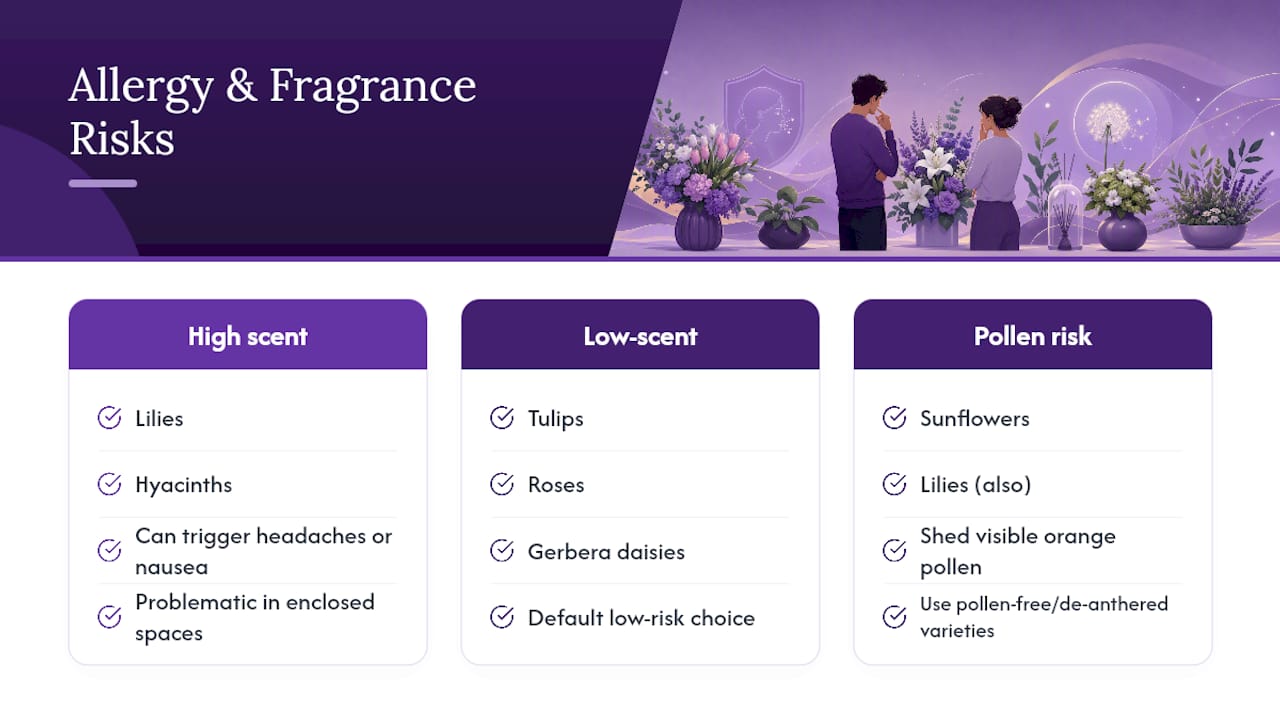
If you genuinely don’t know someone’s sensitivities, a low-scent, low-pollen option like roses, tulips, or gerbera daisies is the lowest-risk choice. It won’t be the most dramatic bouquet on the list, but it’s the one least likely to cause discomfort. When in doubt, a short note asking whether flowers work for them, before you send, beats guessing.
Cultural Norms Around Giving Thank-You Flowers
Flower etiquette isn’t universal, and a few common missteps come up often enough to name. In several European traditions, an even number of stems is associated with funerals, so odd numbers are the safer default for gratitude gifts. Yellow flowers carry warm, friendly associations in most of North America but read as a symbol of infidelity or jealousy in some Eastern European and Latin American traditions, worth knowing if the recipient has strong ties to those cultures.
White flowers lean celebratory in North American gift-giving but are strongly associated with mourning in many East Asian traditions, making them a riskier choice for a casual thank-you to someone from that background. Chrysanthemums follow a similar pattern: cheerful and common in North American arrangements, but reserved almost exclusively for funerals in much of Europe and parts of Asia.
None of this means overthinking every bouquet. For most everyday thank-yous between friends, coworkers, and neighbors in North America, the flowers recommended earlier in this guide, roses, tulips, hydrangeas, sweet peas, carnations, are safe across the board. The etiquette nuances matter most when you’re sending internationally, thanking someone from a culture different from your own, or sending to a formal or unfamiliar setting like a new employer’s office. When in doubt, a quick note asking a mutual contact about local norms costs you nothing and avoids an awkward miss.
Creative Thank-You Flower Ideas Worth Trying
A hand-tied DIY bouquet built from grocery-store or farmers market stems can feel more personal than a professionally arranged one, especially for a close friend or family member, precisely because the effort is visible. Mix textures rather than sticking to one flower type: pair sturdy carnations with something delicate like sweet peas for contrast that doesn’t require florist skills to pull off.
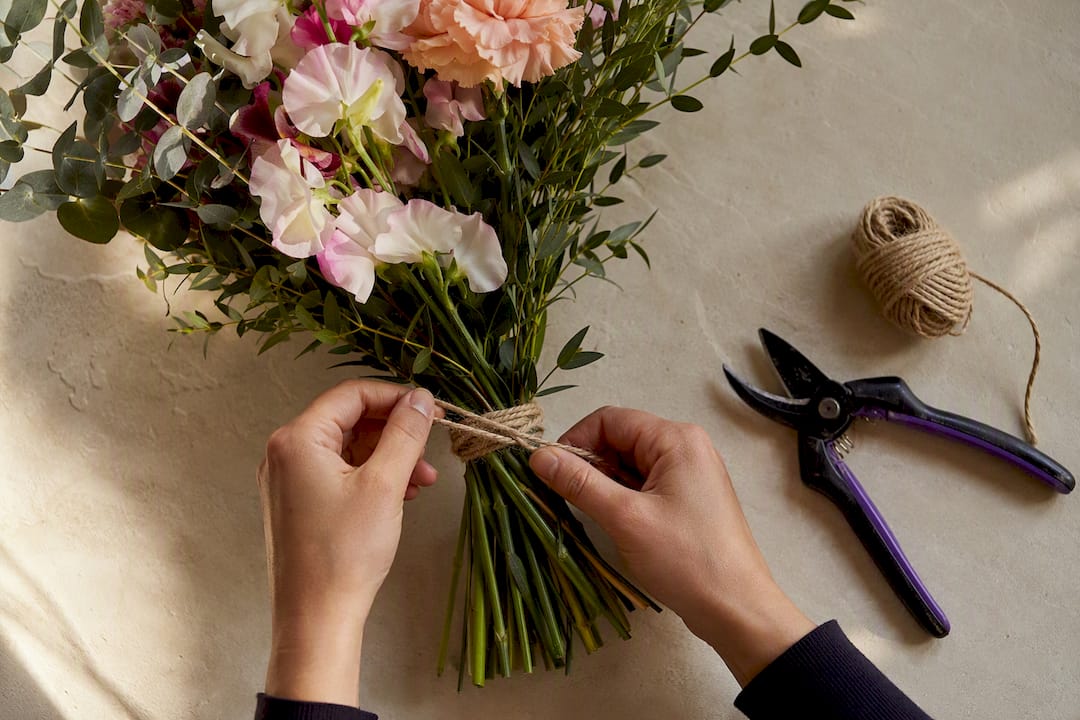
Mixed arrangements that blend flowers with herbs, like rosemary, mint, or eucalyptus, add fragrance and visual texture without leaning on a single heavily scented bloom. This works especially well for a host’s kitchen table, where herbs feel purposeful rather than decorative.
Edible flowers are a genuine novelty option for a foodie friend or a host who loves to entertain. Pansies, nasturtiums, and calendula can be tucked into a small arrangement alongside a card noting they’re edible, useful for garnishing a salad or a cake. It’s a small detail that turns a bouquet into a conversation.
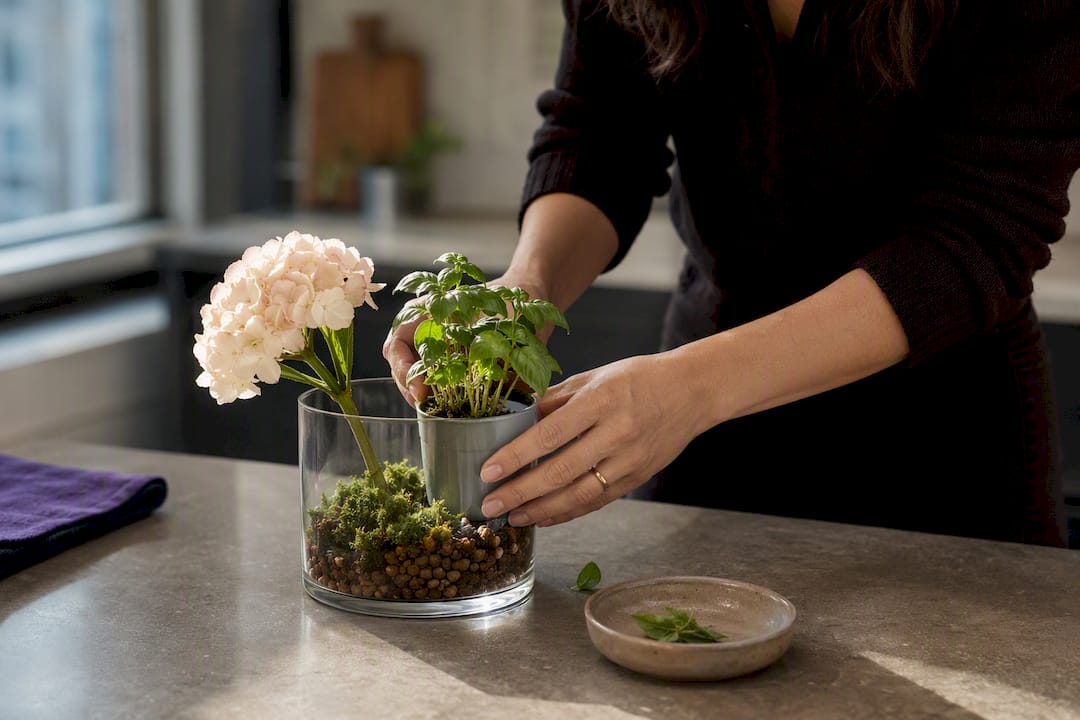
A potted herb or succulent, such as a charming succulent in glass terrarium with tealight holder, paired with a single stem or two, splits the difference between “flowers that die in a week” and “gift with staying power.” It suits recipients who’ve mentioned they’re not big on cut flowers, or anyone you’re thanking for something ongoing, like a mentor or a long-term babysitter, where a longer-lived gift fits the relationship better than a one-week bouquet.
Thank-You Flowers That Don’t Break the Budget
A single stem, done well, communicates the same gratitude as a dozen. One well-chosen rose or a small bunch of three to five tulips in a simple wrap says “thank you” just as clearly as an oversized arrangement, and it costs a fraction as much.
Carnations remain the best value on this list. They’re inexpensive, last the longest of any common cut flower, and hold up well in a mixed bunch with pricier blooms like roses, letting you stretch a small budget across more stems.
Seasonal flowers cost less because they’re not flown in from off-season growing regions, and they tend to look fresher for it. Asking what’s currently in season, rather than requesting a specific out-of-season bloom, is the simplest way to cut cost without cutting quality.
Skip the vase if budget is tight. A hand-tied bunch wrapped in paper costs less than a florist’s arranged vase design and still reads as thoughtful, particularly for a casual thank-you to a friend or neighbor rather than a formal occasion.
Why the Simple Choices Usually Win
The instinct to send something elaborate when you’re genuinely grateful is understandable, but it’s usually the wrong instinct. The research on this backs up something most people learn the hard way: a smaller, well-chosen arrangement with a specific note beats an oversized bouquet with a generic card almost every time.
Where conventional advice falls short is in treating all thank-you flowers as interchangeable once you’ve picked “something nice.” Scent matters in a hospital room. Scale matters when the recipient is a boss, not a best friend. Timing matters more than most people assume, since a bouquet that arrives three weeks late reads as an afterthought no matter how nice it looks.
If you take one thing from this guide, prioritize the note over the flower. A specific, two-line message naming the actual thing you’re grateful for will outlast the bouquet in the recipient’s memory. Handcrafted, seasonal touches, the kind Malikflowers builds into every arrangement, are what turn a good flower choice into a gift someone remembers weeks later.
— Reza
Send a Thank-You Bouquet That Actually Fits the Moment
Picking the right flower is half the job. Getting it delivered fresh, well arranged, and on time is the other half, and that’s where a lot of good intentions fall apart. Malikflowers builds each arrangement by hand with seasonal blooms, so a bouquet you order today looks like it was picked with the recipient in mind, not pulled from a cooler.
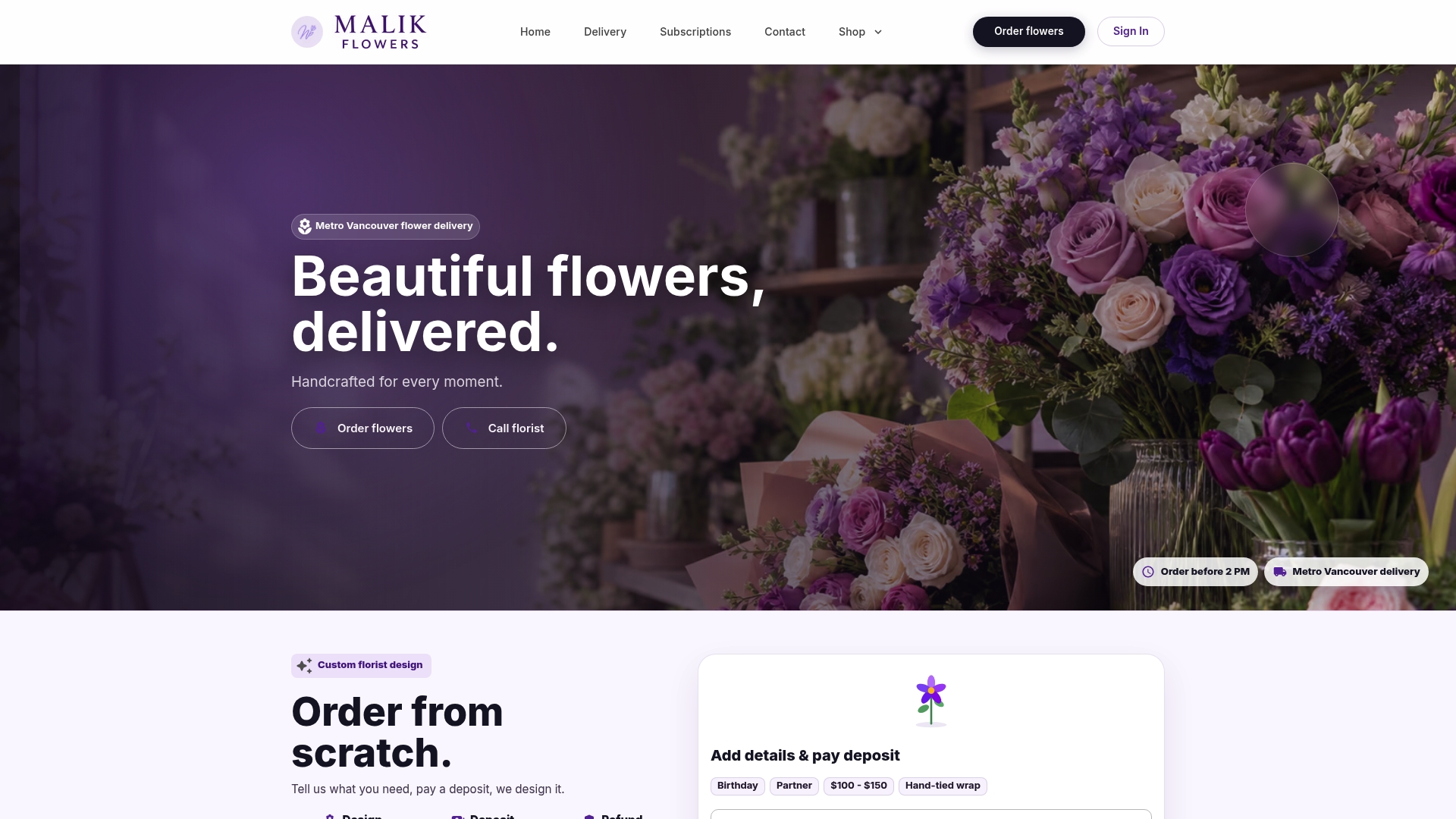
Browse the full thank-you-appropriate arrangements to find something that matches the relationship and occasion covered above, whether that’s a restrained option for a coworker or something fuller for a close friend. If pink or peach roses are your pick, the Peach Parfait Roses arrangement is a ready-made match. For a lighter, seasonal option, the spring collection rotates fresh blooms so you’re never sending something forced out of season. Malikflowers delivers across Metro Vancouver with a satisfaction guarantee, so if the arrangement doesn’t land the way you hoped, you’re not stuck with it. Place your order today and it can be on its way within the 48-hour to one-week window that actually matters for a thank-you gesture.
Sources
- Flowers as a Thank-You: The Right Gesture for Every Occasion | Fleura
- When to Send a Thank You Bouquet After an Event | Agape Floral Creations
- Gratitude plants and their meanings | Gardening Know How
- What flowers mean thank you, by who you thank | Your Flowers Guide
- How to send thank you flowers thoughtfully | Dandelion Florist
FAQ
What is a good flower to say thank you?
Pink or peach roses and sweet peas carry the most consistent gratitude meaning across floriography traditions, making them the safest default when you’re unsure what to send.
Which flower is appropriate to express gratitude in a professional setting?
Restrained, neutral-toned arrangements work best for coworkers and bosses. Tulips, carnations, or a compact rose arrangement avoid the romantic overtones of deep red while still reading as thoughtful.
What flower represents gratitude specifically?
Roses in pink or peach tones and sweet peas are the two blooms most closely tied to gratitude across multiple flower-meaning sources, while hydrangeas are safe but carry more mixed symbolic meanings depending on region.
How soon should I send thank-you flowers?
Aim for 48 hours to one week after the event or favor. Formal occasions call for the tighter end of that window, while casual thank-yous have more flexibility.
What should I write on a thank-you flower card?
Keep it to one or two specific sentences naming exactly what you’re grateful for. A short, concrete note is remembered longer than a lengthy generic message.