
When to See Tulips Near Vancouver: A Local Season Guide
When to See Tulips Near Vancouver: A Local Season Guide
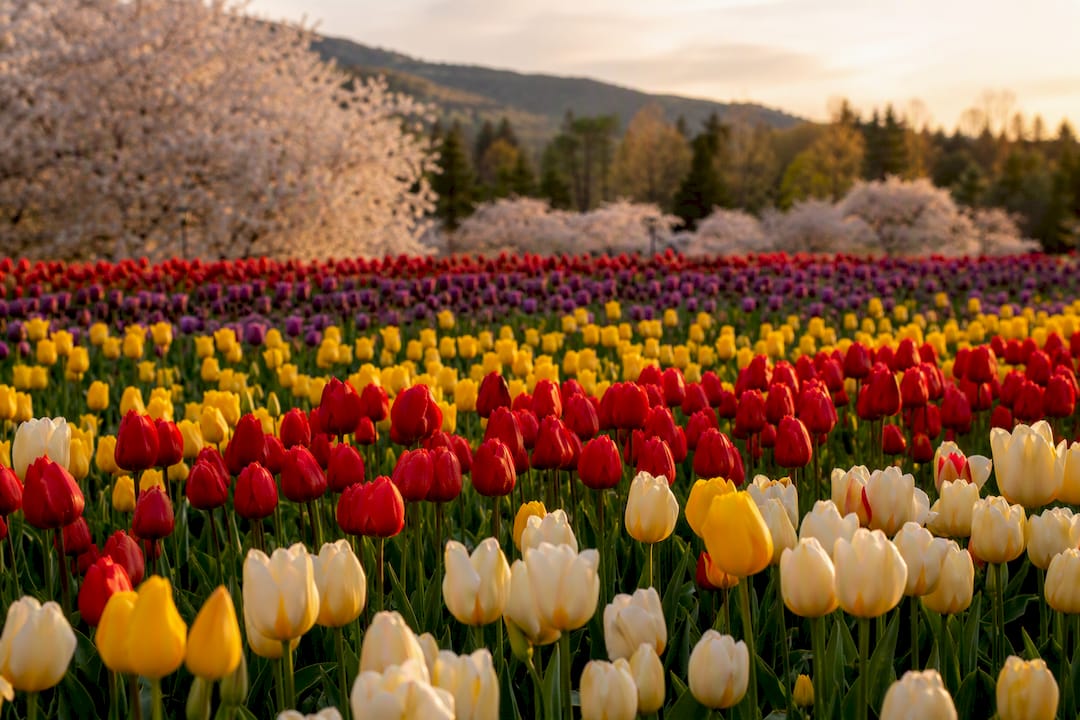
Tulip season around Vancouver typically runs from mid-April through early May, with the best chance of peak bloom in the last week of April. That short window, often lasting a few weeks, is when Fraser Valley field festivals hit their most dramatic color, though a cold spring can push things closer to May. If field festivals are too far a drive, VanDusen Botanical Garden and Queen Elizabeth Park offer tulips without leaving the city.
TL;DR:
- The peak tulip bloom in Vancouver usually occurs in the last week of April, but weather variations can cause early or late flowering.
- The Harrison Tulip Festival, opening on April 10 and running past May 3, features 14 million blooms across 45 acres, making it the top destination.
- Most outdoor festivals cost $10 to $25 for adults, involve about an hour of driving from Vancouver, and require parking or shuttle planning.
- Early morning visits during sunrise provide the best lighting and fewer crowds for tulip photography, with wind and weather influencing bloom timing.
- Visitors should monitor festival updates weekly in April and plan flexible dates, especially avoiding peak times in the afternoon to beat crowds and heat.
Table of Contents
- Where to See Tulips Near Vancouver This Season
- How Do You Know When Peak Bloom Will Hit?
- What Does a Day Trip Actually Cost and Take?
- What Should You Expect Once You’re at the Festival?
- Why Does Bloom Timing Change So Much Year to Year?
- Where to Stay and Eat Near the Tulip Fields
- How Do You Get Great Tulip Photos in the Field?
- What’s the Environmental Side of Tulip Farming?
- A Florist’s Take on Tulip Season
- Bring the Tulip Season Home With Malik Flowers
- Sources
- FAQ
Where to See Tulips Near Vancouver This Season
Most of the spectacular tulip displays near Vancouver live in the Fraser Valley, roughly an hour east of the city, where farmers plant fields specifically for the spring rush. Vancouver itself has smaller but still worthwhile options if a long drive isn’t in the cards.
Here’s how the main destinations stack up:
- Harrison Tulip Festival: This is the big one. The Harrison festival opened April 10, 2026 and ran past May 3, spanning 45 acres and roughly 14 million blooms across 150 varieties. It’s the pick for serious photography, with a Night Garden event and hands-on workshops that turn a quick stop into a half-day outing.
- Lakeland Flowers / Abbotsford Tulip Festival: Large open fields and family-friendly extras make this one of the more accessible options, sitting about an hour from Vancouver with straightforward highway access.
- Maan Farms (Spring at the Farm / Tulip Forest): Tulips share billing with farm activities here, so it suits families who want more than a flower field, including play areas and food vendors alongside the blooms.
- Botanica Tulip Festival: A tighter, more curated experience in Chilliwack, Botanica covers 14 acres and over a million tulips, with a display garden layout plus U-pick rows and artisan vendors.
- Greendale Acres and Taves Family Farms: Both lean into the full farm-day format, pairing tulip viewing with on-site activities that keep younger kids entertained between photo stops.
- VanDusen Botanical Garden and Queen Elizabeth Park: For a no-drive option, VanDusen’s seasonal beds rotate tulips into the spring display, and Queen Elizabeth Park offers a similar city-garden experience with far less travel time.
Every one of these appears on BC Living’s roundup of Fraser Valley tulip festivals, which is worth a scan if you’re weighing distance against scale before picking a destination.
How Do You Know When Peak Bloom Will Hit?
Tulip bulbs respond to soil and air temperature, not the calendar. A string of warm days in March can push bulbs to bloom early, while a cold, wet April stalls them and can shift the whole season later into May.
That’s why British Columbia’s tulip season generally runs mid-April through late May rather than landing on a fixed date every year. Early color usually shows up by mid-April, but the real payoff, full fields in bloom, tends to land in the last week of April through the first week of May. Once peak hits, it rarely lasts more than a couple of weeks before petals start dropping.
Here’s a simple way to time your visit:
- Check festival websites and social accounts starting in early April for opening announcements.
- Watch for “bloom update” posts, most Fraser Valley farms post them weekly once fields start filling in.
- Pick a target weekend but hold a backup date roughly seven to ten days later in case the season runs late.
- If you can be flexible, aim for a weekday morning rather than a Saturday afternoon.
Pro Tip: Sunrise openings are worth the early alarm. The light is softer, the fields are nearly empty, and you’ll beat both the tour buses and the midday heat that wilts tulip petals faster than you’d think.
What Does a Day Trip Actually Cost and Take?
Budgeting for a tulip trip is mostly about tickets, gas, and patience with weekend traffic. None of it is expensive, but a little planning saves real time on the day.
- Tickets: General admission at most Fraser Valley festivals runs roughly $10 to $25 per adult, with kids often discounted or free under a certain age. Several farms sell season passes, and buying online ahead of a weekend visit is the safer bet.
- Drive time: Expect somewhere between one and one and a half hours from downtown Vancouver depending on the festival and traffic. Public transit doesn’t reach most of these farms directly, so a car (or a rental) is close to a requirement.
- Parking: Weekend lots fill up by mid-morning at the larger festivals. If a farm offers a shuttle or park-and-ride option, check the website before you leave rather than discovering it in a traffic jam.
- Accessibility: Stroller and wheelchair access varies by farm, some have paved paths through display gardens, others are gravel or dirt rows better suited to sturdy footwear. Confirm with the specific festival if mobility is a concern.
- Crowds: Weekday mornings are consistently quieter than weekend afternoons, and the first two hours after opening tend to beat the last two before closing.
Pack layers, since Fraser Valley mornings run cooler than downtown Vancouver, along with water, comfortable walking shoes, and a bit of cash for smaller vendor stands that don’t always take cards.
What Should You Expect Once You’re at the Festival?
Not every field works the same way. Some Fraser Valley festivals are strictly display gardens, look, photograph, and walk the rows, while others, like Botanica, let visitors cut their own U-pick bouquets for an added fee. Knowing which type you’re visiting beforehand saves confusion at the gate.
Beyond the tulips themselves, most festivals build in extras: farm markets, food trucks, workshops, and at Harrison, an after-dark Night Garden experience with lighting installations woven through the rows. Family-oriented farms like Maan Farms and Taves layer in play structures and animal encounters, which matters if you’re bringing kids who’ll tire of flower fields after twenty minutes.
A few etiquette basics apply everywhere:
- Stay on marked pathways between rows. Stepped-on bulbs don’t recover for next season.
- Use designated photo props or viewing platforms where they exist rather than wading into planted beds for a better angle.
- If the field is U-pick, follow the posted cutting limits, farms set them to protect the bulbs for future years.
- Bring small bills for market stalls, food trucks, and cut-flower purchases, since not every vendor takes cards.
Why Does Bloom Timing Change So Much Year to Year?
Spring weather swings are the single biggest variable in tulip planning, and they’re the reason no festival can promise an exact bloom date months in advance. A warm February and March push bulbs toward an early show, sometimes opening festival gates a week or more ahead of the prior year. A cold, rainy stretch through March and April does the opposite, delaying color and sometimes compressing peak bloom into a tighter window once temperatures finally climb.
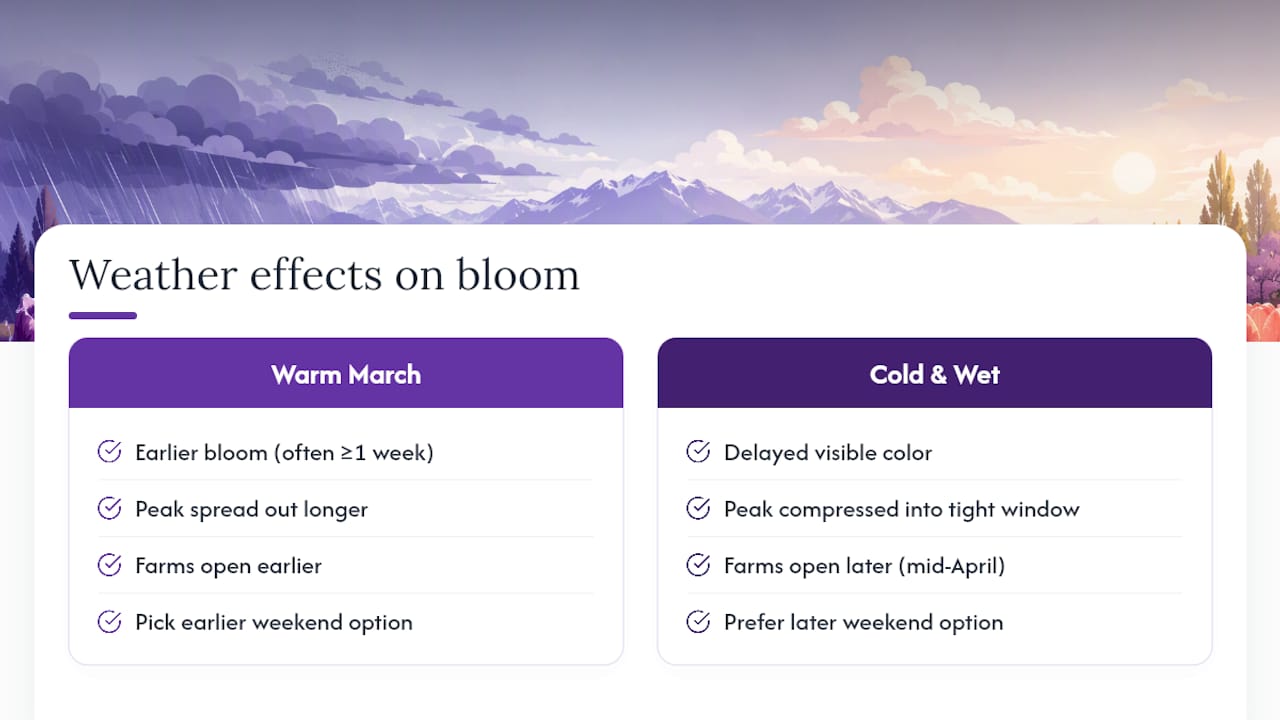
This variability is exactly why festivals lean so heavily on real-time updates rather than fixed calendars. A farm that opened in early April one year might not hit visible color until closer to mid-April the next, depending entirely on that season’s temperature pattern.
The practical fix is building flexibility into your plans rather than locking a single date months out. If you’re booking accommodations or arranging a group outing, hold two possible weekends rather than one, and lean toward the later option if you have to pick just one, since a slightly late visit still catches lingering blooms, while an early visit to a delayed season might mean bare fields. Refundable bookings and flexible-date tickets are worth the small premium during tulip season for exactly this reason. Checking a festival’s own bloom reports the week of your trip beats relying on last year’s dates, no matter how tempting it is to plan around a fixed weekend a year in advance.
Where to Stay and Eat Near the Tulip Fields
Most tulip festivals sit near small Fraser Valley towns that scale up their dining and lodging options specifically for spring visitors. Harrison Hot Springs, close to the Harrison Tulip Festival, has lakeside hotels and a walkable downtown strip with cafés and casual restaurants, making it a natural base if you want to turn a tulip visit into an overnight trip rather than a rushed day drive.
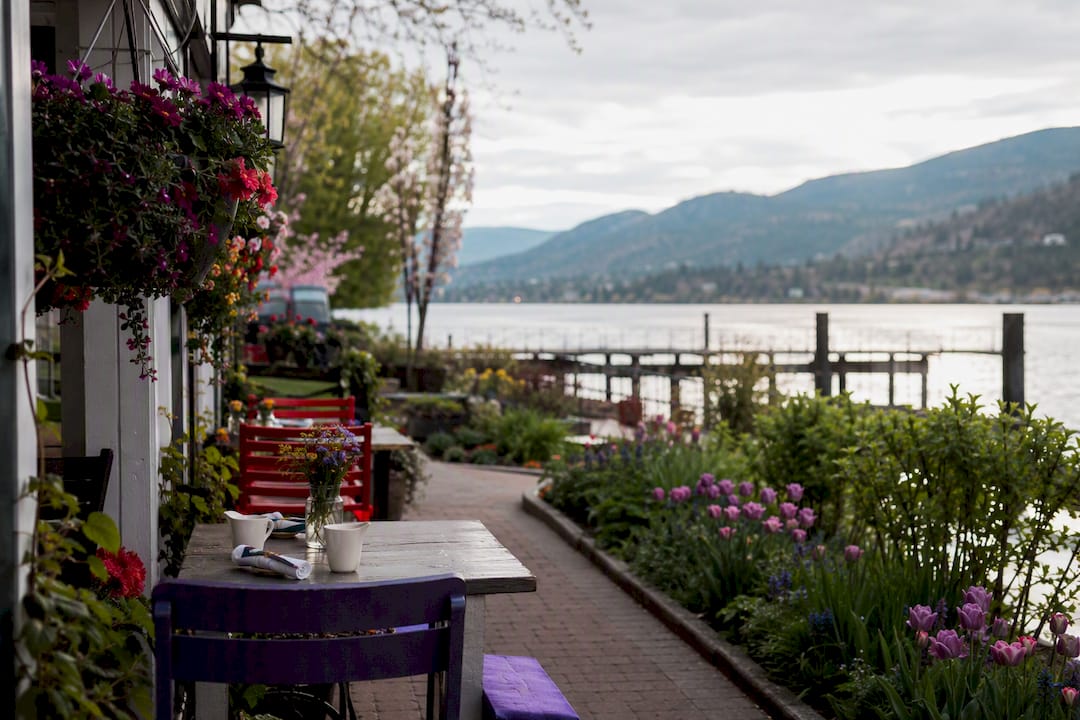
Abbotsford and Chilliwack, home to several of the other major festivals, have a wider spread of chain hotels and independent motels along the highway corridor, generally priced lower than resort towns like Harrison. Both towns also have a solid range of casual dining, from diners to Asian fusion spots that tend to be busiest right around festival lunch hours.
If you’re day-tripping rather than staying over, plan your meal around the festival rather than after it. Many farms run food trucks or small market stalls on-site during peak season, which cuts down on the need to find a sit-down restaurant mid-trip. For a longer weekend, booking a hotel a night or two ahead of a Saturday visit is smart, since tulip season overlaps with regular spring tourism in towns like Harrison Hot Springs, and rooms do sell out on the best-weather weekends.
How Do You Get Great Tulip Photos in the Field?
Timing matters more than gear when it comes to tulip photography. The hour after sunrise and the hour before sunset give soft, warm light that flattens none of the color the way harsh midday sun does, and both windows also happen to be when fields are least crowded.
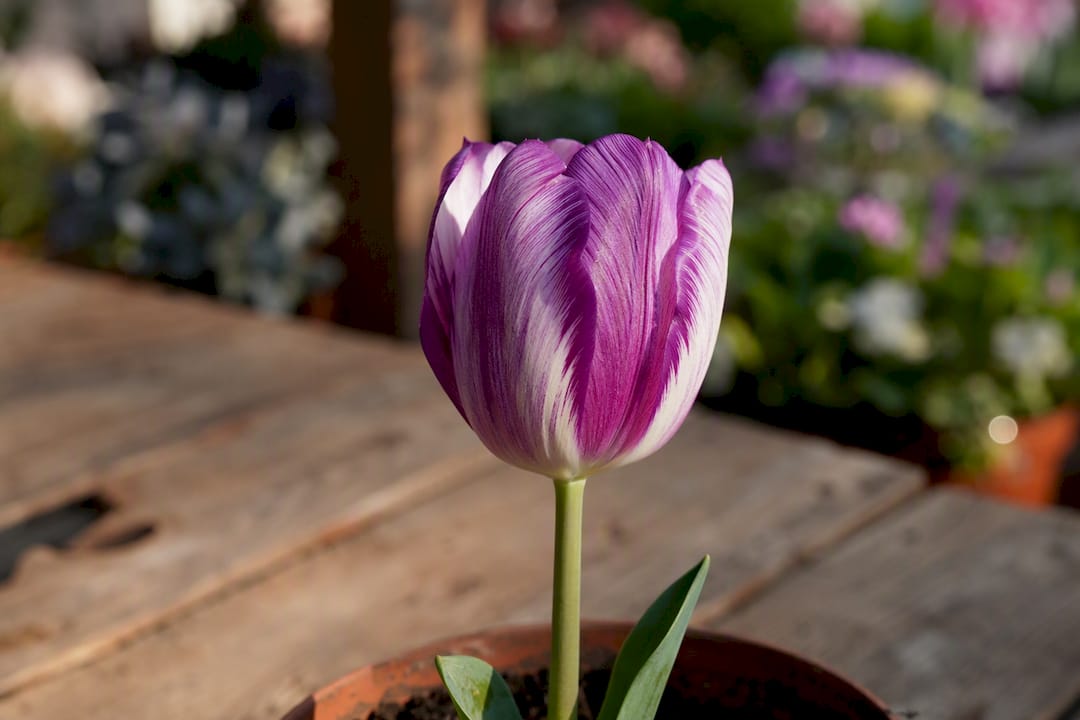
Get low. Shooting from a crouch or kneeling position at the height of the flowers themselves, rather than standing and shooting down, gives images far more depth and makes the rows look endless rather than flat. A wide-angle shot down a row captures scale, while getting close to a single bloom with a shallow depth of field isolates color and texture in a way wide shots can’t.
Watch the wind. Tulips move more than people expect in a breeze, and a fast shutter speed avoids the slight blur that ruins an otherwise perfect close-up shot. Overcast days, while less dramatic for wide shots, actually produce more even color and fewer harsh shadows for close-up detail work.
Respect the rows while you’re chasing the shot. Staying on paths and out of planted beds isn’t just etiquette, it also keeps your photos free of trampled or muddy patches in the background.
What’s the Environmental Side of Tulip Farming?
Tulip farming at the scale seen in the Fraser Valley involves real water and land management, since fields covering dozens of acres need consistent irrigation through a wet-to-dry spring transition. Many of the farms hosting these festivals also grow tulips commercially for the cut-flower and bulb trade, meaning the display fields do double duty as working agricultural land rather than purely ornamental plantings.
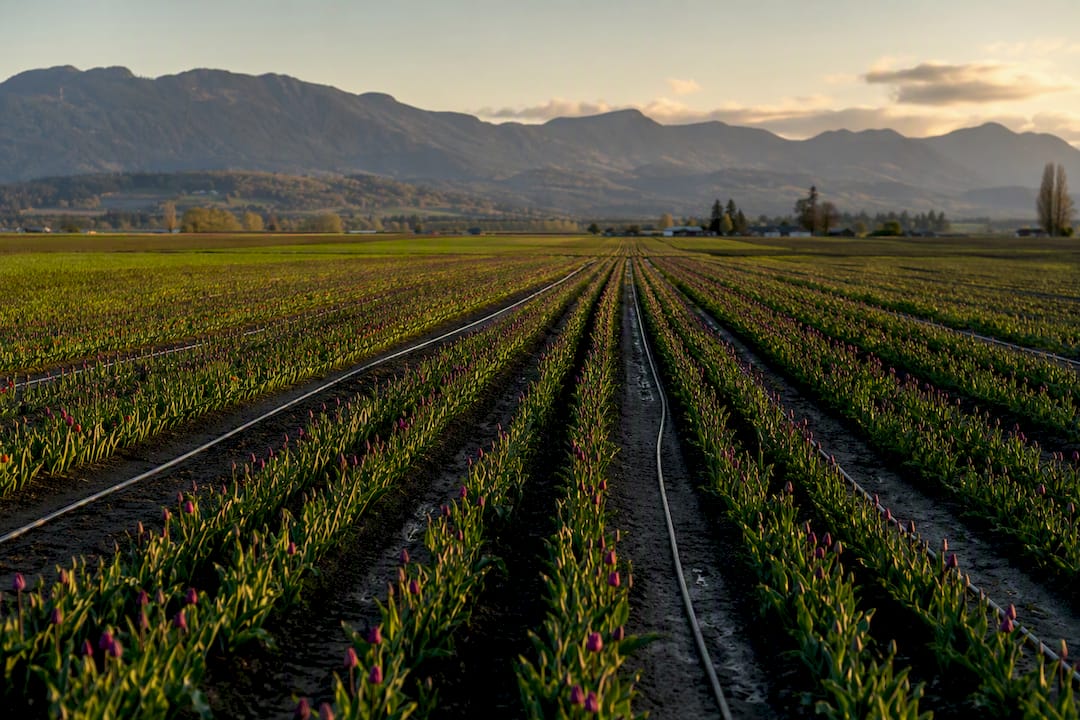
Visitor traffic itself has an environmental footprint worth acknowledging, mainly from vehicle emissions tied to the drive out from Vancouver and parking demand on peak weekends. Some festivals have responded by adding shuttle or park-and-ride options during the busiest days, which cuts down on individual car trips onto farmland roads.
On the farming side, tulip bulbs are generally a low-input crop compared to many row crops, requiring less pesticide application than some agricultural alternatives, though water use during a dry spring remains a real consideration for farms managing large fields. Visitors can support lower-impact practices simply by staying on marked paths, which protects both current-season blooms and the bulbs that will be replanted for next year’s festival.
A Florist’s Take on Tulip Season
Tulip season is short, and that’s exactly why it’s worth planning around rather than treating as a spontaneous weekend maybe. Malikflowers sources seasonal blooms throughout the year, and tulips are one of the clearest reminders that flower availability follows nature’s calendar, not a retail one. Once the fields fade in early May, the easiest way to keep that color going at home is through a florist who tracks what’s actually in season.
If a festival trip isn’t in the cards this year, or you simply want the tulip look without the drive, ordering a seasonal spring bouquet with same-day delivery is a reasonable substitute. Malikflowers builds arrangements around what’s fresh right now, backed by a satisfaction guarantee that includes refunds if a design doesn’t land the way you hoped, delivered across Metro Vancouver.
— Reza
Bring the Tulip Season Home With Malik Flowers
If a Fraser Valley day trip isn’t happening this month, Malikflowers gets that same burst of spring color to your door without the drive, the parking search, or the ticket line. The Spring Collection features seasonal blooms handcrafted into custom arrangements, so you get the tulip-season feeling even on a weekday when a festival visit doesn’t fit your schedule.

Every order ships with same-day delivery available across Metro Vancouver and backed by a satisfaction guarantee, refunds included if the design isn’t what you expected. Whether you’re sending flowers to someone who missed the festival season or just want spring on your own kitchen table, browse the Spring Collection or check delivery options in Vancouver to place an order today.
Sources
- Confirmed: Harrison Tulip Festival to open Friday | Chilliwack Progress
- How to see millions of tulips blooming near Vancouver this month | Daily Hive
- 6 Tulip Festivals to Visit in Greater Vancouver in 2026 - BC Living
- VanDusen Botanical Garden visitor guide | Destination Vancouver
- Where To See Tulips In British Columbia (2026 Guide) - World Adventurists
FAQ
Is there a tulip festival in Vancouver in 2026?
Vancouver itself doesn’t host a large field festival, but the Harrison Tulip Festival opened April 10, 2026, and ran past May 3, and it’s within a day-trip drive of the city, alongside similar festivals in Abbotsford and Chilliwack.
Which tulip festival is better, Abbotsford or Chilliwack?
Abbotsford’s Lakeland Flowers festival tends to suit visitors who want large open fields close to the highway, while Chilliwack’s Botanica Tulip Festival offers a smaller, curated display garden with U-pick rows, so the better choice depends on whether you want scale or a more intimate walk.
What is the tulip season in Canada?
In British Columbia, tulip season generally runs from mid-April through late May, with peak bloom usually concentrated in a one to three week stretch depending on that year’s spring weather.
What is the best month for tulips?
Late April is typically the strongest bet for peak bloom near Vancouver, though festivals often open in early April and can extend color into the first week of May if the spring runs cool.