
Types of Bouquets: What Brides and Planners Need to Know
Types of Bouquets: What Brides and Planners Need to Know
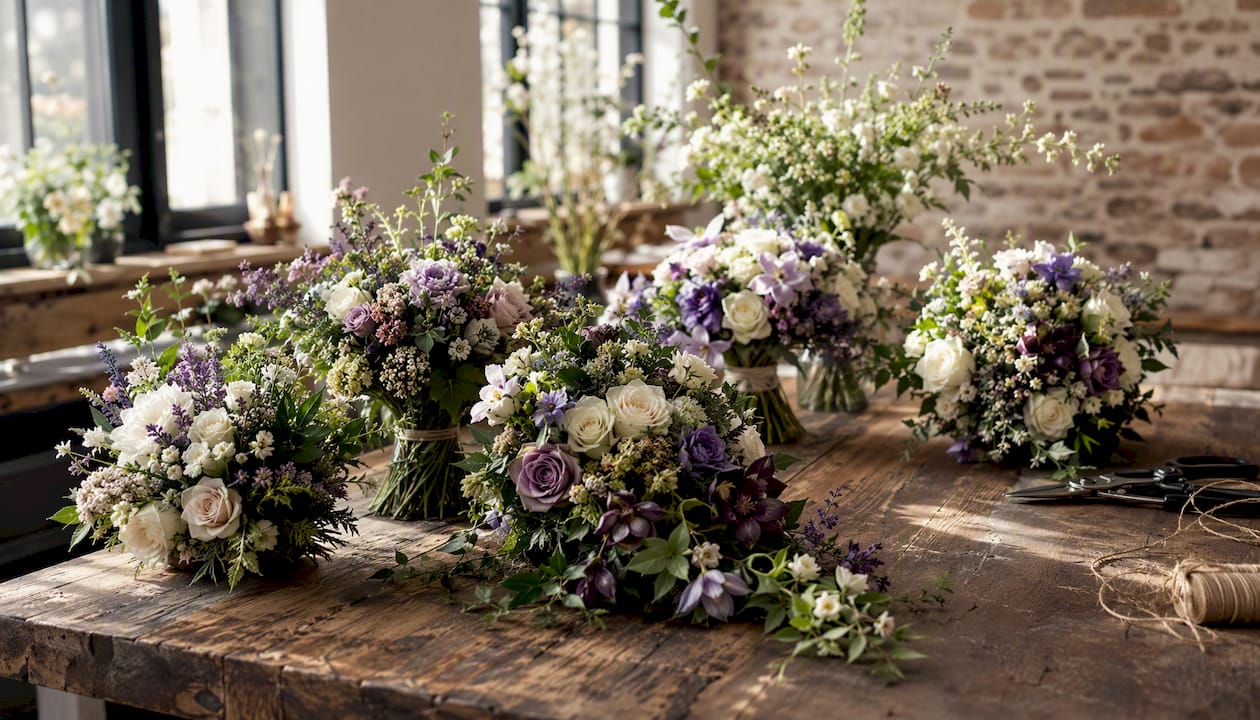
The most useful way to think about bouquet styles is as named shapes: round, hand-tied/garden, cascade, posy/nosegay, Biedermeier, composite/glamelia, pomander, crescent/hoop, arm sheaf/pageant, and wild/organic. Each has a distinct silhouette, scale, and best use case. The single most important selection rule? Proportion over trend. A bouquet that fits your dress and venue will always photograph better than one you saw on Pinterest.
- Top rule: Match bouquet scale to your dress silhouette and venue size before anything else.
- Quick pairings: Ball gown → round or hand-tied; slim/column gown → arm sheaf or single-stem; A-line → cascade or garden hand-tied.
- Cheat sheet: Save or print the comparison table below and bring it to your florist consultation alongside dress photos and venue shots.
Key Takeaways
Proportion is the one rule that overrides every trend: the bouquet that fits your dress and venue will always outperform the one you copied from a photo.
| Point | Details |
|---|---|
| Proportion is the primary rule | Match bouquet scale to your dress silhouette and venue size before choosing any specific style. |
| Dress type guides shape | Ball gown suits round or hand-tied; column/sheath suits arm sheaf or single-stem; A-line works with most styles. |
| Budget and lead time vary by style | Cascade and composite bouquets cost more and take longer to build than a simple posy. |
| Preservation starts at the florist | Ask about pressing or drying options at your consultation, not after the event, since some styles preserve better than others. |
| Malikflowers offers custom wedding bouquets | Handcrafted, seasonal, satisfaction-guaranteed, with consultations available via the wedding flower delivery page. |
Table of Contents
- What are the main types of bouquets?
- What’s the difference between bouquet shape and bouquet style?
- How do you choose the right bouquet for your wedding?
- Expert florist tips: why proportion beats trends every time
- A brief history of popular bouquet types
- A florist’s perspective on matching bouquet to bride
- Custom bouquets for your wedding, designed around your dress
- Sources
- FAQ
What are the main types of bouquets?
Here is a concise profile of each style, covering shape, typical flowers, best use, scale, and DIY difficulty. Prices below come from Poppy Flowers’ bridal bouquet guide, which notes that each shape requires a different stem count and photographs differently.
Round/classic round
A tight, domed sphere of blooms with a flat or slightly rounded base. Roses, peonies, ranunculus, and hydrangea are the go-to choices. It suits almost every dress style and venue, which is why it remains the most-ordered wedding bouquet. Scale: medium. Price range: $150–$250. DIY difficulty: moderate (consistent stem length is harder than it looks).
Hand-tied/garden
Loose, slightly asymmetrical, and full of texture. Think garden roses, sweet peas, eucalyptus, and wildflowers gathered as if just picked. It photographs beautifully in natural light and pairs well with boho, rustic, or outdoor venues. Scale: medium to large. Price range: $175–$275. DIY difficulty: beginner-friendly with practice.
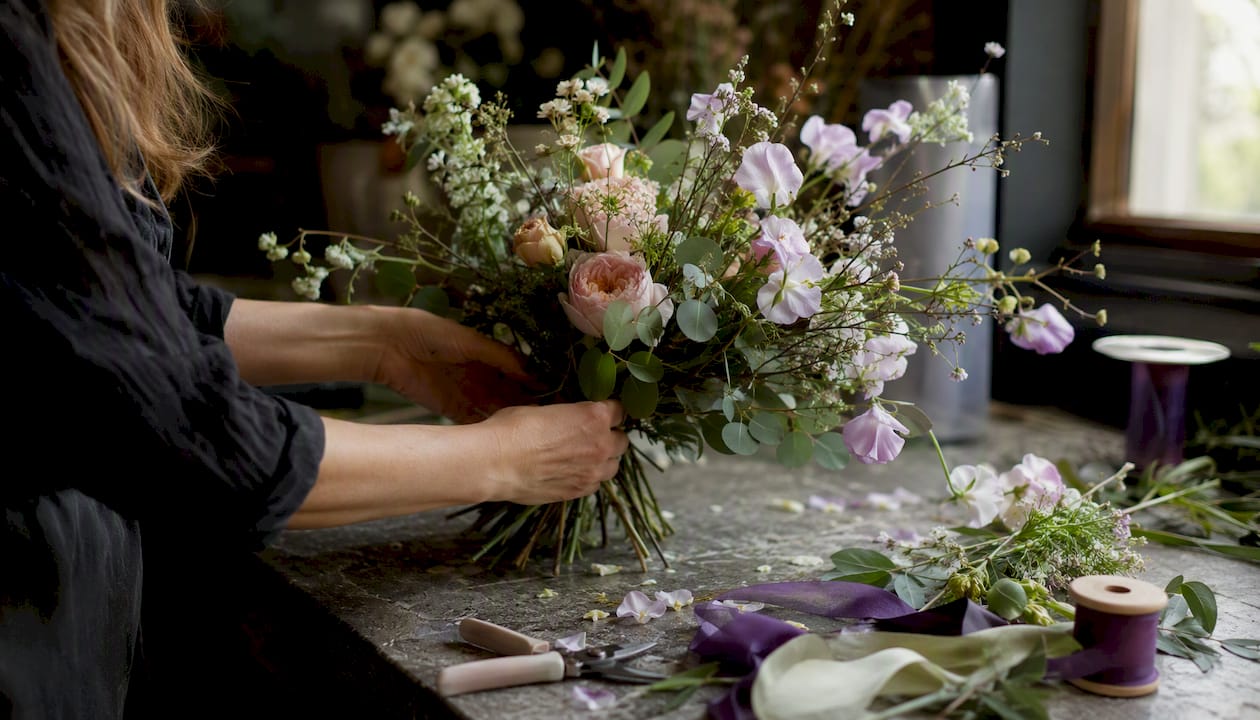
Cascade (shower bouquet)
Flowers trail downward from a central cluster, creating a waterfall effect. Orchids, stephanotis, ivy, and trailing greenery are classic choices. A full cascade suits ballgowns and formal cathedral settings; a mini-cascade works for A-line gowns. Scale: large to statement. Price range: $225–$350+. DIY difficulty: florist recommended (wiring and structural support required).
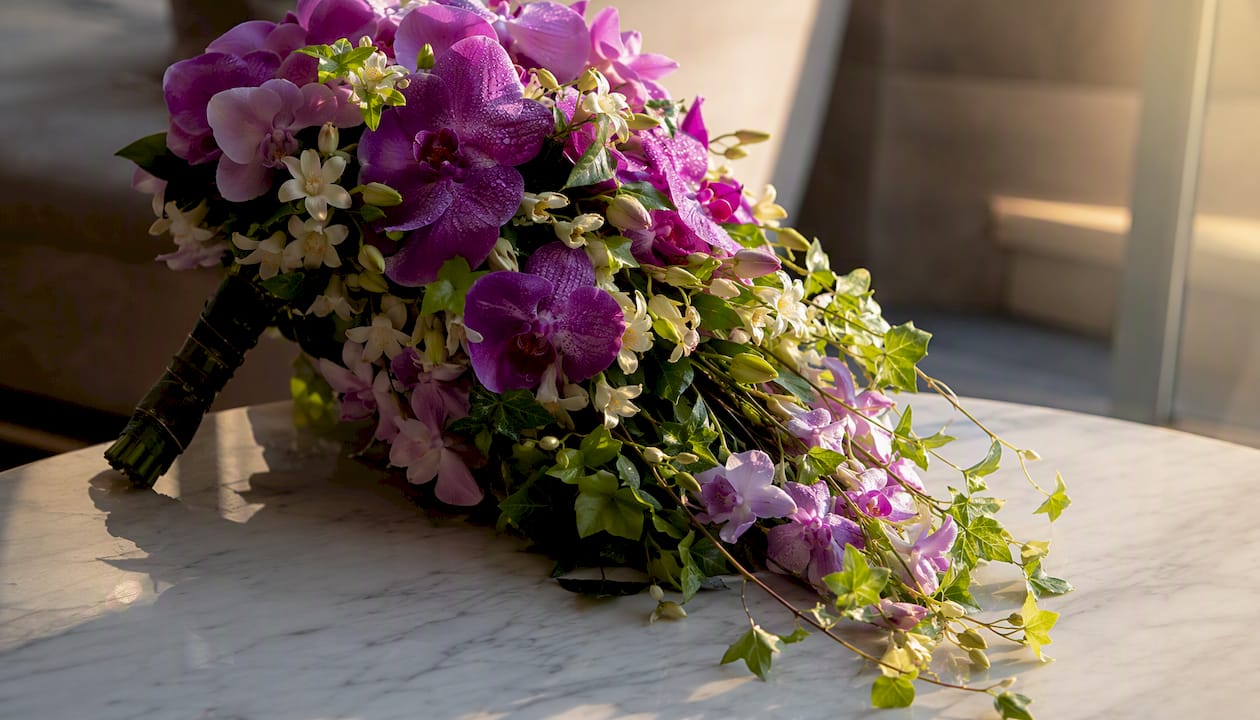
Posy
Small, round, and tightly packed, usually 5–9 inches across. Tulips, daisies, ranunculus, or a single flower variety work perfectly. Ideal for bridesmaids, flower girls, or brides who want something understated. Scale: small. Price range: $100–$175. DIY difficulty: easy.
Nosegay
Essentially a Victorian-era posy: a small, tightly clustered bouquet often wrapped in ribbon or lace, sometimes with a paper frill (called a tussie-mussie). Herbs, lavender, and fragrant blooms are traditional. It suits intimate ceremonies and vintage or garden-party themes. Scale: small. DIY difficulty: easy to moderate.
Biedermeier
Concentric rings of single flower varieties, each ring a different color or bloom. The result looks almost geometric. Roses, carnations, and ranunculus in contrasting colors are typical. It suits structured, formal events and modern minimalist aesthetics. Scale: medium. DIY difficulty: florist recommended (precise placement is the whole point).
Composite/glamelia
Multiple petals or small blooms wired together to create one oversized, sculptural “super-flower.” A glamelia is the most common version, built from gladiolus petals shaped into a giant rose. It is a showstopper for editorial shoots and black-tie events. Scale: statement. DIY difficulty: advanced/florist only.
Pomander (pomander ball)
A sphere of blooms on a ribbon loop, carried by the handle rather than held by the stems. Roses and carnations are standard. Flower girls love them; they also work as aisle or chair decorations. Scale: small to medium. DIY difficulty: moderate (foam ball base required).
Crescent/hoop
A crescent follows a curved, C-shaped silhouette, often with trailing greenery on one side. A hoop bouquet uses a metal or floral ring as the base, with blooms and greenery attached. Both suit editorial, boho, and garden weddings. Scale: medium. DIY difficulty: moderate to advanced.
Arm sheaf/pageant bouquet
Long-stemmed flowers held in the crook of the arm rather than gripped at the stems, like a beauty-pageant winner’s flowers. Calla lilies, gladiolus, and sunflowers are natural fits. It suits column, sheath, or minimalist gowns and elongates the silhouette. Scale: large. DIY difficulty: easy (no wiring, just stem length).
Wild/organic
No defined shape, intentionally loose and unstructured. Wildflowers, grasses, dried elements, and foliage dominate. It suits outdoor, meadow, or elopement settings and pairs with relaxed dress codes. Scale: varies. DIY difficulty: beginner-friendly.
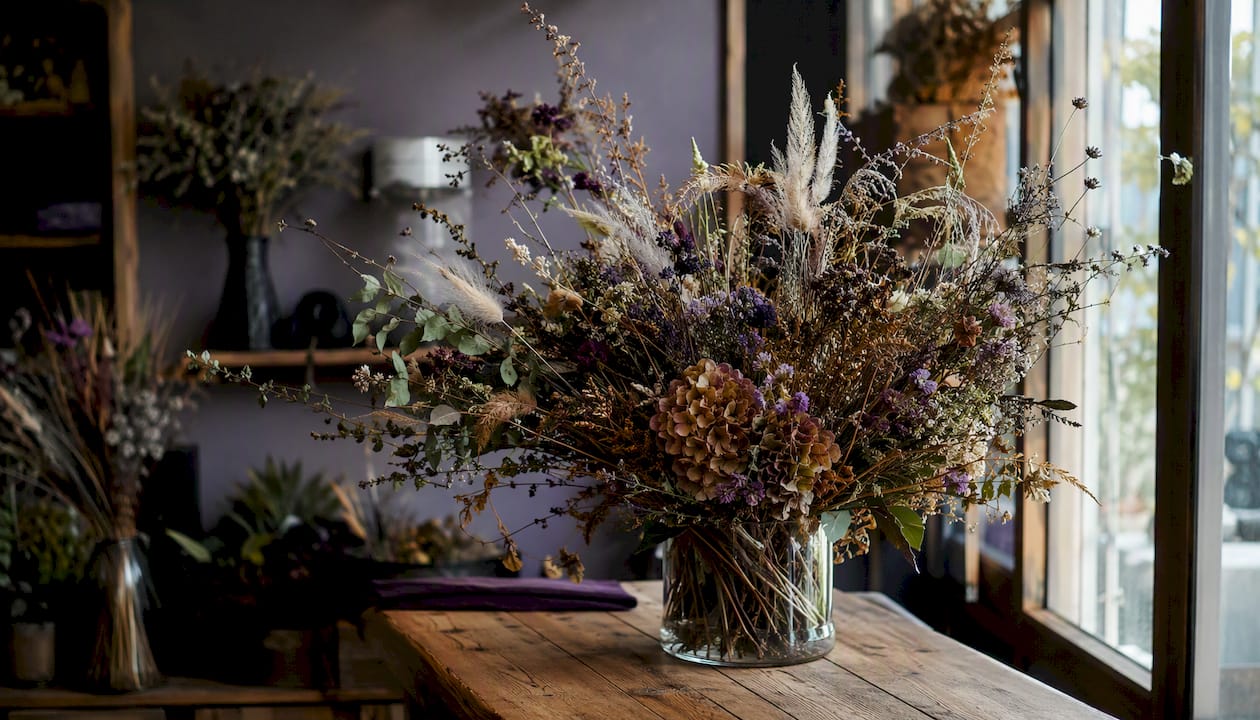
Single-stem/minimalist
One or a few statement stems, often a garden rose, protea, or calla lily. Clean, modern, and surprisingly impactful in photos. Price range: $25–$75. DIY difficulty: none easier.
Breakaway/tossing bouquet
A smaller, simpler version of the main bouquet made specifically for the bouquet toss. Usually a loose posy or mini round. Worth ordering separately so the main bouquet survives the reception.
Printable cheat sheet: comparison of the most-searched types
| Bouquet type | Best for | Shape | Size/scale | Formality/style | DIY difficulty |
|---|---|---|---|---|---|
| Round/classic | Any dress, most venues | Dome | Medium | Classic, formal | Moderate |
| Hand-tied/garden | Boho, rustic, outdoor | Loose, asymmetrical | Medium–large | Garden, relaxed | Beginner |
| Cascade | Ball gown, cathedral | Waterfall trail | Large–statement | Formal, dramatic | Florist recommended |
| Posy | Bridesmaids, flower girls | Small round | Small | Any | Easy |
| Biedermeier | Modern, formal | Concentric rings | Medium | Structured, formal | Florist recommended |
| Arm sheaf/pageant | Column/sheath gown | Linear, long | Large | Minimalist, modern | Easy |
| Single-stem | Minimalist, elopement | Single bloom | Minimal | Modern, editorial | Easiest |
| Composite/glamelia | Editorial, black-tie | Sculptural | Statement | Formal, avant-garde | Florist only |
Photo caption suggestion: “[Bouquet type] bouquet held at waist height, natural light, [venue backdrop].”
Pro Tip: Ask your florist to show you a sample or a photo of the exact bouquet type at the scale you want, not just the style. A cascade that looks elegant at 18 inches looks overwhelming at 30.
What’s the difference between bouquet shape and bouquet style?
These two terms get mixed up constantly, and the confusion leads to real miscommunication at florist consultations.
Shape refers to the silhouette: the physical outline of the bouquet when you hold it. Round, cascade, crescent, and arm sheaf are shapes. They describe geometry, not aesthetics.
Style refers to the design language: the mood, texture, and overall feel. Garden, minimalist, classic, boho, and romantic are styles. Two bouquets can share the same shape but look completely different depending on style.
A few examples:
- A round shape in a classic style uses tightly packed roses in a single color with ribbon wrap.
- A round shape in a garden style uses loose peonies, ranunculus, and trailing eucalyptus in a mix of blush tones.
- A hand-tied shape in a minimalist style uses three stems of white calla lilies, no greenery.
Phrases that actually work with florists:
- “Round dome of peonies, low foliage, photos in an indoor chapel, formal vibe.”
- “Hand-tied garden style, loose stems, lots of greenery, rustic barn venue.”
- “Cascade, orchids and ivy, black-tie ballroom, dramatic is fine.”
One more distinction worth knowing: seasonality is separate from both shape and style. Whether peonies are available in your wedding month is a supply question, not a shape or style question. Your florist can usually substitute a bloom of similar texture and scale, so lock in the shape and style first, then confirm which specific flowers are in season. The spring collection at Malikflowers is a good example of how seasonal availability shapes the final palette without changing the underlying bouquet structure.
How do you choose the right bouquet for your wedding?
Work through these steps before your florist consultation, and you will walk in knowing exactly what to ask for.
- Proportion first. Hold a rough mock-up (a bunch of grocery-store flowers works) at waist height in front of your dress. Does it cover too much of the bodice? Does it disappear against the skirt? The bouquet should complement the dress, not compete with it.
- Consider venue scale. A large ballroom calls for a bouquet with presence. A garden ceremony or intimate chapel suits something smaller and softer. A tiny posy can literally disappear in a grand space.
- Check seasonal availability. Tell your florist your wedding month and ask which of your preferred blooms will be at peak quality. Off-season flowers cost more and may look less fresh.
- Think about scent and allergies. Lilies, freesia, and hyacinths are beautiful but intensely fragrant. If you or your partner have sensitivities, flag it early.
- Set a budget and lead time. Simple hand-tied and posy bouquets have shorter build times. Composite and wired bouquets take significantly longer and cost more. Build time and price vary widely by style, so factor that into your timeline.
- Decide on tossing needs. If you plan to toss the bouquet, order a separate tossing bouquet. It protects your main arrangement and costs far less than replacing a damaged one.
Questions to bring to your florist:
- How many stems does this style typically require?
- Can I see a sample or a photo at the exact scale I want?
- What will you substitute if my preferred bloom is unavailable?
- Do you offer preservation or pressing services after the event?
- What is your lead time for this style, and when do I need to confirm?
According to Rouvalis Flowers & Gardens, when you are unsure where to start, color is the most reliable entry point. It sets the emotional tone of the arrangement before you have settled on a single bloom. Start with your palette, then let the shape and style follow.
Pro Tip: Narrow or column gown? Go with an arm sheaf or single-stem. Ball gown? A round or full hand-tied balances the volume. A-line? Almost anything works, which is why it is the most forgiving silhouette for bouquet experimentation.
Expert florist tips: why proportion beats trends every time
Professional floral designers consistently flag the same mistake: a bride chooses a bouquet shape from a photo without accounting for her dress or venue. The bouquet looked perfect on someone else because it was proportioned for that person’s dress and setting. Copied without that context, it rarely lands the same way.
“The biggest mistake brides make is falling in love with a bouquet in a photo and ordering it without considering how it will relate to their dress and venue. A wide cascade on a minimalist slip dress looks costume-y. A delicate posy in a grand ballroom simply vanishes. Proportion is the one rule that never goes out of style.” — Martha Stewart Weddings, bridal bouquet shapes guide
Common mistakes and how to avoid them:
- Choosing size from a photo, not from your body. Photos flatten scale. Always hold a mock-up at waist height in your actual dress before confirming.
- Ignoring venue ceiling height. A cascade looks dramatic in a cathedral with 40-foot ceilings. In a low-ceilinged barn, it reads as heavy and dated.
- Matching the bouquet to the trend, not the dress. Dried flower arrangements are popular, but they suit relaxed, outdoor aesthetics. In a formal ballroom, they can look unfinished.
- Forgetting the bridesmaids’ bouquets. If the bridal bouquet is large and statement, bridesmaids’ posies should be noticeably smaller. Matching sizes flatten the visual hierarchy in photos.
- Skipping the tossing bouquet. Brides who toss their main bouquet often regret it. A simple posy ordered alongside the main arrangement costs a fraction of the original.
- Overlooking handling comfort. A heavy cascade held for six hours is exhausting. Ask your florist about the finished weight, especially for long ceremonies and receptions.
Pro Tip: Bring three things to your florist consultation: a photo of your dress (front and back), a photo of your venue, and your color palette. A good florist can narrow the shape and style options to two or three in the first ten minutes with those three inputs. It cuts consultation time in half and reduces the chance of a last-minute redesign.
A brief history of popular bouquet types
The bouquet as a wedding accessory has a longer history than most brides realize. According to Wikipedia’s flower bouquet entry, the practice of carrying flowers at ceremonies dates back centuries, with herbs and strongly scented blooms originally chosen to ward off evil spirits and mask unpleasant odors at large gatherings.
The nosegay is one of the oldest surviving forms, popular in medieval Europe as a small, fragrant bundle carried to combat the smells of crowded streets and public spaces. By the Victorian era, it had evolved into the tussie-mussie: a small, tightly arranged posy with a paper or lace frill, often carrying coded floral meanings through the language of flowers (floriography).
The cascade rose to prominence in the mid-20th century, partly driven by royal weddings. Its dramatic trailing shape suited the grand formal gowns of the era and became the default “wedding bouquet” image for decades.
The Biedermeier style takes its name from the Central European Biedermeier period (roughly 1815–1848), a cultural movement that prized order, domesticity, and decorative precision. The concentric-ring bouquet reflects exactly that aesthetic: controlled, geometric, and deliberate.
The hand-tied garden bouquet is largely a late-20th-century development, driven by the rise of English garden-style floristry and designers who pushed back against the stiff, wired arrangements that dominated the mid-century. It prioritizes a natural, just-gathered look that photographs well in the softer, more editorial style that became dominant in wedding photography from the 1990s onward.
A florist’s perspective on matching bouquet to bride
Every bouquet consultation starts the same way: with the dress. The silhouette tells you almost everything you need to know about scale and shape. A structured ball gown can carry a full round or a lush hand-tied; a minimalist column gown is overwhelmed by anything with too much volume. From there, the venue sets the formality, and the season narrows the flower choices.
What surprises many brides is how much the photography style matters. An editorial photographer shooting in natural light will make a loose garden bouquet look extraordinary. A traditional photographer in a ballroom setting will make a classic round or Biedermeier shine. Knowing your photographer’s style before finalizing the bouquet is a step most brides skip.
Malikflowers builds every arrangement to the client’s specific dress, venue, and photo context, with a satisfaction guarantee: if the design does not meet expectations, the order is made right. You can browse the full range of handcrafted custom arrangements to get a sense of the design range before booking a consultation.
Custom bouquets for your wedding, designed around your dress
Malikflowers crafts every wedding bouquet by hand, using seasonal blooms sourced for freshness, with the shape and style matched to your specific dress silhouette, venue, and color palette. No two arrangements are identical, and every order comes with a satisfaction guarantee: if the design does not match what was discussed, it is remade or refunded.
For brides and planners in Metro Vancouver, the wedding flower delivery page is the starting point for consultations. The Ruby Romance Bouquet and the Crimson Allure Arrangement show the range of finished designs available, from romantic and lush to structured and dramatic. Pair your order with a handcrafted gift from Rose Petal Glam for a complete, memorable wedding gift set. To book, visit the wedding page, select your preferred style, and include your dress photo and wedding date in the order notes.
Sources
- Bridal Bouquet Shapes Explained: Round, Garden, Cascading & More | Poppy Flowers
- 15 Types of Flower Bouquets: A Complete Guide for Florists (With Pricing) | HanaFloristPOS
- Bridal bouquet shapes explained: round, garden, cascading & more | Martha Stewart
- How to choose the perfect flower arrangement | Rouvalis Flowers & Gardens
FAQ
What are the different types of bouquets?
The main types are round, hand-tied/garden, cascade, posy, nosegay, Biedermeier, composite/glamelia, pomander, crescent/hoop, arm sheaf/pageant, wild/organic, and single-stem. Each has a distinct shape, scale, and best use case for weddings or events.
What are little bouquets called?
Small bouquets are called posies or nosegays. A posy is typically 5–9 inches across and tightly packed; a nosegay is its Victorian predecessor, often fragrant and wrapped in ribbon or lace.
What are some different styles of bouquet arrangements?
Style refers to the design language rather than the shape. Common styles include classic, garden, minimalist, boho, and romantic. A round bouquet, for example, can be built in a classic style (tight roses, single color) or a garden style (loose peonies, mixed textures, trailing greenery).
What flowers are commonly used in bouquets?
Roses, peonies, ranunculus, hydrangea, calla lilies, and eucalyptus are among the most frequently used. The best choice depends on the bouquet style, the wedding season, and which blooms are at peak quality when you order.
Can Malikflowers create a custom bouquet for my wedding?
Yes. Malikflowers handcrafts custom wedding bouquets in Metro Vancouver, matched to your dress, venue, and color palette, with a satisfaction guarantee. Visit the wedding flower delivery page to start your consultation.